
Angle Steel Lattice Transposition Towers: A Cutting-Edge Solution for Reliable Power Transmission
2026-07-01
In the demanding world of power transmission, every component must provide uncompromising reliability. Enter angle steel lattice transposition towers—an advanced structural solution engineered to maintain phase balance and minimize electrical losses over long distances. By rotating conductor positions, these towers tackle one of the grid’s most persistent challenges with elegant simplicity. Behind many high-performance deployments stands Anbang, a name synonymous with precision fabrication and innovative tower design. As we explore how these structures are reshaping modern infrastructure, you’ll see why forward-looking utilities are choosing this cutting-edge approach for their most critical lines.
The Structural Logic Behind Angle Steel in High-Voltage Transposition
Transposition of high-voltage lines demands more than just rerouting conductors—it requires a substructure that can handle abrupt shifts in electromagnetic and mechanical loads. Angle steel becomes the silent workhorse here, its L-shaped profile offering a deceptively simple answer to a host of spatial and stress-related puzzles. Unlike tubular or channel sections, the angle’s open geometry lets engineers place bolts and braces with a directness that speeds up assembly high above the ground, while its inherent asymmetry actually works in favor when dealing with the twisting forces unique to transposition towers.
Look closer at a transposition span and you’ll see the logic: each leg of the angle steel can be oriented to resist bending in one plane while contributing stiffness in another, effectively creating a modular skeleton that distributes the uneven pull of bundled conductors. The cross-sectional shape isn’t just about strength-to-weight ratios; it’s about giving line crews the flexibility to make field adjustments without compromising the tower’s balance. That diagonal bracing pattern, so common in lattice towers, emerges naturally from the way angle sections can be lapped and bolted—turning individual pieces into a unified, load-sharing network that tolerates thermal expansion and wind sway without fatigue.
What’s often overlooked is how angle steel simplifies the iterative design of transposition points. Because these towers interrupt the regular phasing arrangement, they introduce local stress concentrations that would punish more rigid profiles. The angle’s capacity for controlled flex and its forgiving bolted connections mean it can be tuned through incremental prototyping, with members added or repositioned until the tower stands steady under full load. This practical adaptability, paired with a century of proven performance in wild weather, makes angle steel less a choice and more a structural given—the logic baked into every reliable transposition scheme on the grid.
How Conductor Transposition Mitigates Phase Imbalance and Line Losses
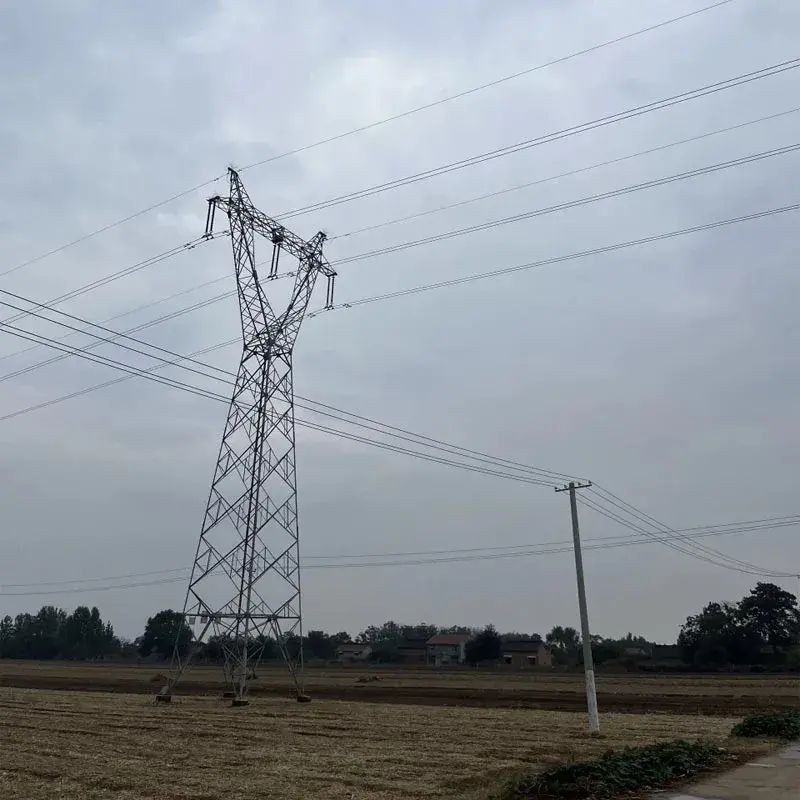
When three-phase transmission lines stretch across long distances, the physical arrangement of conductors is rarely perfectly symmetrical. Unequal spacing means each phase experiences slightly different inductance and capacitance, which leads to unbalanced voltage drops and current flows. Even a modest asymmetry can cause one phase to carry more load, heating up conductors and increasing total line losses over time.
Transposition tackles this directly by physically rotating the positions of the phase conductors at set intervals along the line. Swapping phases A, B, and C through carefully planned transposition towers ensures that, on average, each conductor spends an equal distance in each geometric position. This averaging effect cancels out the imbalances that would otherwise accumulate from fixed asymmetric spacing.
The practical payoff is twofold. First, phase currents become more balanced, which reduces neutral current and the associated stray losses. Second, the equalized mutual inductance lowers the overall reactive power demand and helps maintain steadier voltage profiles along the line. For long-haul transmission, the reduction in resistive losses alone can be economically significant, all without adding complex active controls.
Streamlined Tower Erection: Prefabricated Components and Field Assembly
The traditional approach to raising towers often meant lengthy on-site construction, with crews assembling steel piece by piece at dizzying heights. But a shift toward prefabrication has changed the rhythm of the job. Now, major tower sections—complete with platforms, ladders, and even pre-installed conduits—are built indoors, away from weather delays and alignment guesswork. These hefty modules arrive on flatbeds, ready to be lifted and mated in a sequence that feels more like stacking blocks than building from scratch.
Field assembly becomes a matter of orchestrated lifting rather than piecemeal welding. A small team works from a carefully choreographed plan: the pre-assembled base section is set onto the foundation, followed by mid-sections that bolt together with match-marked flanges. The process repeats with almost metronomic precision, and because each module was factory-fitted beforehand, there’s no reckless improvisation at altitude. The result isn’t just a faster erection—it’s a quieter, safer site where weeks of high-risk labor shrink into days of guided placement.
Weathering the Elements: Galvanized Steel’s Defense Against Rust and Decay
Galvanized steel stands up to the elements with a quiet stubbornness that’s easy to overlook. The zinc coating doesn’t just sit there—it forms a tight, electrochemical bond with the steel beneath, acting as a consumable shield. When moisture and oxygen show up, the zinc corrodes first, buying the base metal years of extra life. It’s a bit like having a self-sacrificing bodyguard that never takes a day off.
What really sets it apart is how it handles scratches and dings. Expose raw steel on a painted surface, and rust sets in fast, creeping under the coating. But zinc’s protection is cathodic: even where the steel is bare, the surrounding zinc keeps rust from taking hold, as if the metal itself knows how to heal. That’s why you’ll find galvanized frames and fasteners in coastal buildings, highway guardrails, and other spots where the weather doesn’t play nice.
Over time, the surface develops a matte, mottled patina that feels less industrial and more organic, almost stone-like. It dulls, sure, but it doesn’t flake or blister the way ordinary coatings do. For structures meant to last decades with minimal fuss, this slow transformation becomes a feature rather than a flaw—a material that simply weathers rather than withers.
Designing for Sensitive Landscapes: Low-Impact Tower Installations
Placing towers in ecologically or visually fragile environments demands more than just engineering precision—it requires a philosophy of restraint. Instead of imposing rigid structures onto the land, designers are learning to read the terrain, letting topography, vegetation, and cultural context guide the footprint. This begins with thorough site analysis, often walking the land with ecologists and local stewards long before the first stake is driven. By choosing locations that naturally screen the tower or minimize habitat fragmentation, the initial disturbance can be drastically reduced, turning a potential intrusion into a quiet conversation with the landscape.
The physical installation process becomes a choreography of minimal intervention. Helicopter-assisted placements, lightweight modular components, and hand-carried materials now replace heavy machinery that would scar access routes. Foundations are often shallow, pinned, or even gravity-based to avoid deep excavation, preserving soil layers and root systems. Towers themselves can be artfully tapered or clad in non-reflective materials to blend into ridgelines, while color palettes are drawn directly from surrounding geology and vegetation. These choices are not cosmetic afterthoughts but functional strategies that allow infrastructure to recede, acknowledging that visibility and durability can coexist.
Long-term site resilience is woven into every decision. Access paths are temporary, designed to heal, with biodegradable matting protecting sensitive understory. Monopole designs reduce sprawl, and guy wires are positioned to avoid wildlife corridors. Where possible, construction timing is aligned with seasonal dormancy or migratory windows. Maintenance protocols emphasize remote monitoring and targeted visits, so human presence remains infrequent and light. Ultimately, low-impact design is not about erasing the tower’s purpose but about proving that reliable infrastructure and ecological integrity are not opposing forces—when done thoughtfully, the site feels whole, as if the tower arrived without breaking a single thread of the landscape’s fabric.
A Closer Look at the Economic Advantages Over Conventional Tower Types
When comparing tower types, the initial material outlay often draws the most attention, but a deeper dive reveals that unconventional designs can shift the balance of total project expenditure. For instance, tubular steel poles may carry a higher upfront price tag than traditional lattice structures, yet their slimmer profile and integrated manufacturing reduce the number of required components. Fewer parts translate to shorter assembly times and less heavy machinery on site, trimming labor and equipment rental costs. Over the lifecycle, these savings compound, especially in remote areas where logistics and skilled labor are premium expenses.
Maintenance demands further widen the economic gap. Lattice towers, with their multitude of bolted connections and exposed members, demand periodic inspection and corrosion touch-ups, each visit adding to operational budgets. Monopoles and shrouded solutions, by contrast, present fewer points of failure and can incorporate self-protective coatings, effectively pushing routine upkeep intervals from months to years. In corrosive coastal environments or regions with strict aesthetic regulations, these reductions in hands-on servicing constitute a major cost avoidance, freeing up capital for network expansion rather than preservation.
Finally, the economic argument extends beyond the tower itself to real estate and zoning. Compact tower bases consume less land, lowering acquisition or leasing fees, while streamlined silhouettes often ease community opposition and expedite permitting—delays that can cripple deployment schedules and budgets. When these softer factors are quantified, the apparent premium of non-conventional tower types frequently evaporates, revealing a total cost of ownership that outclasses traditional designs over the full investment horizon.
FAQ
It's a specialized transmission structure built from angular steel members arranged in a lattice pattern, designed to rotate the phases of high-voltage lines along their route. Unlike standard towers that just hold conductors in place, these towers actively swap the positions of the three phases to reduce electrical imbalances, which improves overall power quality and lowers losses.
Over long distances, the asymmetrical arrangement of conductors naturally causes imbalances in impedance and voltage. By periodically rotating the phases using transposition towers, utilities can equalize these imbalances, which minimizes power losses, limits interference with communication lines, and helps meet grid code requirements for reliability.
Angle steel lattice uses interconnected, lightweight steel angles that create a high-strength, flexible framework. This design is highly resistant to wind and seismic loads, uses less material than solid-shaft alternatives, and simplifies transport and assembly—especially in remote or rugged terrain where heavy lifting equipment is scarce.
They improve reliability both electrically and structurally. The transposition reduces unequal voltage drops and circulating currents that stress equipment, while the lattice design’s redundancy means a localized member failure doesn’t collapse the entire tower. This combination keeps the line in service longer and reduces unplanned outages.
You'll find them on long-distance, extra-high-voltage AC lines—often crossing hundreds of kilometers—where phase imbalances become critical. They're also used in corridors with parallel communication cables, near substations where balanced loading is essential, and in environmentally sensitive areas because their open-frame design reduces visual impact and allows for a smaller footprint.
Recent advances include optimized modular connections that speed up erection, anti-corrosion coatings tailored to harsh climates, and geometries refined through computer modeling to minimize steel weight while maintaining strength. Some designs also incorporate small, integrated platforms for easier maintenance access without adding significant load.
Lattice towers are assembled piece by piece on site, often with basic tools and smaller cranes, which is a big advantage in hard-to-access locations. Unlike monopoles that require heavy, pre-fabricated sections and deep foundations, lattice structures can be adapted to varied soil conditions simply by adjusting the foundation design, making them more versatile for complex terrain.
Because of the many bolted connections, routine inspection focuses on torque checks and corrosion at joints—especially in coastal or industrial areas. However, the open framework allows for visual inspection with drones easily, and damaged angle pieces can be replaced individually without taking the line offline, unlike tubular towers where damage often requires more extensive repairs.
Conclusion
Angle steel lattice transposition towers represent a modern engineering leap in high-voltage transmission, blending structural logic with operational reliability. The lattice framework built from angle steel delivers exceptional strength-to-weight ratios, enabling towers to support heavy conductor loads while resisting wind and seismic forces. Their real innovation, however, lies in the integrated transposition feature that rotates phase conductors at specific intervals. This design directly tackles phase imbalance and line losses, ensuring uniform impedance and reducing reactive power consumption—a critical advantage for long-distance power corridors. Beyond electrical performance, the use of hot-dip galvanized angle steel forms a robust barrier against rust and decay, allowing these towers to weather harsh environments with minimal upkeep over decades.
Construction efficiency and environmental sensitivity further distinguish these towers. Prefabricated components and straightforward bolted assembly accelerate erection, cutting on-site labor and construction time compared to conventional lattice or tubular towers. This modular approach also suits sensitive landscapes: smaller foundations and the lattice's low visual impact minimize land disturbance and aesthetic intrusion, making the technology viable even in ecologically or visually valued areas. Economically, the combined savings in material, installation, and maintenance, along with reduced line losses over the asset's life, position angle steel lattice transposition towers as a compelling choice for utilities aiming to modernize grid infrastructure sustainably and cost-effectively.
Contact Us
Contact Person: antor khan
Email: [email protected]
Tel/WhatsApp: 8613863903569
Website: https://www.qdabtower.com/