

Best Grain Oriented Electrical Steel for High-Efficiency Transformer Cores
2026-09-25
What separates a transformer that quietly delivers decades of low-loss performance from one that runs hot and wastes energy? The answer often hides in the core: grain-oriented electrical steel. Not all grades behave the same way, and the best go beyond basic standards—lower core loss, higher permeability, and consistent magnetic properties sheet after sheet. That’s the focus at Jiangsu Baowu New Materials. We work with transformer manufacturers to select the right grain-oriented electrical steel for high-efficiency designs, so you can push performance without gambling on material variability. Here’s what to consider before your next core specification.
Why Grain-Oriented Steel Still Defines Transformer Efficiency
Grain-oriented electrical steel endures because its metallurgical structure aligns magnetic domains along the rolling direction, cutting hysteresis loss far below what non-oriented grades can achieve. While amorphous metal ribbons offer even lower core loss at modest flux densities, they fall short in saturation magnetization and mechanical robustness, making them unsuitable for large power transformers where weight and fault tolerance matter. The result is a material that balances performance, manufacturability, and long-term reliability in ways no substitute has matched.
The production route—cold rolling to a sharp Goss texture followed by high-temperature annealing—creates large, highly oriented grains that reduce domain wall pinning. Modern refinements such as laser scribing and chemical etching introduce artificial domain boundaries, further suppressing anomalous eddy currents without compromising the steel's structural integrity. This domain engineering is not a one-time discovery but an ongoing push: each generation of grain-oriented steel trims another few percent of no-load loss from the grid.
That incremental gain matters disproportionately because transformers operate continuously for decades. A 0.1 W/kg reduction in core loss across a fleet of distribution transformers translates into gigawatt-hours saved annually, even before accounting for reduced cooling loads. For utilities facing stricter efficiency regulations and rising renewable integration, grain-oriented steel remains the quiet workhorse that keeps losses—and operational costs—from eroding the benefits of cleaner generation.
Reading Core Loss Curves Like a Production Engineer
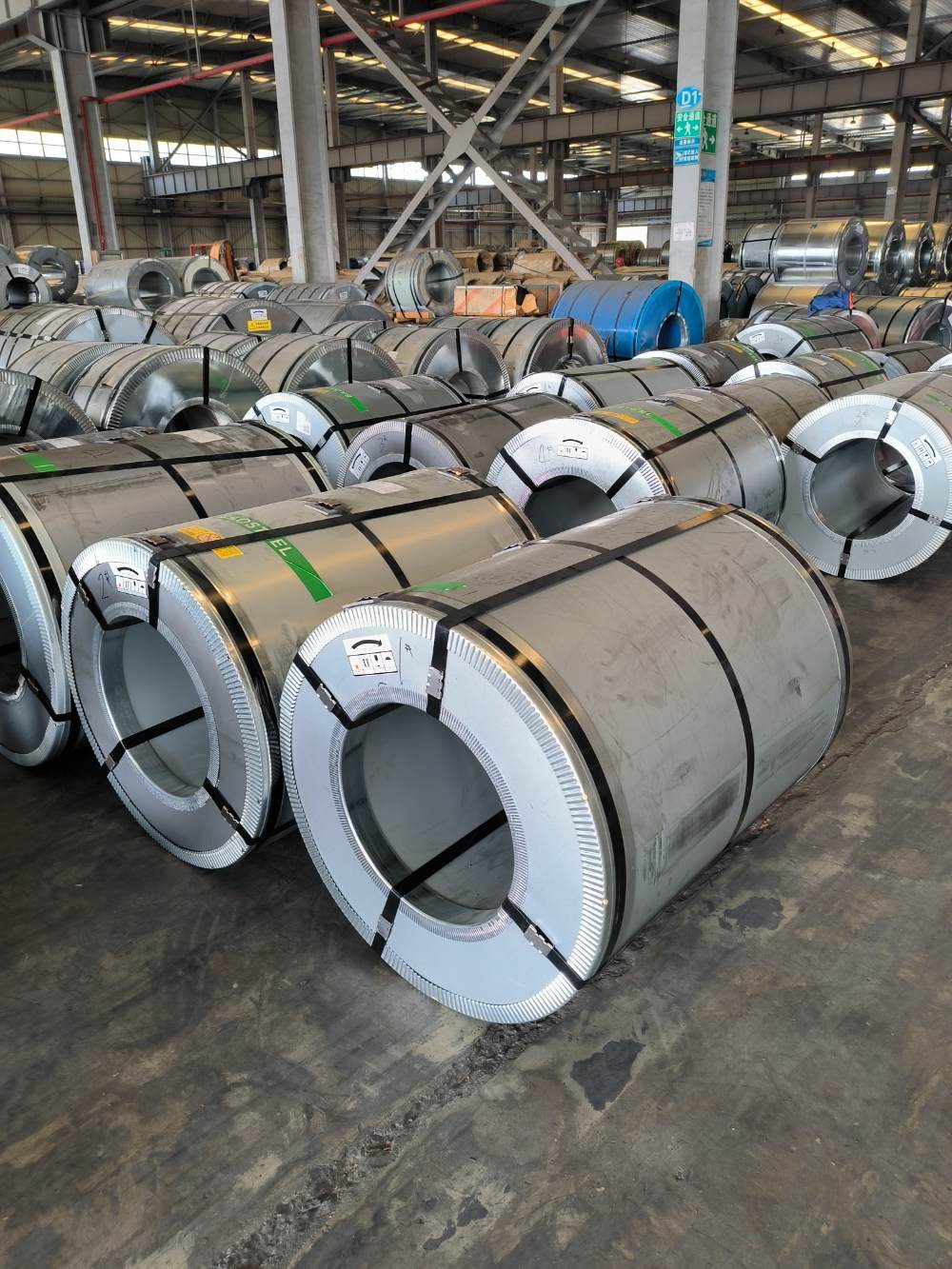
A production engineer reads core loss curves as a starting point, not a gospel. Those curves are almost always measured with a clean sine wave, a fixed temperature, and no DC bias. In a real converter, the waveform is a chopped-up mess with harmonics, the core sits at 90°C because the MOSFET next to it is sweating, and a little DC imbalance creeps in from duty-cycle drift. All of that changes the actual loss per cubic centimeter.
The trick is to pull the curve apart into flux density and frequency, then rebuild your own loss estimate for the switching pattern you actually run. If your waveform is a square wave with a 50% duty, you don't just read the loss at the switching frequency. You think about the ripple current, the peak flux swing, and whether the core ever walks up the BH loop due to transient loading. Then you add margin for batch-to-batch permeability spread, because the curve on the datasheet is an average of a few well-behaved samples, not your worst-case supplier lot.
Finally, a production engineer never trusts the curve without a quick sanity check. Grab a sample core, wind a few turns, push it with the actual voltage waveform, and watch the temperature climb over ten minutes. Compare that against your loss estimate. If the core is hotter than the math says, you're probably missing gap fringing loss, copper proximity heating, or a flux imbalance that only shows up under real load. Reading the curve is just the first move; the production floor writes the final answer.
Domain Refinement Methods That Actually Lower No-Load Loss
Magnetic domain refinement attacks the core problem of anomalous eddy current loss, which dominates no-load loss in grain-oriented electrical steel. By creating localized stress fields or surface discontinuities, these methods force coarse, widely spaced domains to split into much finer structures. The result is a shorter mean free path for domain wall motion, and that directly reduces the energy dissipated per cycle. What separates genuinely useful techniques from laboratory curiosities is whether the refinement survives subsequent processing, especially stress-relief annealing and core stacking.
Laser scribing has become the most widely adopted industrial method because it can be applied at line speed without mechanical contact. The focused beam heats a narrow track, generating thermal stress that pins the domain walls into fine, repeatable patterns. Other viable routes include mechanical scratching with carbide or diamond tips, spark ablation, and plasma treatment, but each brings trade-offs in coating damage, burr formation, or process stability. Effective implementations often combine one of these surface treatments with a carefully tuned tensile coating, because the coating itself can induce enough stress to keep domains fine after the core is assembled.
What matters in practice is not the measured improvement on a single strip but the sustained reduction of no-load loss in a finished transformer core. That means verifying the refined domain structure after slitting, stacking, and core forming, and checking that the method does not worsen magnetostriction or audible noise. Some processes look promising on small coupons yet fail because the beneficial stress pattern relaxes or becomes uneven at full width. The most robust approaches identify a process window where the domain refinement is strong enough to lower loss by several percent but gentle enough to avoid degrading the insulation coating or increasing building factor.
Picking the Right Grade When Every Watt Counts
When every watt is being squeezed, the grade you pick matters more than the spec sheet suggests. A component rated for a wider temperature range or tighter tolerance doesn't just survive longer—it often wastes less energy while doing the same job. Lower-grade parts can hide inefficiencies in the form of higher resistance or leakage that only become obvious when you measure total power draw over time.
Look at how the part behaves in your actual operating window, not just at nominal conditions. Many grades are optimized for a narrow band of load or ambient temperature, and performance falls off quickly outside that band. That falloff can show up as extra heat, which then demands more cooling, which eats into the watts you were trying to save.
Also weigh the cost of that waste over the product's life. A grade that seems overpriced at purchase can pay for itself through lower energy bills and less thermal management hardware. If you're counting watts, the right choice is usually the one that stays efficient across the whole range you'll actually use.
Coatings, Stress, and the Silent Loss Drivers in Stacked Cores
Motor laminations rarely fail from the obvious. The thin insulating coatings between electrical steel sheets look inert, but under compressive stack stress and thermal cycling, they micro-crack in ways that quietly raise eddy-current losses. Early core loss measurements on a freshly stacked stator can pass spec, then drift upward within months as the coating wears at contact points where burrs and uneven clamping concentrate pressure. What starts as a fraction of a watt per kilogram often becomes several watts of extra heat by the time the machine is in service, and no amount of post-assembly varnish fully restores the original inter-laminar resistance.
The real difficulty is that stress and coating degradation interact nonlinearly. Tightening a core to improve mechanical stiffness—say, by increasing bolt torque or using interference-fit housings—can actually increase total losses if the coating's elastic limit is exceeded in local contact zones. This is especially true for thin-gauge, high-silicon steels that trade mechanical ductility for lower intrinsic losses. A stack that looks perfectly rigid on a test bench may already be losing insulation integrity at a level too subtle for standard resistance checks, but enough to create hot spots under high-frequency operation.
Field failure analysis often points back to these silent drivers. One way to spot them before teardown is to track loss growth during thermal shakedown—running the core through repeated heating and cooling cycles while monitoring incremental watt loss at fixed flux density and frequency. A healthy stack will show a stable plateau after the first few cycles; a stressed stack will keep creeping upward. Coatings with higher elongation and lower coefficient of friction tend to resist this, but they usually cost more or require modified curing. The economical fix may be as simple as deburring and chamfering punch edges, or reducing peak clamping pressure through spring-loaded hardware, rather than chasing a supposedly better varnish.
The Processing Window Most Data Sheets Never Mention
The number that gets printed under 'working time' or 'open time' usually comes from a tightly controlled lab bench. What it doesn’t capture is the messy reality of a production floor. A resin that’s supposed to give you twenty minutes can turn gummy in ten if the ambient temperature climbs a few degrees, or if the substrate has been sitting in an unheated bay overnight. The processing window—the actual sliver of time where the material behaves the way you need it to—ends up being far narrower than any datasheet implies.
Part of the reason is that suppliers test for repeatability, not realism. They want a number that looks consistent across batches, so they strip away the variables that cause trouble in the field. That means no drafts, no direct sunlight, no operators pausing to fix a jammed dispenser. The result is a clean, optimistic figure that may hold up in a climate-controlled lab but collapses the moment line speed changes or a shift runs long.
If you’re tired of scrapping parts because the material didn't wait for you, stop treating the datasheet as a promise. Run a small trial under your own worst-case conditions—late in the day, with the bay doors open, using the oldest stock you have. Measure when the viscosity shifts, when tack disappears, or when adhesion drops. That’s your real processing window. It’s rarely the one anyone publishes, but it’s the only one that matters when the clock is running.
FAQ
Grain oriented steel has a strong crystallographic texture aligned in the rolling direction, which dramatically lowers core loss and raises permeability when magnetized along that axis. Non-oriented steel has isotropic magnetic properties but cannot match the efficiency in the rolling direction, so grain oriented material is preferred for stacked or wound transformer cores where flux follows a single path.
Focus on core loss at the transformer's operating induction (typically 1.5 T or 1.7 T) and frequency, along with permeability at those points. Low magnetostriction also matters if noise is a concern. High permeability grades reduce magnetizing current and allow more compact core designs, but they usually come at a higher price, so balance performance against cost.
Domain refinement uses laser scribing, mechanical scratching, or chemical etching to create fine lines across the steel surface. These lines subdivide the magnetic domains, reducing anomalous eddy current loss. The result is a significant drop in core loss without changing thickness, which is why premium low-loss grades often rely on this processing step.
Thinner gauges, like 0.23 mm or 0.20 mm, reduce eddy current loss and are common in high-efficiency designs, especially at higher frequencies or lower inductions. However, thinner material can be more difficult to handle and stack, and the benefit shrinks at 50–60 Hz if the core operates at high induction. The best thickness depends on the specific operating point and mechanical constraints.
The coating provides electrical insulation between laminations to limit inter-laminar eddy currents, but it also imparts surface tension that helps refine magnetic domains and reduce loss. Good coatings must withstand annealing and core assembly without degrading. Some coatings are designed to improve punchability or weldability, so the choice affects both manufacturing and final core performance.
Yes, grain oriented steel is widely used in both wound and stacked cores. Wound cores take full advantage of the material's directional properties because the flux path follows the rolling direction around the entire loop. Stacked cores use mitered joints to keep flux aligned with the rolling direction, but joints introduce some loss, so careful corner design is needed.
Common choices include conventional grain oriented (CGO) and high permeability grain oriented (HGO) grades. Within HGO, domain-refined products marked as low-loss or ultra-low-loss are often specified for strict efficiency standards. Typical thicknesses range from 0.18 mm to 0.27 mm, with core loss values around 0.65–0.85 W/kg at 1.7 T and 50 Hz for premium grades.
At 50–60 Hz, core loss is dominated by hysteresis and classical eddy currents, so low-loss grades with optimized domain structure are preferred. As frequency rises, eddy current loss increases, making thinner gauges more attractive. For applications like medium-frequency transformers, you may need 0.18 mm or even thinner material, and the relative advantage of high permeability grades can change.
Conclusion
The sustained dominance of grain-oriented electrical steel in transformer cores isn't a legacy accident—it's rooted in how its crystallographic texture aligns magnetic flux with minimal resistance. A production engineer doesn't just glance at a datasheet's B-H curve; they read core loss curves under actual operating induction and frequency, spotting knees and nonlinearities that generic specs hide. Domain refinement, whether through laser scribing or mechanical treatments, has moved from laboratory curiosity to a practical lever for shaving no-load losses by several percent, especially when the core operates at moderate flux densities where domain wall motion dominates. Understanding this interplay is what separates a nominal efficiency figure from a design that actually delivers under real grid conditions.
But the best grade on paper can be sabotaged by factors data sheets rarely address. Coatings—often viewed as mere insulation—carry their own stress and thickness tolerances that directly influence magnetostriction and stacking factor. Every clamping bolt, every uneven lamination edge, every microscopic burr creates local stress zones that quietly eat into efficiency, particularly in stacked cores where air gaps and pressure distributions vary. That's why experienced engineers match the steel grade not just to the transformer's kVA rating, but to the specific processing window: annealing temperature, slitting sharpness, and core assembly torque. When every watt counts, the decision isn't about buying the most expensive grade, but about the one that forgives the realities of your manufacturing floor.
Contact Us
Contact Person: Zoe Liang
Email: [email protected]
Tel/WhatsApp: 86 189 2128 6299
Website: https://www.jycomat.com