

Best Hydraulic Rotary Union Options for Smooth Fluid Transfer
2026-09-06
Every hydraulic system has a weak point, and if you've ever traced a pressure drop or a sudden leak back to a rotating joint, you already know it's the rotary union. Smooth fluid transfer isn't just about bigger hoses or higher pressure—it's about the component that keeps fluid moving while everything else spins. In this post, we're looking at the best hydraulic rotary union options that actually hold up, including a few from MOFLON that deserve more attention than they get.
Pressure and Speed Ratings You Cannot Afford to Overlook
Engineers often treat pressure and speed limits as static specs pulled from a datasheet. In the field, those numbers shift with temperature, lubrication, and mounting tolerances. A bearing rated for 12,000 rpm on paper can overheat at half that speed if clearance is too tight or the wrong grease stiffens under load. Pressure limits are just as conditional: a valve stamped 300 psi may leak at 180 psi once the seat wears or the media carries abrasive fines. Ignoring these interactions is the fastest route to unplanned downtime.
The real oversight isn't picking a component with the wrong rating, it's assuming the rating applies across every operating point. Speed collapse rarely announces itself. It shows up as vibration that gets blamed on alignment, or as intermittent cavitation that nobody traces back to the pump curve. Pressure excursions are similar. A spike that lasts half a second can exceed the continuous rating, but because it doesn't trip the sensor, it goes unnoticed until a flange or seal fails. That kind of failure is expensive because it looks random, not rating-related.
What separates good maintenance teams is not just reading ratings, but mapping them against actual duty cycles. Measure the real pressure envelope across startup, normal run, and shutdown. Log speed variations instead of trusting the nameplate. When the gap between rated and actual narrows to less than 15%, it's time to inspect, derate, or redesign. Ratings are not warnings to be ignored until failure; they are boundaries that move with your process. Overlook that, and the next repair will teach you what the datasheet already knew.
Seal Configurations That Minimize Internal Leakage
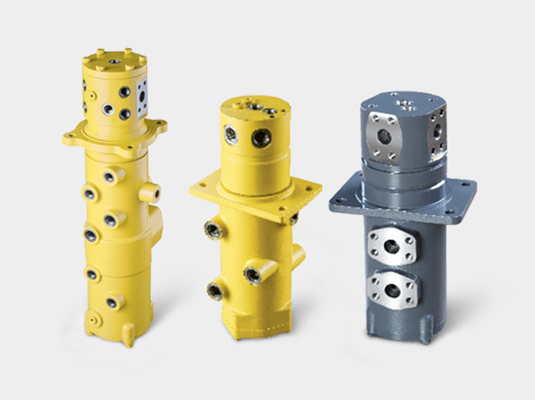
Internal leakage in fluid systems rarely stems from a single obvious flaw. More often it creeps through micro-gaps between mating surfaces that look perfectly flat to the naked eye. One configuration that consistently reduces this seepage is the precision-ground face seal with a spiral groove pattern etched into the stationary ring. As the shaft rotates, the grooves pump a thin film of fluid back toward the high-pressure side, creating a hydrodynamic barrier that works against the natural pressure drop. Engineers who specify this type typically pair it with a slightly softer carbon face on the rotating side, letting the harder ceramic or tungsten carbide ring establish the primary wear plane.
Elastomeric seals often fail at the extrusion gap, not at the contact face. A useful configuration here is the anti-extrusion ring made from a filled PTFE that sits on the low-pressure side of the groove. Under system pressure the elastomer deforms and wedges against this ring, closing off the pathway that would otherwise open between the housing bore and the shaft. Adding a controlled squeeze of 10 to 15 percent on the cross-section, rather than the default 20 percent seen in many catalog designs, reduces friction and heat buildup without sacrificing the initial contact stress needed to block low-pressure leakage.
For rotating equipment that handles volatile or hazardous fluids, a dual mechanical seal with a barrier fluid between the two sets of faces changes the leakage path entirely. Instead of relying on a single pair of lapped faces to hold back process pressure, the outer seal becomes the primary defense while the inner seal operates under a stable, lower differential. The barrier fluid can be maintained at a slightly higher pressure than the process, which means any leakage that occurs flows inward as a clean liquid rather than letting process fluid escape outward. This configuration demands a more complex support system, but the reduction in internal leakage across the pump or mixer casing is significant enough to justify the added hardware in many chemical plants.
Stainless Steel vs. Carbon Steel: Choosing the Right Body Material
When you line up stainless steel and carbon steel side by side, the differences go beyond just price. Stainless holds its own in wet or corrosive environments because the chromium in the alloy forms a passive layer that keeps rust at bay. Carbon steel, on the other hand, is tougher in terms of raw strength but needs coatings or paint to survive exposure to moisture.
Temperature also plays a big role in the decision. Stainless can handle both cryogenic conditions and high heat without losing much of its integrity, though it may cost significantly more. Carbon steel performs well at moderate temperatures and offers excellent thermal conductivity, but prolonged exposure to steam or aggressive chemicals will eat away at it unless it's lined or clad.
In most process plants, the choice often comes down to what's flowing through the body and how often it gets inspected. If the fluid is corrosive, stainless makes sense despite the higher upfront cost. If the system is dry, non-corrosive, and budget is tight, carbon steel remains a practical, widely used option. The real key is matching the material to the actual operating conditions rather than defaulting to the more expensive alloy.
How Many Flow Paths Does Your Application Actually Need?
Most teams overestimate the number of distinct flow paths their product needs. A login screen, a checkout, a configuration wizard—these are often treated as separate rivers when they share the same underlying channel. Instead of counting every possible click sequence, focus on the outcomes users are trying to reach. If two paths lead to the same result with only cosmetic differences, they are not separate flows; they are one flow with conditional styling.
Start by mapping the shortest route from entry to a completed goal for each primary user type. You will likely find three to five genuinely different journeys. Anything beyond that usually signals over-fragmentation caused by feature creep or internal team boundaries rather than real user needs.
A practical test is to ask whether a user would notice if two paths were merged. If the answer is no, merge them. Reserve distinct flow paths for moments where the sequence of decisions, data entered, or system responses diverges meaningfully. This keeps the application easier to navigate and much simpler to maintain over time.
Installation Steps That Prevent Twisting and Premature Wear
Twisting during installation is one of the most common root causes of premature wear in flexible hoses, belts, and cable assemblies. When a component is forced into a helical alignment rather than its natural lay, internal strands and reinforcement layers fight against each other under pressure or movement. The resulting stress concentrations quickly degrade the material, leading to cracks, leaks, or outright failure long before the expected service life.
The most straightforward preventive measure is to mark a straight longitudinal line along the hose or belt before loosening any fittings. As you tighten or route the assembly, watch that line closely. If it begins to spiral, stop and correct the orientation immediately—never rely on muscle memory or visual guesswork alone. Using two wrenches on hex fittings, one to hold the hose steady and one to turn the nut, also eliminates torque transfer through the hose body itself.
Finally, consider the role of clamping and support spacing. A hose that sags between distant clamps will twist under its own weight or fluid pulsation, even if installed straight initially. Keep supports close enough that the natural bend radius is respected, and route the assembly with gentle, sweeping curves rather than forced compound angles. Small adjustments during installation pay off in dramatically reduced wear and fewer unexpected shutdowns.
Warning Signs That Your Current Rotary Union Is Due for Replacement
A rotary union that has reached the end of its service life rarely fails without warning. One of the earliest indicators is a gradual loss of sealing performance, which often shows up as a faint but persistent leak around the housing or connection points. You might notice a thin film of fluid collecting on nearby surfaces, or a slow drop in system pressure that cannot be explained by other components. This kind of seepage tends to worsen over time, especially during temperature swings or when the machine runs at higher speeds, and it usually means the internal seals or bearing surfaces have worn beyond their tolerance.
Another clear sign is an increase in operating temperature or unusual noise coming from the union itself. As internal parts wear, friction increases, generating heat that can be felt on the outer shell or detected with an infrared thermometer. You may also hear a consistent grinding, squealing, or rattling sound that was not present when the unit was new. These symptoms often point to damaged bearings, misalignment, or contamination inside the fluid passages. If left unchecked, the added stress can accelerate wear on connected equipment, leading to more expensive repairs down the line.
Finally, pay attention to any change in fluid quality or flow consistency. A failing rotary union can introduce air into the line, causing sputtering or erratic delivery of coolant, hydraulic oil, or air. In some cases, you may see metal particles or dark discoloration in the fluid, indicating internal erosion or galling. When multiple smaller issues—such as slight weeping, intermittent noise, and fluctuating flow—start appearing together, it is usually more cost-effective to replace the union before a catastrophic failure halts production. Regular visual checks and logging of these warning signs can help you plan a replacement during scheduled downtime rather than dealing with an emergency shutdown.
FAQ
Focus on seal material compatibility, pressure rating, and port configuration. Look for hardened steel or stainless construction if you're running high pressure, and make sure the seals can handle your fluid temperature range. Don't overlook the bearing design—tapered roller bearings tend to hold up better under side loads than ball bearings.
Multi-passage units allow separate fluid channels in one housing, which is great for machines that need simultaneous hydraulic flow and return, or different pressures in different circuits. They're more complex and often larger, but they can eliminate multiple separate unions and simplify hose routing. The key is ensuring each passage is isolated properly with robust seals.
Yes, several manufacturers consistently produce reliable units. Deublin, Moog (through their GAT brand), DSTI, and Rotary Systems are often used in industrial machinery. For heavy-duty or custom applications, Dynamic Sealing Technologies (DSTI) and Moog GAT have strong reputations. It's worth comparing lead times and support, not just catalog specs.
Most leaks come from worn or damaged seals due to contamination, excessive speed, or incorrect fluid compatibility. Preventive steps include using filtered hydraulic fluid, staying within the rated speed and pressure limits, and doing periodic inspection of seal surfaces. If you notice a small drip, address it quickly—running a union with degraded seals can score the shaft and require a full rebuild.
Some models are designed for mixed media, but you have to be careful. Hydraulic oil and compressed air have very different sealing requirements—air requires different seal profiles and lubricity. It's generally better to use a dedicated passage for each medium or choose a union specifically rated for mixed service. Always confirm with the manufacturer before swapping media types.
Speed rating matters a lot, especially if the union is on a spindle or rotating drum. Running above the rated RPM accelerates seal wear and can cause heat buildup. If you have a high-speed application, look for unions with balanced mechanical seals or special low-friction seal materials. Don't just rely on the maximum RPM spec—factor in continuous vs. intermittent duty.
Many failures come from improper mounting—misalignment, excessive side load on the shaft, or using rigid pipe connections that prevent slight movement. Always use flexible hose connections near the union, support the housing properly, and avoid overtightening fittings. Also, make sure the fluid path is clean before startup; debris from new hoses can destroy seals quickly.
For unusual port configurations, extreme pressures, or tight space constraints, custom unions can pay off by reducing adapters and potential leak points. However, for most standard applications, a well-chosen off-the-shelf model works fine and costs less. Consider custom only when standard options force compromises in routing, flow capacity, or mounting.
Conclusion
Choosing a hydraulic rotary union that actually holds up starts with matching pressure and speed ratings to your system's real operating window—not just the peaks listed on a spec sheet. Overspeeding a unit or running it near its pressure limit shortens seal life dramatically. Seal configurations matter just as much; look for balanced mechanical seals or multi-lip designs that keep internal leakage low without creating excessive friction. Body material is another practical fork in the road. Stainless steel makes sense when corrosion resistance or washdown compatibility is non-negotiable, while carbon steel often provides a tougher, more cost-effective shell for heavy industrial loads. Before committing, count the flow paths your application truly needs—adding unused channels only increases leak points and complexity.
Installation habits often decide whether a rotary union runs quietly for years or fails within months. Use flexible hose connections and avoid forcing alignment; even slight angular or radial misalignment can twist internal components and cause premature wear. Support the union body independently instead of letting the piping carry its weight. Over time, watch for warning signs like intermittent pressure drops, visible weeping around the joint, rising operating temperature, or a new rhythmic vibration that wasn't there before. If seals are replaced repeatedly or the union no longer holds rated pressure at normal speed, it's usually cheaper and safer to replace the whole assembly than to keep chasing leaks. Paying attention to these details keeps fluid transfer smooth and downtime predictable.
Contact Us
Contact Person: Xiangpin Li
Email: [email protected]
Tel/WhatsApp: 86 186 1706 8578
Website: https://www.moflon.com