

Best Plate Rolling Machine Solutions from China for Superior Metal Fabrication
2026-10-15
When every millimeter counts in metal fabrication, the tools you choose make or break your output. China has long been a hub for heavy machinery, but finding a plate rolling machine that truly delivers precision and durability isn’t always straightforward. That’s where JIAN MENG steps in—offering engineered solutions that redefine what ‘superior’ means on the shop floor. In this guide, we’ll unpack what makes their machines stand out and why fabricators worldwide are paying attention.
The Quiet Evolution of Plate Rolling in China
Walk through any modern shipyard or wind-tower fabrication shop in China and you'll see steel plates being shaped with a precision that was rare two decades ago. The machines look similar, but the feel of the work has shifted. Plate rolling, once a brute-force trade dominated by trial and error, has quietly become a craft of measurement, feedback, and repeatability.
What changed wasn't a single breakthrough, but a slow accumulation of better rollers, smarter operators, and a supply chain that stopped accepting distortion as inevitable. Older three-roll machines demanded constant shimming and guesswork. Newer four-roll systems, paired with laser scanning and CNC controls, let a crew roll a cone or a cylinder to within a millimetre on the first pass. The skill didn't disappear; it moved from the hands to the head.
This evolution matters beyond the factory floor. It means pressure vessels fit together without rework, bridge girders meet camber specs the first time, and heavy equipment makers can quote tighter lead times without betting on re-rolls. The change is not advertised with fanfare, but in the steady decline of rejected plates and the rising trust of international buyers who once assumed Chinese rolling meant 'good enough' rather than exact.
What Actually Matters in a Rolling Machine Spec Sheet
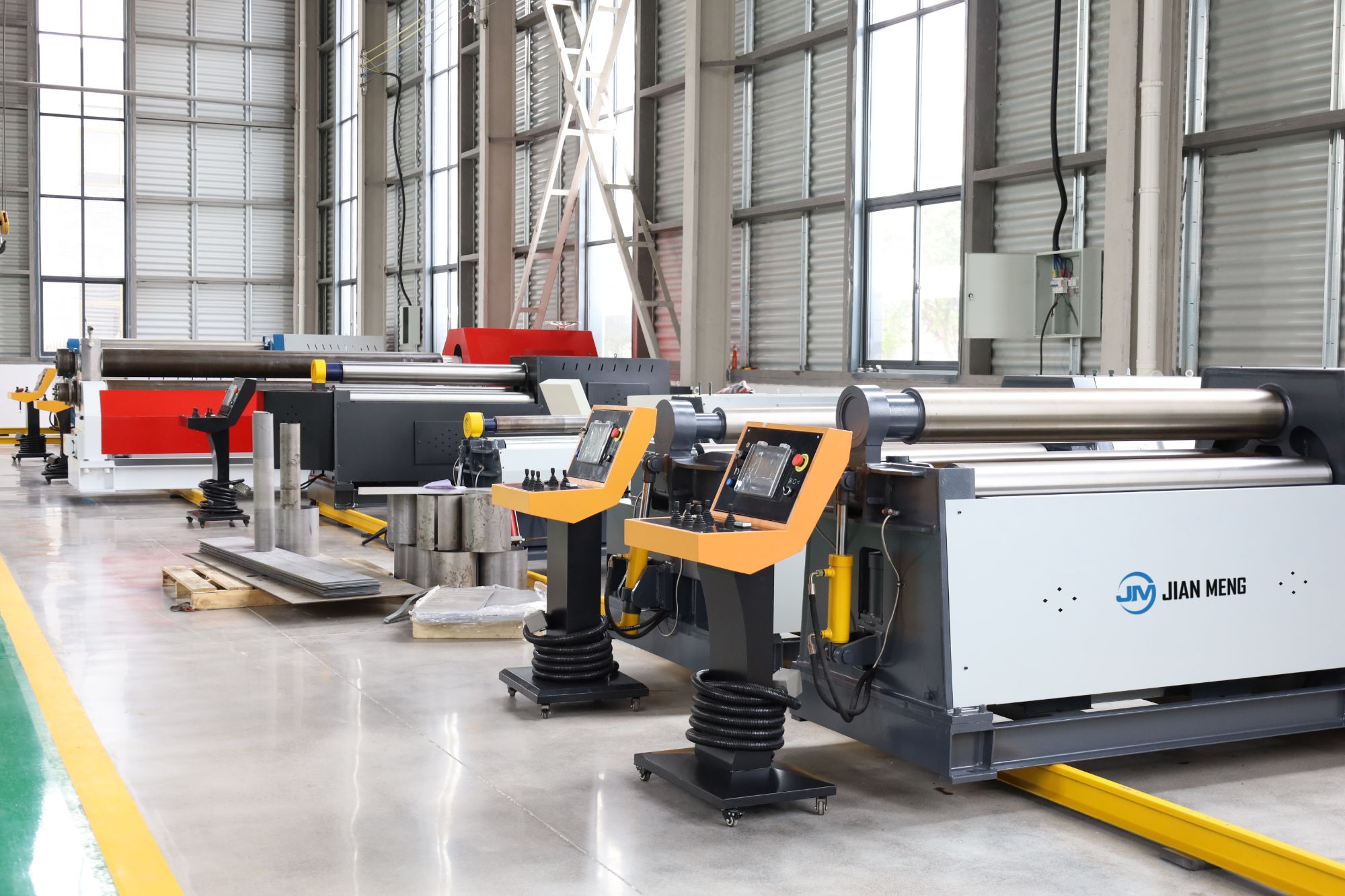
Most spec sheets bury you in numbers—roller diameter, motor horsepower, frame thickness—but those rarely tell you how the machine will behave on your floor. The first thing I look for is the maximum sheet width and gauge capacity at full bend. A machine that claims 16-gauge capacity often struggles once you push past 40 inches wide, because the load isn’t linear. Ask the manufacturer for a tested curve, not just a single rating. If they can’t provide one, assume the real limit is about seventy percent of what’s printed.
The next spec that actually changes your day is the minimum flange length and the inside radius range. Most shops get stuck on parts with short returns or tight hems, and a rolling machine that needs a two-inch flat to start a bend is useless for half your jobs. Look for adjustable back gauges and support arms that can handle a one-inch flange without marking the material. Also check the roll crowning method—manual shimming versus hydraulic crowning. Manual shimming works fine for long production runs of the same part, but it eats hours when you switch profiles twice a day.
Finally, ignore the top speed number. What matters is the acceleration and deceleration curve, because a machine that hits 60 feet per minute but takes ten feet to stop will never make accurate parts at the ends. Ask about the drive system: direct gear drive with servo feedback is far more repeatable than a chain drive with a VFD. And don’t forget the control interface—if you can’t store and recall tooling positions for at least twenty profiles, you’ll spend more time setting up than rolling. A spec sheet is a promise. Test the promise with your own material before you sign anything.
Matching Roller Capacity to Your Real Workload
Many equipment buyers still size a roller by drum width or operating weight alone. The actual work tells a different story. If your jobs involve thick lifts of cohesive soil, you need more than static weight—you need high centrifugal force and the right amplitude settings. On granular bases, a lighter vibratory roller can sometimes out-produce a heavier static unit simply because it matches the material response. Start by listing the materials you compact most often, the lift thickness you typically place, and the density spec you have to hit on every pass.
Then tie that list to realistic cycle times. A roller that looks productive on a spec sheet may spend too much time making extra passes to reach density on stiff clay, while a smaller machine running at correct frequency could finish the same lane faster. Don't forget turning radius and gradeability if you work on tight commercial pads or sloped subgrades. Matching capacity means the roller reaches spec consistently without forcing the crew to slow down or rework areas.
Custom Tooling Without the Custom Price Tag
For years, custom tooling meant either paying a premium for one-off molds or settling for off-the-shelf parts that nearly fit. The usual suspects—high setup fees, long lead times, minimum order quantities—made small runs impractical. We decided to break that pattern. Our approach uses modular base plates and interchangeable inserts, so you only pay for the custom geometry, not the entire tool body. The standard frame gets reused across jobs, which cuts material waste and machining hours without compromising repeatability.
The real difference shows up in how design changes are handled. Instead of starting from scratch when a dimension shifts, you swap out a lower-cost insert and keep the main fixture intact. In-house digital verification catches interference issues before any steel is cut, so rework almost disappears. That means a prototype taper or a production clamp can be ready in days, not weeks, and the invoice reflects the actual work done—not a padded "custom" surcharge.
This isn't about stripping away capability to hit a price point. It's about rethinking what deserves to be custom and what can be standardized. Whether you need five parts or five hundred, you get tooling that matches the spec exactly, without the traditional custom-price anxiety.
Where These Machines Earn Their Keep
The most reliable revenue for self-service equipment doesn't come from busy sidewalks or tourist strips. It comes from places where people have no exit strategy: hospital waiting rooms, airport gates after a delay, the basement of a college dorm at 2 a.m. A machine that dispenses phone chargers, basic toiletries, or a hot snack will quietly outperform a vending bank in a shopping center, simply because the customer has no nearby alternative.
Laundromats and car washes earn their keep in rental-heavy neighborhoods, where the math of owning a washer or a pressure washer never quite adds up. These machines don't need to be smart or stylish. They need to be dependable. A single out-of-order unit can drain a full day's profit, so the operators who last are the ones who treat maintenance as a line item, not a surprise.
Office break rooms and apartment lobbies are the quiet earners. Coffee machines, snack dispensers, and parcel lockers rarely draw attention, but their cash flow is steady because the location does the selling. A basic machine in a building with 400 employees will beat a feature-packed machine in a building with 40, every time.
After the Sale Support That Keeps Shops Running
Every order that leaves your warehouse is a promise you’ll still be there tomorrow. Real after-sale support isn’t a ticket queue—it’s the reason a customer’s printer jam at 8 a.m. doesn’t become a one-star review. For shops that rely on repeat business, the difference between a quiet week and a chaotic one often comes down to how quickly you answer the “it’s broken, now what?” email.
Think about the last time you needed a replacement part or a refund that didn’t feel like a battle. That relief is what keeps buyers loyal. It means keeping spare inventory for common failures, training staff to actually read the complaint before replying, and building a return process that doesn’t punish the customer for your packaging mistake. When support runs smoothly, it fades into the background—and that’s exactly what keeps the register ringing after the initial sale.
FAQ
Focus on frame rigidity, roll shaft material and heat treatment, hydraulic pressure consistency, and whether the manufacturer uses stress-relieved welded structures. A machine that can hold roll parallelism under full load matters more than a long list of features.
Many offer modular side rolls, CNC-controlled lower roll adjustment, and can add variable geometry for cone bending. The better suppliers will ask for your exact material spec, minimum diameter, and length tolerance before recommending a configuration.
Yes, if you choose a factory with in-house machining and testing. Look for hardened rolls, branded hydraulic components, and a documented run-out test. Avoid machines where the supplier cannot show you a recent installation in a similar production setting.
High-tensile steel demands more than extra motor power. Check the crowning system, whether rolls are ground to compensate for deflection, and the machine's rated yield strength. A machine rated for mild steel will struggle and wear quickly with high-strength plate.
It should be a primary decision factor. Remote troubleshooting, spare parts availability, and clear hydraulic schematics make a huge difference. Ask for a list of consumable part numbers and whether the supplier stocks them or ships within days. Local service partners are a plus.
Absolutely. Many provide feed tables, conveyors, and control interfaces that talk to a central PLC. The key is to define the handshake points early: material dimensions, cycle time, and whether the machine will operate in semi-auto or full-auto mode.
Underestimating the required pre-bending capacity, ignoring the minimum bending diameter for the actual plate thickness, and choosing a machine based on maximum width only. Also, some buyers skip factory acceptance tests and then face alignment issues at installation.
Request a live video walkthrough, ask for close-up photos of weld joints and bearing housings, and check the roll material certificates. A reliable supplier will have no problem showing a machine under load or sharing test data from a recent customer.
Conclusion
Over the past decade, Chinese plate rolling equipment has moved past the noisy, low-cost stereotype and into a quieter phase of engineering refinement. Shops that once had to choose between expensive European builds and questionable imports now find machines with better frame rigidity, smarter hydraulic controls, and tighter roll parallelism. When reading a spec sheet, the numbers that matter aren't always the headline maximum thickness or width. Pre-bending capacity, top roll diameter, and the actual yield strength the machine can handle without losing roundness tell you far more about daily performance. Matching those figures to your real workload—not your dream project—is what prevents a machine from becoming either a bottleneck or an oversized paperweight.
What makes the difference in day-to-day use is how easily a machine adapts to the jobs you actually run. Custom tooling, like special top rolls or extended shafts for pipe sections, no longer requires a six-month lead time or a premium price tag. Many Chinese builders now keep common modifications in stock or machine them quickly from domestic steel, which keeps replacement costs low. These machines earn their keep in structural steel shops, tank fabrication, shipyard sub-assembly, and agricultural equipment lines where rolling 10 to 25 millimeter plate is a daily reality. Supporting that workload means having access to clear wiring diagrams, responsive spare parts channels, and technicians who understand the machine rather than reading from a translated manual. That kind of after-sale support, once rare, is now the quiet reason shops stick with a particular supplier.
Contact Us
Contact Person: Jeanie
Email: [email protected]
Tel/WhatsApp: +86 19805122954
Website: https://www.jianmeng.com