
Bogie Hearth Furnace Explained: How It Works and Why Manufacturers Choose It
2026-08-27
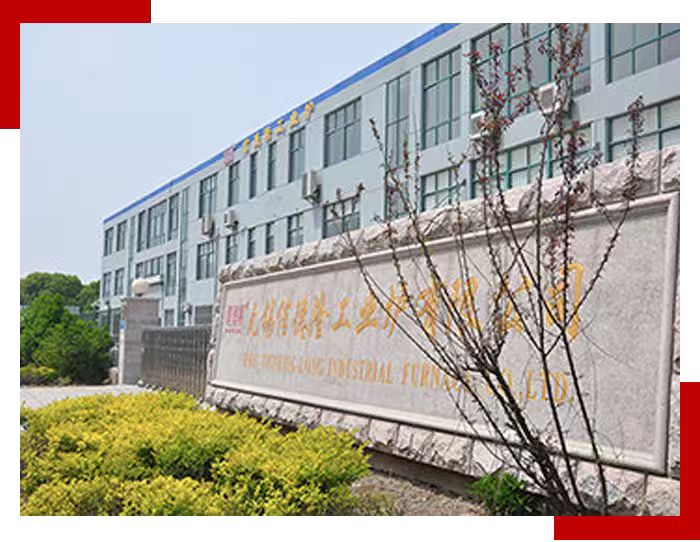
Temperature control makes or breaks heat treatment—yet most furnaces still struggle with heavy loads, tight cycles, and the precision modern production demands. The bogie hearth furnace was designed to solve exactly that. In this article, we break down how its moving hearth works and why more manufacturers are switching away from conventional setups. If you're comparing options, the engineering details ahead might just reshape your shortlist. And when it comes to building these systems for real-world demands, THINKING-LONG has earned a name worth knowing.
What a Bogie Hearth Furnace Does That Others Can't
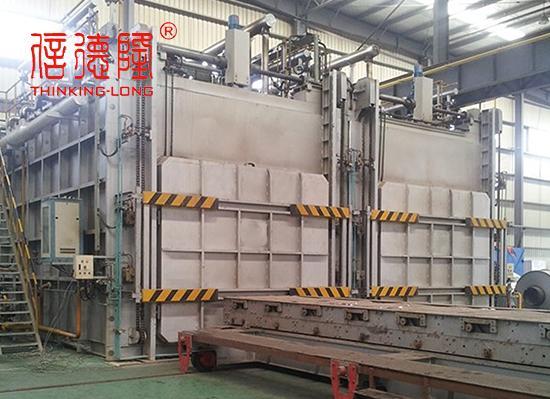
Most industrial furnaces move parts through heat in straight lines or simple rotations, but a bogie hearth furnace breaks that pattern by letting the entire load ride out on a movable platform. This means awkward, oversized, or heavy components—things that would jam a roller hearth or demand risky manual handling in a bell furnace—can be loaded and unloaded away from the heat zone. The bogie itself rolls on rails, so you get full access from above and the sides, which changes how operators think about tooling and placement.
The real edge comes when you need uniform heating across a dense or irregular stack. Because the bogie can be wheeled into a tightly insulated chamber and sealed with sand or ceramic gaskets, the furnace holds temperature much more evenly than a pusher furnace bumping parts along. You can run long, multi-day cycles for heavy forgings or preheat massive weldments without cold spots stealing performance. And unlike car-bottom designs that still tie you to a fixed loading position, a bogie hearth can index multiple hearths—one being loaded while another soaks, another cools—so production never waits on crane time.
That flexibility extends to atmospheres. Add a retort or controlled gas flow and the same bogie hearth handles bright annealing of stainless coils or stress relief of titanium frames, jobs where oxidation would ruin the final spec. Other furnace types force you to choose between shape, capacity, or atmosphere control. A bogie hearth doesn't ask you to compromise; it just rolls the heat where you need it and lets you drag the work back out without breaking the thermal seal mid-process.
A Single Heating Cycle from Start to Finish
A heating cycle doesn't begin with a dramatic surge. It starts when a thermostat or controller notices the temperature has drifted a degree or so below the target. A relay clicks, current reaches the heating element, and the element's resistance starts converting electricity (or combustion energy) into heat. At this stage, you rarely feel anything right away—the thermal mass of the surrounding air, water, or material absorbs the early output almost greedily.
As the element stays on, convection or conduction takes over. Air moves across the heat source, picks up warmth, and carries it into the cooler zones. In a room, you might notice the air near the ceiling warming first; in a boiler, the water temperature climbs steadily. The controller keeps sampling the sensor, but it's not waiting for an exact number. Most systems allow a small overshoot because the element can't cool instantly, and a tight cutoff would cause rapid on-off fluttering.
The end of the cycle is just as gradual as the beginning. When the sensor reads the upper limit of the setpoint range, the relay opens and power stops flowing. Residual heat continues to radiate or circulate for several minutes—sometimes a fan keeps running to extract that leftover warmth. Then the system sits idle, waiting for the temperature to fall just enough to begin the next cycle. It's a loop defined by small thresholds, not a single dramatic event.
The Components That Handle the Real Abuse
At the edge, the request filter is what absorbs the first wave. It doesn't just glance at IP reputation—it strips down headers, enforces hard limits on body size and content type, and rejects malformed multipart streams before they ever touch application logic. This layer kills most automated junk without mercy, because nothing gets a second chance if it trips a structural rule.
Further in, the challenge broker handles the ambiguous traffic: sessions that look mostly right but move too fast, carry mismatched TLS fingerprints, or send headers in an odd order. Instead of blocking outright, it issues proof-of-work or interactive checks to make abuse expensive. Anything that still fails gets dropped into a quarantine store—an isolated bucket for offline replay and forensics, keeping live databases and user caches completely clear of poisoned payloads.
Why Shops Stick with This Design After Trying Others
Switching shelf layouts or display fixtures often feels exciting at first, but many store owners quietly drift back to this particular design within a few months. The main reason isn't habit—it's that the layout simply works better for daily operations. Staff can restock without blocking aisles, customers naturally move from front to back, and impulse buys happen near the counter without any forced marketing tricks. Compared to fancier alternatives that look great in photos but create bottlenecks, this design keeps the flow smooth even on busy weekends.
Another factor is how the design handles seasonal changes and new product lines. Many shops test modular or themed displays, only to find they require constant adjustment and leave awkward empty spaces. This layout, by contrast, has enough flexibility to absorb a new shelf insert or a temporary promotion zone without breaking the overall rhythm. Owners who have tried rotating endcaps or angled shelving often report that those experiments look clever for a week, then start to feel cluttered. This design avoids that trap by keeping the main sightlines clean and letting products breathe.
Perhaps the most telling sign is that staff rarely complain about this setup. In other designs, you'll hear grumbles about hard-to-reach corners or displays that fall over when customers touch them. Here, the spacing between units and the height of the shelves match how people actually move and reach. That may sound like a small detail, but it's exactly the kind of thing that convinces a shop owner to stop experimenting. After a few failed attempts with something trendier, they realize this design isn't just the default—it's the one that supports the business quietly, day after day.
The Jobs That Demand This Kind of Furnace
Walk into any serious blacksmith or farrier shop and the furnace is rarely an afterthought. These trades need a unit that holds a narrow temperature band across the whole chamber and recovers fast after the door opens. A farrier shaping shoes all day or a smith working high-carbon tool steel won't put up with cold spots or a lining that cracks after a few weeks.
Foundry workers and metal casters lean on the same equipment for different reasons. Melting bronze, aluminum, or cast iron punishes the lining with repeated thermal shock, and even a small temperature drift can ruin a pour—overshoot by fifty degrees and the casting comes out brittle or riddled with gas pockets. For them, the furnace is a process instrument, not just a heat source.
Glassblowers and ceramicists round out the group, though their demands shift again. Glass studios need steady, even heat over hours-long sessions, while ceramic shops often push the same furnace through burnout and glaze schedules. In these trades, the furnace isn't a side tool. It's the quiet backbone of the entire workday.
Simple Checks That Prevent Costly Repairs
Most homeowners only notice a problem after it has already turned into a hefty bill. Yet a handful of small, routine checks can stop silent damage long before it spreads. Peeking under sinks for moisture, listening for a toilet that runs a few seconds too long, or running your hand along baseboards for soft spots takes minutes but often reveals early warnings. These small habits don't just preserve your home—they keep your budget from taking an unexpected hit.
It's worth making a short loop around the house once a month. Jiggle faucet handles to spot loose fittings, give the water heater a quick once-over for rust flakes, and glance at the AC drain line if it's accessible. Once you start noticing how your home normally sounds and feels, the odd drip or faint musty smell will stand out like a sore thumb. Catching those subtle changes early is what separates a quick fix from a full replacement.
No special skills or tools are required—just a bit of curiosity and a flashlight. The goal isn't to become a weekend plumber or electrician, but to notice when something is off and call in help while the repair is still minor. Over time, these simple checks take less than ten minutes and can save thousands in emergency work. Your future self will thank you every time a potential disaster turns out to be nothing more than a tightened valve or a replaced washer.
FAQ
A bogie hearth furnace is essentially a box furnace with a movable floor. Instead of a fixed hearth, the entire bottom section rolls out on wheels or rails, allowing you to load massive parts outside the hot chamber. This is a big departure from conventional box furnaces where you have to place components through a door opening. With the bogie design, you can use overhead cranes or forklifts without worrying about tight clearances. The furnace is commonly used for stress relieving, annealing, and tempering of large weldments, castings, and forgings.
The hearth sits on a motorized or manually driven carriage that runs along floor-level tracks. Once the load is secured, the carriage is rolled back into the furnace body, and the door closes. Seals around the hearth perimeter—often sand troughs or ceramic fiber gaskets—prevent hot gases from escaping and cold air from entering. Heating elements or burners then bring the chamber to the target temperature, while circulation fans distribute heat evenly. After the soak time, the hearth rolls out again, and the load can cool in open air or under controlled conditions.
The main reason is accessibility. Large parts like pressure vessels, heat exchanger shells, or long shafts are difficult to maneuver inside a fixed chamber. A bogie hearth lets you load them in the open, where crane access is straightforward. The floor structure is built to handle extreme weight, often using reinforced steel and heavy-duty wheels. This reduces handling damage and speeds up turnaround. Manufacturers also appreciate that one furnace can accommodate a wide range of part geometries simply by changing the loading fixture on the hearth.
Common processes include stress relieving after welding, full annealing, normalizing, and tempering. It is also used for preheating before forging or for aging treatments. Because the chamber can be large and temperature control is good, it suits long soak cycles where thermal uniformity is critical. For example, a large steel casting might be heated to 600–650°C for stress relieving, held for several hours, then cooled slowly. The bogie design allows the whole load to be removed and replaced quickly between cycles, which is valuable in job-shop environments.
Both gas-fired and electrically heated versions are common. Gas burners tend to heat large chambers rapidly and may be cheaper to operate in regions with low natural gas prices. Electric heating elements offer precise temperature control and a cleaner working environment, but electricity costs can be higher. The decision often comes down to local utility rates, required temperature range, and environmental regulations. Some furnaces use radiant tubes for gas to keep combustion gases away from the workload, which is important for surface quality.
Insulation directly affects energy consumption and heat distribution. Modern bogie hearth furnaces use lightweight ceramic fiber modules instead of traditional firebrick. This reduces heat storage, so the furnace heats up faster and uses less energy per cycle. The fiber lining also minimizes hot spots and cold spots when combined with a well-designed airflow pattern. Door and hearth seals are equally critical—any leakage around the moving hearth will cause temperature gradients and wasted energy. Regular inspection of seals and insulation keeps efficiency from degrading over time.
Key maintenance includes checking the hearth carriage wheels, rails, and drive motor for wear or misalignment. Seals around the hearth and door need periodic replacement because they are exposed to thermal cycling and mechanical abrasion. Heating elements or burner nozzles should be inspected for hot spots, corrosion, or blockage. The insulation lining may crack or shrink over time, especially near the door opening. Keeping the hearth track clear of scale and debris is also important for smooth movement. A weekly visual inspection plus a monthly thermal survey can catch most problems early.
Yes, many are integrated with programmable logic controllers and supervisory control systems. Hearth movement, door operation, temperature ramps, and soak times can be automated to run unattended. Recipes can be stored for different part numbers, reducing operator error. Some facilities add automated loading and unloading stations where the hearth moves between the furnace and a transfer car. This level of automation is especially useful for repeat production runs, though smaller job shops often keep manual controls for flexibility.
Conclusion
A bogie hearth furnace doesn't just handle big loads—it handles the kind of heavy, awkward pieces that would stall most other furnace designs. The entire floor rolls out on rails like a flatbed railcar, so you can load massive weldments, long shafts, or bulky castings right at floor level with a forklift or crane. Once the bogie glides back inside, the heating cycle moves through a carefully staged ramp-up, a soak at the target temperature, and a controlled cool-down that avoids thermal shock. The parts that really take the abuse are the high-temperature alloy hearth rails, the insulated door seal, and the drive system that pushes tons of steel in and out without jamming. These components get hammered every single day, yet they're exactly what makes the furnace dependable shift after shift.
Shops that experiment with cheaper fixed-hearth furnaces or retrofitted car-bottom conversions usually come back to a purpose-built bogie hearth because nothing else gives you the same combination of load capacity, even heat distribution, and low-stress loading. Jobs like stress relieving after welding, annealing large forgings, normalizing plates, and heat treating long structural members are exactly what this design was built for. Keeping one running isn't complicated either—most unexpected breakdowns come from ignoring a handful of simple things: checking the hearth roller bearings for flat spots, making sure the sand seal trough is topped up and level, and verifying that the door limit switches actually stop the drive before the bogie moves. A few minutes of inspection each week prevents the kind of failure that stops production cold and sends the maintenance crew scrambling.
Contact Us
Contact Person: Qian Xijun
Email: [email protected]
Tel/WhatsApp: 8613961736750
Website: https://www.thinkinglong.com/