

BOPP Masterbatch Recommendations for High-Quality Film Production
2026-08-16
Ask any BOPP line operator what keeps them up at night, and masterbatch quality will come up more often than not. Getting the right dispersion, color consistency, and processing stability without sacrificing film clarity is a balancing act. That’s why Xinwancai put together these practical recommendations—so you can avoid common pitfalls and produce film that consistently meets specification.
Dispersion Uniformity and Its Direct Impact on Haze Levels
Achieving a narrow haze range starts well before curing. When pigments or fillers clump into micro-aggregates, each cluster becomes a scattering center that pushes light off-axis. A uniform dispersion keeps particle-to-particle spacing predictable, so transmitted light stays coherent and surface clarity remains stable across the batch.
The relationship is not linear. A few large agglomerates can raise haze more than a slight overall shift in particle size, because scattered intensity scales with the sixth power of particle diameter. This is why two formulations with identical average particle size often show very different haze readings—one simply carries more invisible, poorly dispersed clusters.
Practical control depends on wetting kinetics and shear history. Replacing a high-speed disperser with a longer, low-shear mixing step often gives better uniformity without breaking fragile particles. Monitoring dispersion through drawdown panels rather than grind gauges catches localized haze before it becomes a full-batch problem.
Carrier Resin Mismatch: A Frequent Culprit in Film Defects
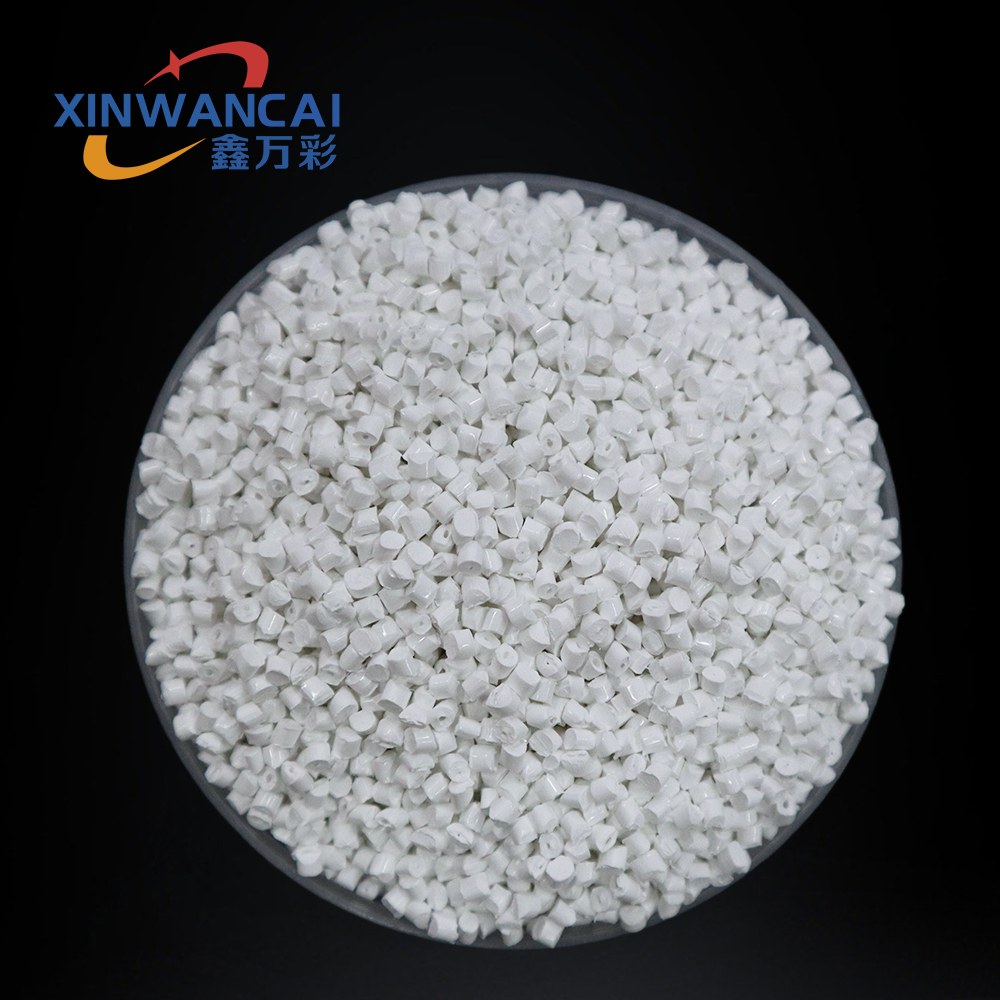
Carrier resin mismatch rarely announces itself with a single dramatic failure. Instead, it leaves a trail of small, inconsistent issues across the film: occasional fisheyes, faint haze bands, or a subtle loss of tear strength in one direction. Because the carrier polymer in a masterbatch can be chemically close to the base resin yet still differ in melt flow, branching, or comonomer content, processors often chase downstream variables—temperature profiles, screw speed, die gaps—before checking the masterbatch itself.
In blown film lines the problem becomes more visible. A carrier with a lower melt index than the main resin tends to form micro-domains that resist elongation, which can surface as gel-like specks or rough skin layers. The opposite case, where the carrier flows too easily, often creates streaks and poor dispersion of pigments or additives. Multilayer structures amplify the effect because each layer experiences different shear and cooling rates, so a mismatch that is tolerable in monolayer film can cause delamination or optical defects in coextruded products.
Diagnosing the mismatch starts with comparing melt flow rates under realistic shear conditions, not just standard MFI values. A quick lab-scale blown film trial using the same base resin and a small addition of the masterbatch can reveal defects that raw data miss. Switching to a carrier resin matched in comonomer type and narrow molecular weight distribution usually clears up the problems without touching the main extruder settings.
Plate-Out Prevention for Sustained High-Speed Production
Keeping a line running fast without interruptions means paying close attention to what accumulates on tooling and downstream equipment. One overlooked source of trouble is the gradual buildup of low-molecular-weight fractions that migrate from the melt under heat and shear. Rather than relying on periodic wipe-downs, many processors shift to additive packages that reduce volatile byproducts at the source. Selecting stabilizers with lower volatility, paired with a carefully tuned processing window, often cuts visible residue by half or more within the first few shifts.
Tool surface finish plays a bigger role than most realize. A mirror-polished die or mold face gives deposits less mechanical anchoring, making any film that does form easier to remove before it hardens. In sustained high-speed operations, even a 10% reduction in plate-out frequency translates into meaningful uptime. Some teams go further by applying thin ceramic or nitride coatings to critical surfaces; these not only resist adhesion but also tolerate frequent cleaning cycles without losing dimensional accuracy.
Finally, monitor the melt temperature profile rather than assuming the barrel settings tell the whole story. Localized overheating near screw tips or hot-runner manifolds accelerates decomposition and plate-out formation. Installing additional thermocouples or using infrared imaging during trial runs can reveal hot spots that need correction. Once temperatures are balanced and residue-resistant materials are in place, high-speed lines often see plate-out intervals stretch from hours to days, allowing operators to focus on output instead of constant scraping.
Achieving the Right Slip/Antiblock Balance for Ultra-Thin Films
Ultra-thin films, those under roughly 12–15 microns, force a rethink of slip and antiblock additives because the margin for error shrinks with the gauge. Standard loading levels that work in 25-micron film often leave a 10-micron web either too tacky or too hazy. The real challenge isn't just picking the right amide or silica—it's managing how these additives distribute through a much thinner cross-section. A film this thin has less bulk to act as a reservoir, so migration timing and particle size become disproportionately important.
With slip agents like erucamide or oleamide, the goal is a controlled bloom to the surface. In ultra-thin gauge, that bloom can happen too fast because the diffusion path is short. If the surface saturates early, you get a drop in coefficient of friction but also a risk of plate-out on rollers and a greasy feel. Antiblock particles, typically synthetic silica or diatomaceous earth, counter this by creating micro-roughness that reduces film-to-film contact. But their average particle size must sit well below the film thickness—ideally under 3 microns for a 10-micron film—or you'll see pinholes and local haze. A practical approach is to pair a fast-blooming primary amide with a secondary amide that migrates more slowly, plus a low-dust antiblock masterbatch with a narrow particle size distribution.
Process conditions also steer the balance. Faster chill-roll or air-ring cooling traps more slip agent inside the film, delaying the surface effect and extending its life. Slower cooling lets more amide reach the surface before winding, which can help if you need immediate slip for high-speed packaging but hurts if the film sits in inventory. On-line coefficient-of-friction measurements and haze checks every few rolls help tune the additive package without waiting for lab results. The sweet spot is usually a coefficient of friction between 0.2 and 0.35, a blocking force low enough to avoid unwind problems, and no visible loss of clarity—numbers that are harder to hit as the film gets thinner but are achievable with the right combination of additives and cooling control.
Thermal Stability Limits in Multilayer BOPP Coextrusion
In multilayer BOPP coextrusion, the practical thermal window is rarely defined by a single resin. A thin heat-seal skin based on a propylene-ethylene copolymer may start degrading 15–25°C below the homopolymer core, yet the combined melt stream must survive the same die temperature and downstream stretching oven. This mismatch forces line operators to run nearer the degradation onset of the most sensitive layer, leaving little room for fluctuation.
Local overheating tends to show up first as gel particles or fisheyes at the edges of the cast sheet, where residence time in the die is longest. Once these crosslinked or oxidized fragments pass through the machine-direction and transverse stretching stages, they become visible optical defects or weak spots that can initiate film breaks. Running the extruders slightly cooler helps protect the skins, but it also risks incomplete melting of high-melting core layers, producing interfacial streaks and uneven thickness that worsen during orientation.
Plants often try to stretch the operating window by adjusting screw profiles, using lower-shear barrier designs, and adding stabilizer packages tailored to the copolymer skins. However, the thermal stability limit in a complex multilayer structure is ultimately a compromise between melt uniformity and degradation resistance. Even minor layer ratio changes—such as increasing the thickness of a thermally fragile skin—can shift the safe processing temperature enough to affect bubble stability and final haze.
Fisheye Reduction Through Strategic Additive Formulation
A critical hurdle in wide-angle optical design is the fisheye distortion that bends straight lines into exaggerated curves near the frame edges. Rather than relying solely on complex lens reshaping or digital correction, a more elegant path lies in strategic additive formulation—carefully selected compounds blended into the lens material itself. These additives alter the refractive index gradient across the glass or polymer, gently steering peripheral light rays toward a more rectilinear projection. By tuning the concentration and dispersion profile of nano-scale dopants, engineers can suppress barrel distortion at its optical origin, preserving edge sharpness without the computational artifacts that often accompany software fixes.
The art of this approach resides in balancing optical clarity with distortion control. Certain metal-oxide micro-particles, for example, can be dispersed uniformly to raise the refractive index near the lens periphery while leaving the center nearly untouched. This spatially graded formulation mimics the corrective effect of aspherical surfaces but within a simpler spherical blank, reducing both production cost and weight. Moreover, additives with negative dispersion characteristics can offset chromatic aberrations that tend to worsen when distortion is aggressively corrected by traditional means. The result is a more natural, film-like rendering where straight architecture remains straight, and the viewer forgets the lens ever had a fisheye tendency.
Practical implementation demands rigorous testing of additive compatibility with base resins or glasses, as even slight phase separation can introduce haze or birefringence. Yet when the formulation is dialed in, the payoff is substantial: a lens that requires fewer corrective elements, transmits more light, and delivers cleaner geometry straight out of the camera. For action cameras, drone optics, and automotive surround-view systems, this additive-driven strategy is quietly replacing brute-force optical stacks, offering a lighter, simpler, and more cost-effective route to true wide-angle fidelity.
FAQ
For high-end BOPP film, focus on anti-block, slip, and antistatic masterbatches. Anti-block prevents film layers from sticking during winding and converting; slip reduces friction for smooth handling; antistatic dissipates charges that attract dust. Depending on end use, you may also add optical brightener or matting masterbatch.
Carrier resin should match the base PP closely in melt flow and crystallinity. A mismatch can cause poor dispersion or visible gels. For BOPP, many processors use a high-flow homopolymer PP carrier with MFI around 8-12 g/10 min, but verify compatibility with your specific resin grade.
Start with 0.5-2% by weight, depending on film thickness and desired haze. Thinner films often need the higher end because surface effects are more pronounced. Always run a trial to balance blocking resistance against clarity loss.
Migration rate of the slip additive depends on film crystallinity, storage temperature, and corona treatment. Higher crystallinity slows migration, so film may feel less slippery right after production but improve over days. Also, excessive corona can oxidize the surface and interfere with slip.
Yes, combination masterbatches are available, but be cautious with interactions. For example, high levels of antistatic can reduce slip performance, and some anti-block agents increase haze. Request lab-scale trials or ask the supplier for a recommended combo that is already validated for BOPP.
These defects usually come from poor dispersion, incompatible carrier resin, or moisture in the masterbatch. Pre-dry hygroscopic additives and lower the melt temperature slightly if thermal degradation is suspected. Check the masterbatch particle size—fine, uniform granules help achieve consistent mixing.
Additives like anti-block and slip can scatter light and reduce clarity if overdosed or poorly dispersed. Choose masterbatches with small particle size and high-purity additives. For glossy films, avoid wax-based slip that blooms heavily; instead use a moderate level of a high-clarity slip additive.
Beyond standard COF, haze, and blocking tests, check gel count on a cast film line, measure heat seal strength if film will be metallized or laminated, and evaluate migration after 7 days of aging. Also run a printability test if the film will be printed, because some additives change surface energy.
Conclusion
In high-quality BOPP film production, masterbatch choices often determine whether the line runs clean or battles persistent haze and fisheyes. Low haze depends heavily on dispersion uniformity; even minor pigment agglomerates scatter light and raise haze values, so the carrier resin must closely match the polypropylene grade to avoid localized viscosity differences that create micro-domains. Carrier resin mismatch remains a frequent culprit behind gels, streaks, and unstable bubble formation. For sustained high-speed production, plate-out prevention is equally critical—low-molecular-weight additives and incompatible slip agents tend to migrate to die lips and chill rolls, forcing costly downtime. Selecting masterbatches with controlled additive blooming and thermal stabilizers suited to multilayer coextrusion temperatures helps keep surfaces clean.
Ultra-thin films call for a careful slip/antiblock balance; too much slip impairs winding and metallization, while excessive antiblock raises haze and can scratch film surfaces. A well-formulated masterbatch typically combines high-purity synthetic silica with a migrating slip package at tuned ratios, often 1000–3000 ppm total, to maintain web handling without sacrificing clarity. Thermal stability limits in multilayer BOPP coextrusion demand pigments and additives that withstand 240–260°C processing without yellowing or generating volatiles. Fisheye reduction, finally, hinges on strategic additive formulation—dispersing aids, melt-filtration-friendly particle sizes, and low-gel carrier resins work together to minimize the unmelted polymer clusters that degrade both film appearance and mechanical strength.
Contact Us
Contact Person: JACK
Email: [email protected]
Tel/WhatsApp: 86 18650130917
Website: https://www.xinwancai.com/