

China Aromatic Acetoxy Intermediate Properties and Industrial Applications Worth Knowing
2026-11-18
When a single molecule quietly dictates the purity of a final product, it deserves more attention than it usually gets. Aromatic acetoxy intermediates sit at that exact intersection, influencing reaction pathways, downstream stability, and the practical economics of industrial synthesis. Yet most discussions stop at the chemical name, leaving production teams to figure out the rest. This guide looks at the properties that actually matter in plant-scale operations and the applications where these intermediates prove indispensable. Drawing on production insights from DSL Chemicals, it moves beyond the datasheet to explore why sourcing, handling, and quality consistency make a measurable difference in real-world performance.
What Makes Aromatic Acetoxy Intermediates Structurally Different
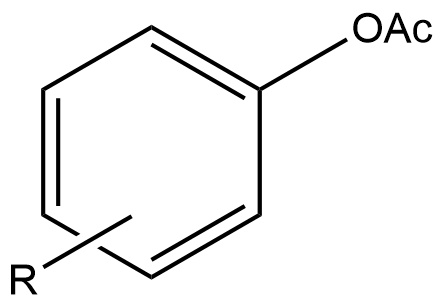
The unusual structure of aromatic acetoxy intermediates comes largely from the dual character of the acetoxy substituent. It is not simply an oxygen donor or a carbonyl withdrawer. The ring-attached oxygen holds lone pairs that can feed into the aromatic π system, while the adjacent carbonyl tugs electron density in the opposite direction. Because these two effects operate on different length scales, the overall charge distribution across the ring becomes uneven and highly sensitive to the position of the acetoxy group.
Substitution geometry introduces further distinctions. An ortho acetoxy group often sits close enough to neighboring substituents to adopt a twisted conformation, weakening overlap between the oxygen lone pairs and the aromatic ring. In para derivatives, the acetoxy unit aligns more readily with the conjugated path, allowing stronger resonance communication. Meta isomers depend mostly on inductive effects, so their reactivity and directing behavior depart from both ortho and para patterns. These positional shifts make simple classifications based on activating or deactivating character considerably less reliable.
Conformational flexibility adds another layer of structural difference. Unlike rigid aromatic substituents, the acetoxy group can rotate around the aryl-oxygen and oxygen-carbonyl bonds, and the preferred geometry responds to solvent polarity, temperature, and nearby functional groups. This flexibility changes how the intermediate packs in crystals, how it approaches a reagent, and whether the acetoxy group acts as a leaving group, a directing group, or a participant in an acyl transfer. Such behavior separates aromatic acetoxy intermediates from their more conformationally restricted ether or ketone counterparts.
Solubility and Thermal Profiles That Influence Real-World Use
A compound can look promising on paper and still fail in practice if it refuses to stay in solution under ordinary conditions. Poor aqueous solubility often means lower absorption, unpredictable plasma levels, and the need for formulation workarounds such as co-solvents, solid dispersions, or salt forms. These adjustments are not always benign; they can change the handling properties of a final product and complicate manufacturing at scale.
Thermal behavior adds another layer of constraint. Materials that decompose near their melting point or undergo unwanted polymorphic transitions during heating can limit options for drying, milling, or hot-melt extrusion. In storage, exposure to routine temperature swings may gradually alter crystallinity, moisture uptake, or chemical stability, affecting shelf life even when accelerated testing does not capture the full picture.
Real-world use ultimately depends on how these two profiles interact. A solubility enhancer might improve dissolution but lower the glass transition temperature enough to cause sticking during tablet compression. Conversely, a thermally robust form may exhibit slower dissolution in gastric fluid. Early attention to both parameters helps avoid late-stage reformulation and keeps the process closer to what actually happens in the clinic, on the shelf, and in the patient's hands.
China’s Role in Scaling Up Reliable Production Routes
China has quietly reshaped the global supply chain for several production routes that matter far beyond its own borders. Rather than relying on a single dominant method, Chinese manufacturers have built overlapping networks of suppliers, allowing them to switch between approaches when costs, materials, or regulatory pressures shift. This redundancy is not accidental; state-backed industrial parks and regional clusters have spent years aligning raw material providers with midstream processors, creating a buffer against disruptions that would stall production elsewhere.
A closer look at photovoltaic cells shows how this plays out in practice. While many countries focused on laboratory efficiency records, Chinese firms poured resources into tightening tolerances on existing lines, pushing yields higher without chasing entirely new chemistries. The result is a route that is dependable not because it is the most advanced, but because every step has been stress-tested at scale. Similar patterns appear in lithium iron phosphate battery production, where continuous process improvements have lowered defect rates to levels that once seemed unattainable outside controlled cleanrooms.
What makes this model particularly hard to replicate is its feedback loop. Each production run generates data that feeds back into equipment adjustments, supplier contracts, and worker training programs. Over time, the knowledge embedded in these routines becomes harder to separate from the physical assets themselves. For countries trying to build their own reliable routes, the lesson is not simply to buy machinery or license patents, but to create conditions where operators, engineers, and local suppliers can develop the same tacit understanding through repeated, low-cost iterations.
Industrial Sectors Where These Intermediates Do the Heavy Lifting
In pharmaceutical production, the real bottleneck is rarely the final tablet or injectable; it is the multi-step synthesis leading to the active molecule. Specialty intermediates such as chiral building blocks, heterocyclic cores, and protected amino acid derivatives compress these routes. A well-chosen intermediate can turn an eight-step sequence into a four-step one, cutting solvent use and making scale-up less of a gamble.
Agrochemical formulators lean on similar chemistry but with a different cost logic. Intermediates for sulfonylurea herbicides, triazole fungicides, or pyrethroid insecticides have to deliver high purity without pushing field prices too far. Here, the load-bearing work happens in halogenated aromatics and nitrogen-rich rings, where even small improvements in yield shift the economics of an entire growing season.
Polymer and electronic materials add another layer of pressure. A single diacid, diamine, or epoxy precursor can dictate the thermal performance of a resin, while photoresist monomers and ultra-dry solvents determine whether a lithographic step can hold its linewidth. In these sectors, the intermediate is not just an input; it often becomes the technical ceiling for the finished material.
Purity, Handling, and Storage Factors Worth Watching
Purity is rarely as straightforward as the number printed on a certificate. A material listed at 99% can still hold traces of isomers, residual solvents, or metal contaminants that shift how it behaves in sensitive applications. Rather than taking the headline figure at face value, it is often more useful to look at the profile behind the percentage and compare lot-specific data when reproducibility starts to drift.
Handling habits tend to introduce more variability than people expect. A powder that picks up moisture from the air, a liquid that oxidizes after repeated opening, or a fine solid that clings to static surfaces can all change composition before the material ever reaches the bench. Simple precautions such as working quickly, using clean utensils, and avoiding contact with reactive container liners help keep the original properties intact.
Storage decisions matter just as much after the container is sealed. Temperature control is only part of the picture; freeze-thaw cycles, light exposure, and the quality of the closure can quietly degrade a sample over weeks or months. Keeping a short log of opening dates and visual changes makes it easier to spot handling-related drift before it shows up as an unexpected result.
Less Obvious Application Spaces Gaining Commercial Traction
A handful of quiet corners are starting to show real commercial pull, often far from the places analysts tend to watch. Cold storage monitoring, greenhouse climate tuning, and retro-commissioning of older office buildings have moved past pilot chatter into repeat orders. The common thread is not novelty but nuisance: operators in these spaces have been dealing with drift, spoilage, and inefficient equipment for years, and only recently have practical sensor-and-control packages become cheap enough to justify action.
What makes these applications sticky is how tightly they fit into daily operations. A dairy distributor does not care about having the most advanced dashboard; it cares about an alert when a compressor starts losing temperature before a shipment is ruined. That narrow focus leads to smaller, less visible deployments that rarely make headlines but produce measurable savings within a few quarters. Once the alerts and automated adjustments are wired into an existing shift routine, ripping them out becomes an operational headache, which gives vendors a retention profile many flashier categories would envy.
The surest sign of traction is rarely a launch event or a funding announcement. It shows up when a regional service contractor starts bundling the same sensors into maintenance agreements, or when a facility manager asks to expand a trial from one loading dock to every site in the district. Those low-key purchasing patterns are easy to overlook, but they compound into meaningful revenue precisely because the problem being solved is too mundane to attract a crowd.
FAQ
It acts as a masked phenolic hydroxyl. During nitration, halogenation, or coupling steps, it blocks unwanted oxidation and directs electrophiles to the desired position. Later, mild alkaline hydrolysis releases the phenol without disturbing ester or amide groups elsewhere in the molecule.
Acetic anhydride generates acetic acid as a by-product rather than hydrogen chloride, which reduces corrosion in glass-lined reactors and avoids chloride residues that can poison downstream catalysts. Acetyl chloride still appears when a faster, more aggressive acylation is needed, but anhydride is easier to control at industrial scale.
Appearance, melting range or distillation curve, assay by GC or HPLC, residual free phenol, moisture, and sometimes color in a molten state. For export, residual acetic acid and trace metal content are also common because they affect storage stability and color in later formulations.
Para isomers usually give the most crystalline products and the cleanest electrophilic substitution patterns. Ortho isomers can chelate or sterically hinder certain reagents, which sometimes slows reactions but can be useful for regioselective transformations. Meta isomers tend to remain liquid or low-melting, and their further substitution often requires harsher conditions.
No. They appear in fragrance acetates, polymer stabilizers, liquid crystal intermediates, and photographic chemicals. For example, aromatic acetoxy esters serve as precursors to phenolic antioxidants in rubber and lubricants, where the acetoxy form improves storage stability before the phenol is recovered.
Hydrolysis is highly pH-dependent. Acidic conditions cleave the ester slowly unless refluxed, while dilute alkali at moderate temperature removes the acetyl group rapidly. Buffered systems can be used to stop the reaction at the phenol stage, which is useful when the free phenol is sensitive to oxidation.
Residual starting phenol, acetic acid, the corresponding ortho or meta isomer, and trace sulfonic acid when a sulfonic acid catalyst is used. The residual phenol level matters most for downstream polymerization or pharmaceutical steps because even small amounts can shift color or inhibit catalysts.
Acetic anhydride is usually fed below the reaction temperature while the batch is cooled, and the addition rate follows the heat removal capacity of the reactor. Some plants switch to continuous flow for highly exothermic acetylation, which shrinks the reactive hold-up and keeps the temperature profile flatter than batch operation.
Conclusion
Aromatic acetoxy intermediates stand apart because the acetoxy group sits directly on an unsaturated ring, altering electron distribution, steric hindrance, and leaving-group behavior in ways that simple alkyl acetates do not match. Their solubility tends to favor mid-polar solvents such as ethyl acetate, dichloromethane, or warm toluene, while thermal stability is substitution-dependent: electron-withdrawing groups often raise melt points but can also make the ester bond more sensitive to hydrolysis. Chinese production has moved beyond basic capacity expansion into continuous acetylation, solvent recovery, and controlled crystallization, which helps keep batch-to-batch drift low enough for downstream coupling steps.
In practice these materials carry much of the load in pharmaceutical intermediates, agrochemical building blocks, and polymer modifiers where a clean acyl transfer or protecting group strategy is needed. Purity demands are strict because residual acetic acid, metal traces, or ring isomers can poison catalysts or shift impurity profiles later. Handling usually calls for low-moisture environments, cool storage, and nitrogen blanketing for the more hydrolytically sensitive grades. Beyond the obvious sectors, smaller-volume applications are gaining ground in electronic chemicals, photoacid generators, and specialty resin formulations where the aromatic acetoxy unit offers a convenient balance of reactivity and thermal latency.
Contact Us
Contact Person: Wei Zhang
Email: [email protected]
Tel/WhatsApp: 862163529955
Website: https://www.dslchem.com