

China Laser Safety Curtains What You Need to Know
2026-11-16
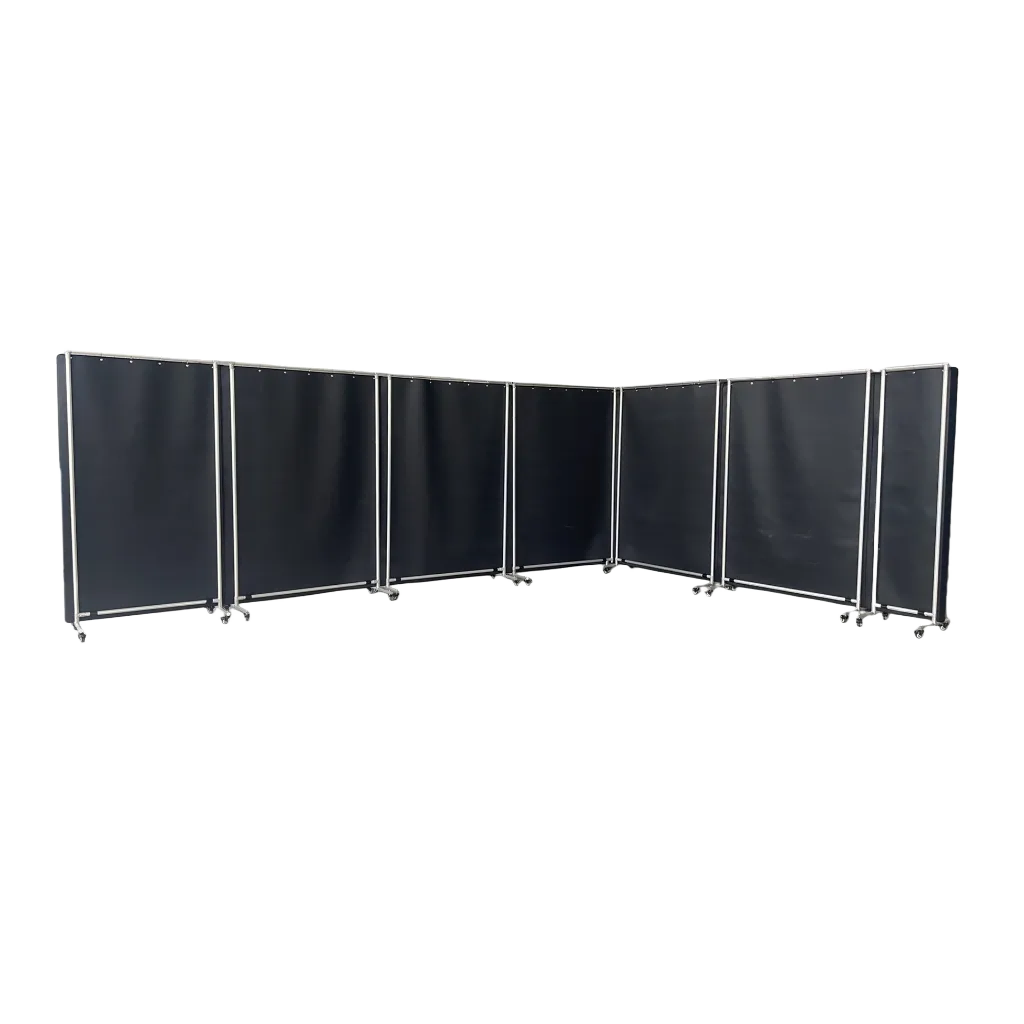
Laser safety isn't just about goggles and signs—your choice of protective curtain can be the thin line between a near miss and a serious injury. China has emerged as a major supplier of these critical barriers, offering everything from budget-friendly PVC to high-performance composite panels. But with so many options flooding the market, how do you separate genuine protection from clever marketing? This guide breaks down what actually matters when evaluating China laser safety curtains, and why a growing number of engineers now specify LASERPAIR for their toughest applications.
Laser Curtains Aren't All the Same: Checking the Actual Optical Density
Laser curtains get lumped together as if a printed OD number tells the whole story, but that number only means something for a specific wavelength and a very particular set of test conditions. A curtain that blocks 1064nm light well might let a visible alignment beam pass straight through, or the opposite could happen with a green laser. The material itself can also degrade unevenly at the edges or near grommets, so the stated OD may not hold where the beam actually hits.
To check the real optical density, you need to measure it with a power meter at your laser's exact wavelength, not just trust the datasheet. Set up a sample of the curtain material under the same beam diameter and power level you intend to use. Calculate OD from the ratio of transmitted to incident power. If the curtain is flexible, scan several spots, including seams and creases, because leaks often show up in those places first.
Also watch out for how the curtain behaves over time. Some materials lose attenuation quickly under UV or repeated exposure, and others can start to burn through if the power density is higher than the spec assumed. Ask for a spectral OD curve from an independent test lab rather than a single value, and if possible, retest a cut sample from the batch you'll actually install. That's the only way to know the curtain will hold up in your setup.
How Wavelength and Power Ratings Change What You Need
Wavelength does more than set the color of the beam—it dictates how the light interacts with whatever it hits. Ultraviolet output carries enough photon energy to break molecular bonds directly, which is why it excels at fine ablation and micro-machining without excessive heat. Infrared light, on the other hand, tends to get absorbed by water and many plastics, making it a natural fit for welding or surface heating. Pick the wrong wavelength for your material and you might see almost no effect, even if the power seems high enough.
Power ratings tell you how much energy arrives per second, and that translates into how quickly a process can run. A higher wattage can slice through thicker stock or cure coatings faster, but it also brings more heat, more risk of charring, and a bigger safety envelope. Low-power sources are often easier to handle and less likely to damage heat-sensitive substrates, but they force longer dwell times. The trick is matching the power to the tolerance of the material and the speed you actually need, not just grabbing the biggest number on the spec sheet.
In practice, wavelength and power have to be balanced together, because they pull in different directions. You might need a short wavelength to get fine feature resolution, but the available laser at that wavelength maxes out at low power, so you slow the feed rate. Or you could choose a high-power infrared source for fast cutting, only to find the material reflects most of that wavelength. Understanding the interplay—rather than treating each spec in isolation—is what separates a setup that works from one that just looks good on paper.
Common Mounting Errors That Leave Gaps in Protection
A lot of installers assume that pressing a bracket firmly onto a surface is enough, but surface prep makes or breaks the seal. Residue from wax, dust, or even a slightly oily fingerprint keeps the adhesive from bonding across its entire footprint, so the edges start peeling within weeks. The same goes for cold-weather installs where the tape never reaches full tack before the part is loaded.
Another overlooked issue is fastener count and placement. It's tempting to use every other pre-drilled hole to save time, but that leaves the middle of a guard or rail free to flex under impact. The gap doesn't have to be large; a few millimeters of movement near a mounting point can redirect force into an area that was never designed to take it.
Finally, rigid frames bolted directly to surfaces that expand and contract with temperature will slowly work themselves loose. The protection might look fine on day one, but after a season of thermal cycling, small gaps open at the corners and along one edge. Using slotted holes, isolation washers, or a flexible bedding compound keeps the mounted part seated even when the substrate moves.
What to Expect From Chinese Suppliers on Custom Sizes and Lead Times
Custom sizing is rarely a simple yes or no with Chinese suppliers. While many factories can tweak length, width, thickness, or diameter, the real question is how far you can push before retooling costs and minimum order quantities shift. Expect to share detailed drawings or sample measurements, and don’t be surprised if the first response is a counter-proposal with slightly adjusted dimensions that better fit their existing molds or material sheets.
Lead times hinge on what exactly you’re changing. A minor alteration to a standard product might add only a week to the usual production cycle, but a fully custom size that requires a new mold, jig, or blade setup can stretch to 35–50 days before shipping. Always ask whether the quoted lead time includes mold fabrication, sample approval, and local holidays. Chinese New Year and the weeks around it can push even simple orders by two to three weeks, so building in a buffer of 10–14 days is often the difference between a smooth launch and a frustrating wait.
Routine Checks That Catch Damage Before It Becomes a Hazard
Most structural problems don't announce themselves. They start as hairline cracks, faint damp patches, or a loose bracket that nobody thinks twice about until a storm turns it into a projectile. A five-minute walkaround every week—checking roof edges, downspouts, railings, and tension points—costs nothing but catches the small shifts that later become expensive failures.
Look at high-wear zones first: hinges on gates, seals around windows, joints where two materials meet. Run your hand along surfaces that move or bear weight; if something gives more than it did last month, that's your warning. Photograph suspect areas with your phone and compare them a few weeks later. You're not looking for perfection, just change.
The trick is to make these checks boring enough to repeat. Tie them to an existing habit—after mowing the lawn or before putting bins out. Keep a pocket notebook or a note app with three columns: area, date, observation. When a small issue shows up twice in a row, schedule the fix. That's how routine checks stop being chores and start being cheap insurance.
Navigating Local Certifications and International Equivalents
When entering a new market, one of the first hurdles is understanding which local certifications are mandatory versus which can be substituted with international equivalents. Many countries have their own testing and labeling requirements, but they often recognize standards like ISO or IEC as a baseline. Yet the recognition is rarely automatic—applicants may need to provide documentation proving equivalence, sometimes through a recognized conformity assessment body. Ignoring these nuances can lead to costly delays at customs or even product seizure.
A practical approach is to map out the specific certification landscape for your target region before committing to a full compliance program. For example, while a CE mark opens doors across the European Economic Area, it does not replace China's CCC mark or Brazil's INMETRO certification. Each regulator may require local testing even if the underlying technical standard is identical to an international one. Building relationships with local agents or certification partners can streamline this process, as they understand unwritten expectations and can pre-empt common rejection reasons.
Another overlooked aspect is the maintenance of these certifications after initial approval. Some local marks require periodic factory inspections or renewal fees that international schemes do not. Failing to budget for these ongoing obligations can result in silent revocation, leaving your products technically illegal to sell. A smart navigation strategy treats certification not as a one-time checkbox but as a living, market-specific commitment that evolves alongside regulatory updates.
FAQ
Laser safety curtains are flexible barriers made from materials that block or attenuate laser light, preventing accidental exposure. They're typically used around laser workstations, labs, or automated production lines where a full rigid enclosure isn't practical. Instead of stopping the beam completely, they absorb or scatter enough energy to bring it below the maximum permissible exposure limit for the specific wavelength.
Don't rely on marketing claims alone. Ask for third-party test reports from an accredited lab, preferably one that follows IEC 60825 or ANSI Z136 standards. Check the wavelength range, optical density, and damage threshold against your laser's specs. If a supplier hesitates to provide independent test data, treat that as a red flag.
A trustworthy supplier should be familiar with IEC 60825, CE marking for the EU market, and FDA/CDRH requirements for the US. They might also hold ISO 9001 for quality management. Some will offer UL 94 flame resistance ratings for the curtain material. Don't assume every Chinese factory has these—verify documents and, if possible, request samples for independent testing.
Custom sizing is common and usually safe if you provide exact measurements and mounting details. Request a material sample before committing to a large order. Pay attention to edge finishing, grommet placement, and how the curtain will hang—these details affect both safety and durability. Many Chinese suppliers can produce custom shapes, but clear communication is essential to avoid costly mistakes.
Lead times vary from a couple of weeks for standard sizes to over a month for custom orders with special coatings or frames. Shipping by sea is cheaper but slower, often taking 30-45 days door-to-door. Air freight is much faster but can double or triple the logistics cost. Always confirm whether the quoted price includes shipping, customs duties, and any import taxes.
Prices from Chinese manufacturers are often 30-50% lower than comparable products from Western suppliers, especially for larger quantities or custom work. However, that advantage can shrink after adding shipping, import fees, and the cost of verifying quality. If you're buying a few panels, local suppliers might be more economical; for volume orders or specialized materials, China is usually worth considering.
Inspect the curtain regularly for cracks, burns, or discoloration, especially near the beam path. Clean with mild soap and water, but avoid harsh solvents that could degrade the flame-retardant or absorptive coating. Replace any panel that shows signs of physical damage, because even a small gap can allow dangerous exposure. Store spare curtains away from direct sunlight and extreme temperatures.
Not automatically. The curtain material must be matched to your laser's wavelength and power. A curtain designed for a CO2 laser at 10.6 microns won't necessarily protect against a 1064 nm fiber laser. Always state the exact wavelength, continuous or pulsed mode, and maximum power when inquiring with a supplier. Reputable Chinese manufacturers will ask for these details—if they don't, look elsewhere.
Conclusion
Buying laser safety curtains from China is rarely a simple product swap. The first thing that trips people up is optical density: a curtain can be labeled OD 4+ but fail at the specific wavelength you're actually using, so you need test data or a trusted supplier's spectral curve rather than a generic rating. Wavelength and peak power change how much protection the material must deliver—what works for a 1064 nm fiber laser may leave you exposed with a 450 nm diode setup. Even a well-specified curtain becomes useless if mounting leaves a gap along the floor, around frames, or at overlapping seams; scattered reflections find those openings quickly. Chinese manufacturers vary widely in their ability to handle custom sizes, and lead times can stretch when a particular color or certified material isn't in stock, so it's worth confirming dimensions, hemming, and attachment points before ordering.
Once installed, routine inspection is the only thing standing between you and a burned-through weak spot. Folding, dragging, or chemical splashes create damage that isn't obvious in normal lighting, so run a bright flashlight test or check against a known laser at low power before every shift. Certifications add another layer of confusion: a local CCC mark or a test report from a Chinese lab may not automatically map to CE or ANSI standards, and some suppliers list international equivalents that haven't actually been verified. If you need true compliance, ask for the original test report, not just a logo on the datasheet. The same curtain can perform very differently depending on how it's used, so the real answer is to verify OD at your wavelength, eliminate gaps, schedule damage checks, and confirm certification documents match your local requirements.
Contact Us
Contact Person: Jenny
Email: [email protected]
Tel/WhatsApp: +86 13537713281
Website: https://www.laserpair-safety.com/