

China Residue Free Protective Film Supplier: A Practical Guide for Industrial Buyers
2026-10-22
Peel off a low-quality protective film and you'll find the real cost isn't in the price—it's in the cleanup. As industrial buyers shift sourcing to China, residue-free performance has become the dividing line between a smart purchase and a production headache. This guide covers the essentials, and highlights why Shire stands out among Chinese suppliers for buyers who can't afford surprises.
What 'Residue Free' Actually Means on a Busy Production Floor
On a busy production floor, "residue free" rarely means laboratory-grade zero. It means the line has been cleaned to a point where any remaining active ingredient, cleaning agent, or degradation product falls below a validated acceptable limit—often measured in parts per million or even parts per billion. Operators don't chase invisible perfection; they chase a defensible, repeatable state. After a product changeover, the shift lead might run a cotton swab across a mixer blade, send it to QC, and wait for the result that says the previous batch won't alter the next one's potency or safety. That's the practical definition: clean enough to prove you won't contaminate what comes next.
The phrase also carries a visual and tactile weight on the floor. A line worker will run a gloved finger along a gasket or check under a conveyor belt for powder caking—because residue hides in seams, not on open surfaces. If a rinse sample comes back within spec, the line gets signed off. If not, it's back to scrubbing and re-swabbing. This constant back-and-forth between operators, QA, and equipment design turns "residue free" into a working agreement, not a marketing slogan. It acknowledges that perfect cleanliness isn't the goal; preventing cross-contamination and protecting the next patient or consumer is.
The Testing Gaps That Let Adhesive Transfer Slip Through
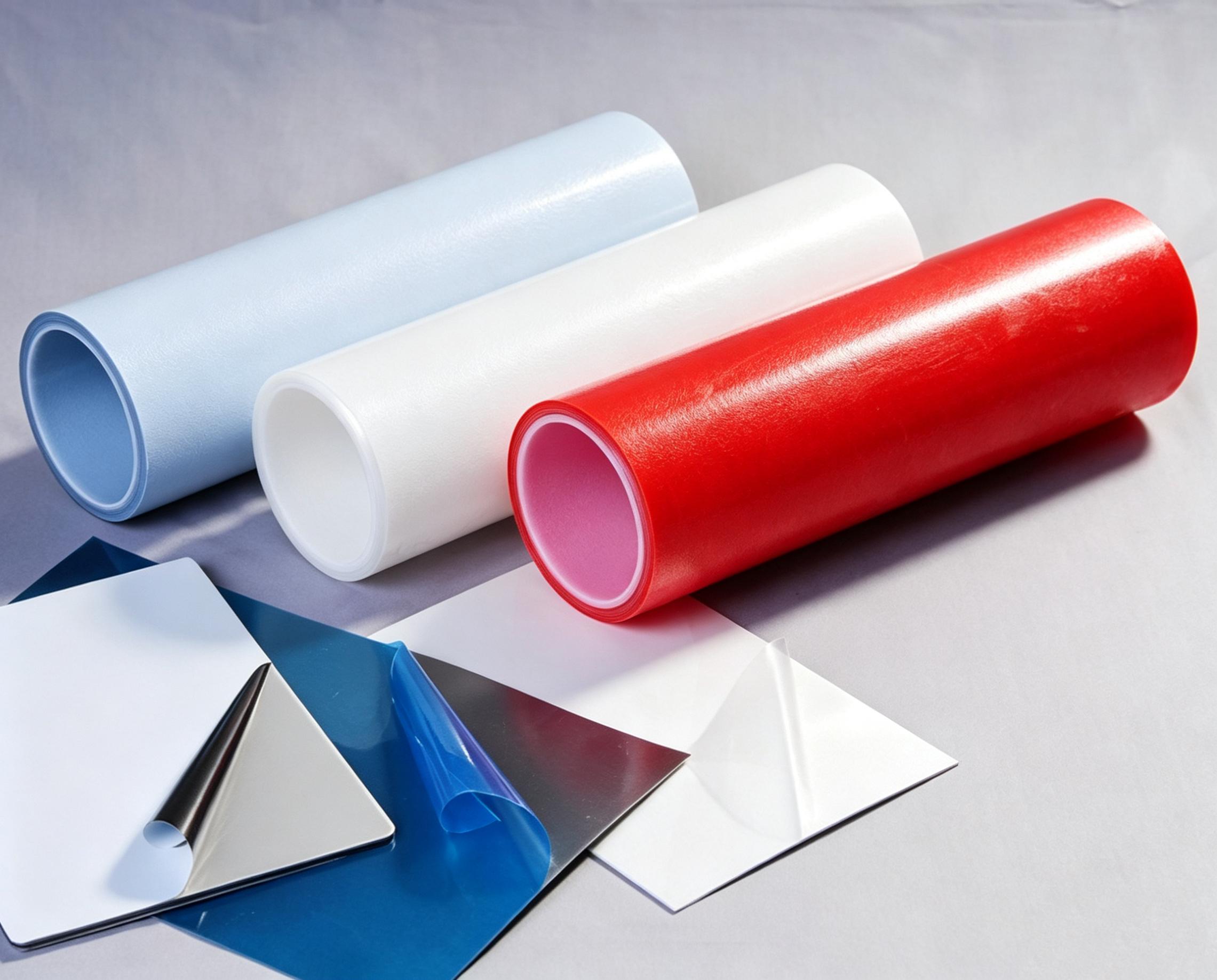
Adhesive transfer failures rarely announce themselves in a single dramatic test. They hide in the quiet corners of abbreviated protocols—where dwell time is trimmed, substrate cleaning is skipped, or environmental conditioning is treated as an afterthought. Standard peel and shear tests might pass with flying colors while a real-world assembly still sheds residue onto mating parts weeks later. The gap isn't in the adhesive's datasheet; it's in the assumption that one accelerated condition can stand in for the messy, long-duration contact of actual use.
Another blind spot sits between lab cleanliness and factory reality. Test coupons are often wiped with solvents, handled with gloves, and bonded on perfectly flat, freshly abraded surfaces. Production lines, by contrast, carry trace release agents, finger oils, and micro-roughness variations that no spec sheet anticipates. Without deliberately introducing controlled contamination or mimicking operator variability, a test suite can certify a bond that will silently transfer adhesive the moment it meets a less-forgiving environment.
The most dangerous gap is temporal. Many transfer failures surface only after thermal cycling, humidity exposure, or sustained load—conditions that are expensive to simulate and easy to truncate. Shortened dwell times and lowered cycle counts save budget but erase the creep and plasticizer migration that drive residue formation. Until test methods stop favoring speed over sequence, adhesive transfer will keep slipping through the very checkpoints meant to catch it.
Matching Film Chemistry to Your Substrate, Not the Supplier's Default
Default film formulations are usually tuned for the most common substrates a supplier encounters. Your surface may have a different surface energy, a plasticizer that migrates, or an oxide layer that resists wetting. Running a standard adhesion test on the actual production material will tell you more than any datasheet.
Start by measuring contact angle and doing a quick solvent rub to see how the substrate behaves before choosing a resin system. For example, untreated polypropylene demands a surface treatment step, while nylon can absorb moisture and shift curing behavior. Adjust the crosslink density or swap out a solvent blend to stop lifting, crawling, or solvent attack that the default formula ignores.
Small changes often make the difference between a coating that passes in the lab and one that stays bonded after thermal cycling or humidity exposure. Keep a running list of failures you see on your specific substrate, and don't accept a supplier's stock answer if it isn't based on your line conditions.
Why Heat and UV Aging Expose Weak Protective Films
Most protective films look flawless when first applied, but that initial appearance hides a lot. Heat and UV exposure act like a slow stress test. Thermal cycling forces the film and the underlying surface to expand and contract at different rates, which gradually pulls at the adhesive interface. Meanwhile, ultraviolet light attacks the polymer backbone, snipping molecular chains and creating reactive sites that didn't exist before.
As those micro-damage points accumulate, the weaker films start to betray themselves in visible ways. You might see lifting at the edges first, then faint hazing or a yellowish tint spreading across the surface. Small bubbles can appear where adhesion has failed locally, and in harsh conditions the film turns brittle enough to crack under ordinary handling. These aren't random defects; they're the direct result of materials that lack the stabilizers and crosslink density needed to hold up under prolonged exposure.
Once a protective film reaches that stage, it stops doing its job. Instead of shielding the surface, it becomes a brittle layer that traps heat and moisture, sometimes accelerating the very damage it was meant to prevent. That's why heat and UV aging separate genuinely durable films from ones that only pass a quick visual check.
Reading Between the Lines of Factory Quality Claims
A factory's quality assurance page can read like a highlights reel—crowded with ISO badges, zero-defect pledges, and phrases like "world-class manufacturing." The trouble is that these terms are rarely anchored to anything you can verify. A certificate hanging in the lobby doesn't tell you how often the line stops for rework, how many customer returns slipped through last quarter, or whether the night shift follows the same inspection checklist as the day shift. When a supplier leads with vague superlatives instead of specific test data, ask for the numbers behind the nouns.
Look past the polished wording and check for what's missing. A claim like "100% inspected" means little if the inspection method is a quick visual glance rather than a calibrated measurement. "Materials sourced from trusted partners" can hide a rotating cast of subcontractors with no traceability. Smart buyers don't stop at the marketing sheet; they request batch records, process capability indices, and a list of recent non-conformances. If a factory hesitates to share those, the gap between the brochure and the shop floor is usually wider than the brochure suggests.
Keeping Batch Consistency Tight as Order Volumes Scale
Scaling order volumes tends to expose every small irregularity in production. What was once an acceptable half-percent variation in ingredient dosing becomes a visible defect when thousands of units ship in a single week. To hold batch consistency tight, the first move is usually narrowing incoming material tolerances and locking down vendor specs—if raw inputs drift, no downstream mixing trick can fully correct it.
Process controls need to move from scheduled sampling to continuous monitoring once throughput climbs. Inline sensors for viscosity, pH, or fill weight can flag deviation in real time, allowing the line to adjust before a full batch drifts out of range. Simple closed-loop controls, like automatic dispensing tied to a target weight rather than a timer, eliminate much of the operator-to-operator variability that becomes costly at higher volumes.
Consistency also depends on how changeovers and cleaning are handled between runs. At scale, the accumulated effect of residue, worn nozzles, or tooling differences can silently shift output quality. Building short verification steps into each setup—comparing the first article against a locked reference sample—helps catch drift early. This turns batch consistency from a quality-assurance checkbox into an expected part of the daily run rhythm.
FAQ
Look beyond the glossy brochures. Ask for samples from recent production runs and test them on your actual surfaces, not just standard glass or steel. A supplier worth considering will be transparent about which adhesive system they use and how it behaves after weeks of UV exposure or heat cycling.
The difference usually comes down to the adhesive layer's cross-linking and peel force stability. Residue-free grades are formulated to release cleanly even after extended dwell time, whereas cheaper films may leave ghosting or adhesive transfer. Ask the supplier for aging test data, not just initial peel values.
Many suppliers advertise low MOQs, but realistic production economics often start around 3,000 to 5,000 square meters for custom widths. If you need only a few hundred meters, be prepared to pay a premium or choose from stock sizes.
Yes, most established suppliers can adjust thickness from roughly 20 to 150 microns, slit to your exact width, and add tints or print. However, custom colors and printing usually require a separate setup fee and longer lead time, so plan accordingly.
Ask for batch-level test reports covering peel force, tensile strength, elongation, and haze. Better suppliers will also provide third-party lab results for heavy metals or REACH compliance if your product enters regulated markets.
Standard production often takes 10 to 15 days after artwork or specification approval, with another 5 to 10 days for sea freight depending on destination. Rush orders are possible but may incur a surcharge of 15 to 30 percent.
Beyond the unit price, factor in customs duties, port handling, inland trucking, and possible warehousing if your delivery window shifts. Some suppliers quote FOB only, so request a door-to-door breakdown before comparing offers.
A direct manufacturer usually offers better technical support and faster issue resolution, but trading companies can sometimes provide more flexible consolidation for smaller orders. Verify the actual factory location and visit or arrange a video audit if possible.
Conclusion
On a busy production floor, “residue free” rarely means what a data sheet implies. Operators apply film at varying speeds, leave it on during heat cycles, and peel it weeks later from surfaces that are not laboratory-clean. A film that lifts cleanly from polished steel in a supplier demo may leave adhesive islands on a scratched aluminum extrusion or a coated plastic part. Standard peel adhesion tests miss this because they use pristine panels and short dwell times. Smart buyers run their own trials with contaminated substrates, elevated temperatures, and extended aging before approving a lot. Film chemistry also matters more than the supplier's default recommendation. Acrylic adhesives often suit high-energy metals but can behave poorly on low-energy plastics; rubber-based films may hold well but risk residue under UV. Matching the adhesive system to your actual substrate and line conditions prevents most field failures.
Heat and UV aging separate durable films from ones that degrade into ghosting or adhesive transfer. Request QUV or xenon weathering data, but do not trust it blindly—run the same film through your own outdoor or accelerated exposure stack. Many factory quality claims use loose language: “residue free” without specifying test method, dwell time, substrate, or removal angle. Ask for a clear TDS and lot-specific COA, and push suppliers to define pass/fail criteria for adhesive transfer. As order volumes scale, batch consistency becomes a larger risk. A pilot order may pass while subsequent containers show shifts in adhesive coat weight or film caliper. Require statistical process control summaries, incoming lot inspection, and a documented change notification process. A supplier that understands your substrate, line speed, and storage conditions—and proves it with test data—will save far more than the unit price difference.
Contact Us
Contact Person: Jack Xu
Email: [email protected]
Tel/WhatsApp: 8615257328825
Website: https://www.temporaryprotectivefilm.com/