

Complete Cylinder Head Company: The Key to Long-Lasting Engine Performance
2026-07-21
When it comes to engine reliability, the cylinder head plays a starring role—yet it’s often overlooked until something goes wrong. At DDR, we believe that precision engineering isn’t just a buzzword; it’s the foundation of every mile you drive. This blog peels back the layers on what makes a complete cylinder head solution truly transformative for long-term performance, and why cutting corners here can cost you dearly down the road.
Why Cylinder Head Quality Directly Impacts Engine Longevity
The cylinder head sits right where the action happens—dealing with extreme combustion heat, violent pressure spikes, and constant thermal cycling. If the casting is subpar or the alloy lacks the right composition, it struggles to redistribute these loads evenly. Over time, microscopic stress fractures appear around valve seats or coolant passages. Once those cracks propagate, coolant seeps into the oil or combustion chamber, and the engine’s days are numbered. A well-engineered head, with proper heat treatment and rigorous porosity tests, absorbs these punishments almost indefinitely, letting the rest of the engine live a longer, smoother life.
Valve seats, guides, and the mating surfaces all demand pinpoint accuracy. Even a tiny misalignment accelerates guide wear, allowing oil to trickle into the cylinders. That carbon buildup then cooks onto piston crowns and valves, creating hot spots that trigger pre-ignition. Before you know it, the engine is running hotter, losing compression, and sipping oil. A quality head is machined to tolerances that keep the valvetrain stable and the combustion chamber sealed, so the engine breathes cleanly and burns fuel as intended—mile after mile.
Casting integrity doesn’t just come from the alloy recipe; it’s about how the metal flows and solidifies. Low-cost heads often hide internal voids that act as insulation barriers, preventing heat from transferring to the coolant as designed. Localized overheating warps the deck surface and softens the material, so head gaskets eventually fail. When you choose a head built with advanced simulation-driven casting processes and post-casting stress relief, you’re preserving the thermal barrier that shields pistons, rings, and bearings from premature death. That investment on the front end quietly adds tens of thousands of miles to the engine’s life.
Inside Our Manufacturing: How We Achieve Flawless Cylinder Heads
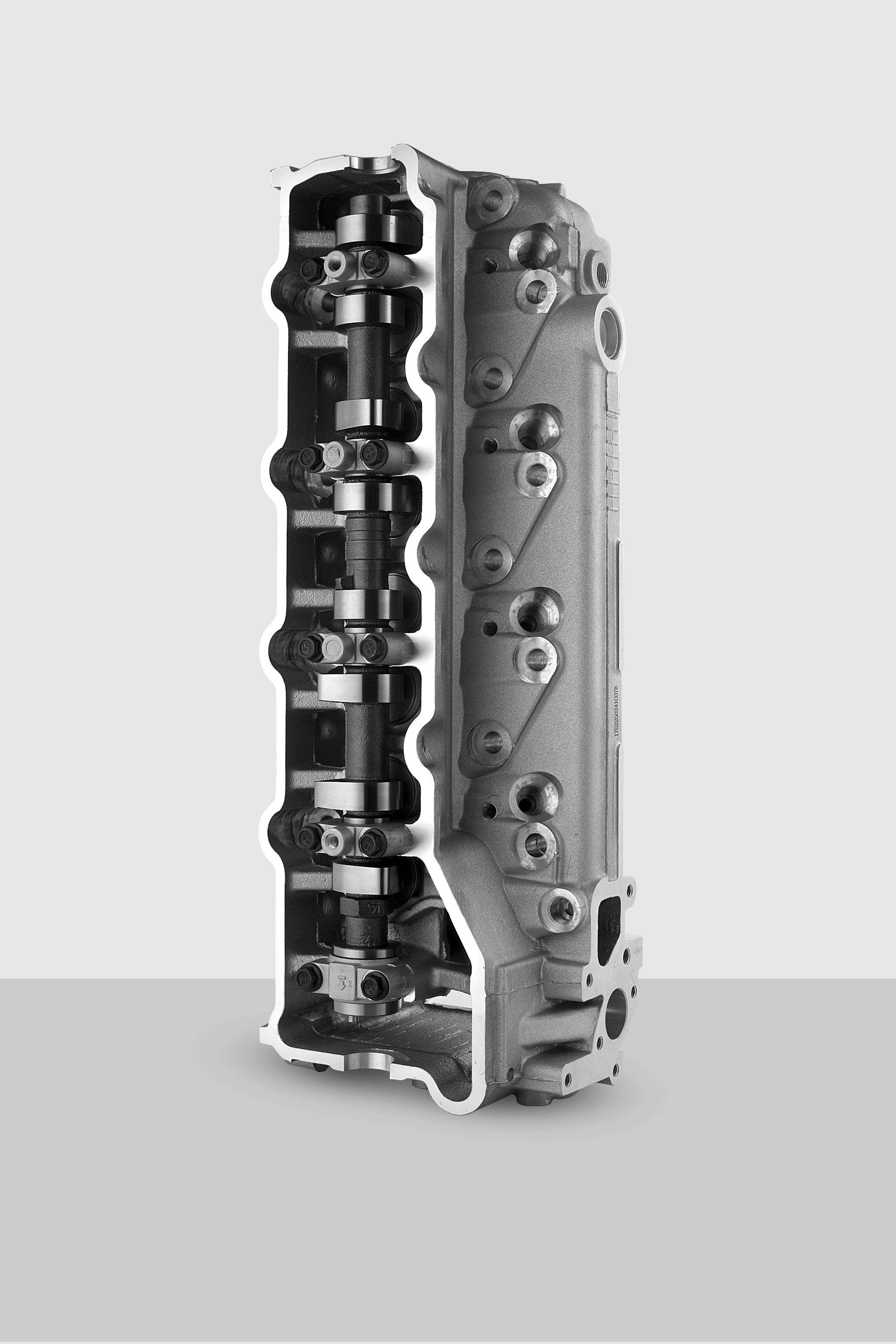
Right from the start, every cylinder head begins with a rigorous selection of raw materials. We source only certified aerospace-grade aluminum alloys, which undergo spectrometer analysis upon arrival. This upfront quality gate ensures that each casting starts its journey with the ideal chemical composition and structural integrity needed for high-performance engines.
The real magic happens inside our precision machining cells. We employ a combination of multi-axis CNC centers and custom-built honing stations that maintain tolerances within microns. After each operation, in-process laser scanning and probing verify critical features in real time—chamber volumes, valve seat concentricity, and port surface finishes—all without slowing production. Any deviation triggers an immediate corrective loop, keeping variability close to zero.
Before a cylinder head ever leaves our facility, it endures a battery of final validation tests that replicate extreme operating conditions. Helium leak-down tests confirm absolute sealing, while digital mapping of every port ensures identical airflow from unit to unit. It’s this obsessive attention to detail, combined with decades of foundry and machining expertise, that delivers cylinder heads our customers trust to perform flawlessly under the most demanding conditions.
Matching the Right Cylinder Head to Your Vehicle
Getting the correct cylinder head for your engine isn't just about grabbing a part that fits—it's about understanding your vehicle's specific needs. The casting number on your current head is the best place to start, but don't stop there. Check the combustion chamber volume, valve sizes, and port configurations, as these directly affect compression ratio and airflow. Even subtle differences between model years can mean the difference between a smooth-running engine and one that knocks or struggles to breathe.
Beyond the physical dimensions, consider how you actually use your vehicle. A stock replacement might be fine for daily commuting, but if you're towing, racing, or have made other upgrades, a performance-oriented head could unlock noticeable gains. Pay attention to material—cast iron handles heat well and is durable, while aluminum is lighter and dissipates heat quickly. Mismatched components often lead to tuning headaches, so take your time cross-referencing specifications rather than just relying on what's listed as compatible online.
The Hidden Costs of Compromising on Cylinder Heads
Opting for cheaper, lower-grade cylinder heads might seem like a smart budget move at the checkout counter, but the expenses pile up once they’re bolted onto the block. Inferior castings are prone to microscopic porosity and uneven sealing surfaces that invite coolant and oil to mingle, leading to head gasket failures that run far deeper than a simple gasket swap. Suddenly, you're not just replacing the head—you're machining the deck, flushing contaminated lubricants, and praying the bearings haven’t been washed out.
Heat management takes a backseat when the alloy blend and coolant passages are skimped on. With inadequate thermal dispersion, localized hot spots warp the deck and valve seats, twisting the combustion chamber geometry until valves no longer seat properly. The resulting burnt valves, seat recession, and eroded gasket fire rings turn a supposed savings into an endless cycle of tear-downs. Factor in the growing need for premium fuel to stave off detonation, and that bargain head is bleeding your wallet dry tank by tank.
Then there’s the power you never see—and never recover. Poorly designed ports and rough cast-as-cast runners choke airflow, while sloppy CNC work from generic manufacturers misaligns the intake and exhaust faces. You end up tuning around dead spots and reversion pulses, sacrificing torque under the curve just to keep the engine safe. Worse, the harmonic imbalance from mismatched combustion pressures shortens the lifespan of piston rings, timing components, and even the crank itself. The hidden cost isn't just a thinner wallet; it’s a shorter engine life, disguised as a deal.
Real-World Performance: Stories from Our Customers
A logistics company we worked with saw their order processing time drop from 14 minutes to just under 3. It wasn’t about flashy upgrades—just steady tuning of their database queries and smarter caching. Their team didn’t need to hire more people; suddenly they could handle twice the load with the same crew.
Another client, a niche e‑commerce store, had been losing customers during flash sales because checkout kept stalling. After profiling their server‑side code, we found a handful of routines that were hogging CPU. Once those were fixed, they sailed through their biggest holiday rush without a single timeout. The owner later told us it was the first season he actually got to sleep.
Then there's the bakery chain whose inventory app used to crash every morning when all stores logged in at once. We shifted them to a read‑replica setup and added simple queuing for writes. Now the app stays responsive regardless of the hour, and their IT tickets dropped by 90%. For them, performance isn't just a metric—it’s the difference between a smooth start to the day and chaos before the ovens are even warm.
Beyond the Sale: Our Commitment to Your Engine’s Health
When you drive off our lot, the relationship doesn’t end with the paperwork—it’s only the beginning. We believe that a healthy engine is the heartbeat of your vehicle, and we’ve built every service, check-up, and support channel around that principle. From the fluids we pour to the parts we trust, our technicians are trained to treat your car like their own, staying ahead of wear before it becomes a problem. It’s not flashy, but it’s the kind of quiet dedication that keeps you on the road, mile after mile.
Most people only think about their engine when a warning light flickers on. We’d rather that light never comes on in the first place. That’s why we’ve designed a proactive care approach—custom reminders based on your driving habits, free multi-point inspections during routine stops, and plain-English explanations so you actually understand what’s happening under the hood. There’s no upselling, no guesswork. Just a genuine partnership with mechanics who remember your name and your last trip’s mileage.
Years down the road, when your engine still purrs at startup and pulls strong onto the highway, that’s our real handshake. It’s a commitment woven into every bolt we tighten and every oil filter we replace—one that goes beyond warranties and slogans. Because at the end of the day, your engine’s health isn’t just a checklist item for us. It’s the reason we get up in the morning, and the quiet pride we carry long after the garage doors close.
FAQ
A cylinder head seals the combustion chamber, manages heat, and directs airflow. If it's poorly made or wears down, compression drops and overheating starts, slowly killing the engine. The right materials and precise machining keep everything stable under extreme stress, which directly affects how many miles you get before a rebuild.
It's about depth. A complete company handles everything in-house—design, casting, machining, testing—instead of just reselling. They often offer remanufactured options, custom porting, and technical support that generic suppliers can't match. You're buying from the source, so the knowledge runs deeper.
Most high-durability heads use aluminum alloys with silicon for heat dissipation or compacted graphite iron for strength. They might also add copper or magnesium to fight cracking. The choice isn't random; it's matched to the thermal load and pressure the engine will see daily.
Beyond basic pressure checks, they simulate thermal cycling and vibration that mimics real driving. Some use dye penetrant inspection to catch micro-cracks invisible to the eye. The final step is often a run on a test engine, not just a bench, to see how it behaves under load and heat soak.
Yes, that's a big part of their value. They keep archives of rare casting molds and can remanufacture heads for engines out of production for decades. Their machinists often reverse-engineer worn parts to create better-than-original replacements, which is something a mass-market catalog can't offer.
Don't skimp on coolant—old glycol eats gaskets. Retorque bolts after a few heat cycles, and watch for early signs like random misfires when cold. A quality head gasket matched to the surface finish matters more than most realize. Also, break-in oil with high zinc helps everything seat without scuffing.
Conclusion
A well-built engine begins at the top—literally. The cylinder head is far more than a chunk of metal bolted onto the block; it’s the chamber where combustion meets precision, and every degree of heat, every burst of pressure, tests its integrity. When quality slips, fatigue sets in fast. Microscopic casting flaws spread into cracks, valve seats lose their grip, and suddenly you’re nursing a leaky, wheezing motor that no tune-up can save. That’s why we obsess over the metallurgy and geometry from day one, using advanced CNC machining and rigorous pressure testing to deliver a head that seals perfectly and breathes efficiently. Whether you’re driving a work truck or a weekend classic, getting the right head—matched not just by part number but by the actual demands of your driving style—prevents the domino effect of overheating, warped gaskets, and oil-coolant cross-contamination that cheap replacements often trigger.
Bargain cylinder heads hide their costs in the shadows: premature failure, repeated labor bills, and that sinking feeling when the temperature gauge climbs again. Our customers tell us stories that echo the same truth—swapping a budget reman for one of our units turned a troublesome engine into a faithful partner for years on end. Behind every head we ship, there’s also a promise that goes beyond the transaction. We stand with you through break-in, through the first oil change, through the questions that pop up down the road. It’s this blend of manufacturing discipline, proper application, and long-term support that keeps engines running strong. When the cylinder head is right, everything underneath stays healthier: pistons, bearings, and your peace of mind. That’s what lasting performance really means, and it’s the only kind we’re interested in building.
Contact Us
Contact Person: Shelly
Email: [email protected]
Tel/WhatsApp: 8613967667688
Website: https://www.yongyu.com/