

Container Refrigeration Room Evaporator Exporter Guide for Global Buyers
2026-11-16
Sourcing the right container refrigeration room evaporator can make or break cold chain efficiency. This guide cuts through the noise for global buyers, spotlighting PAULAIR—a name trusted for robust evaporator solutions that keep cargo at precise temperatures. Whether you're upgrading a fleet or entering new markets, here's what actually matters before you sign off on your next order.
What Separates a Reliable Container Refrigeration Evaporator Exporter From the Rest?
A dependable exporter doesn’t just ship units—they understand the brutal conditions these evaporators face at sea, from salt spray to constant vibration. What truly sets them apart is their willingness to modify coil spacing, fin thickness, or defrost logic based on actual cargo profiles rather than pushing a one-size-fits-all catalog. You’ll notice this in how they ask about your routes, door-opening frequency, and humidity targets before quoting a single unit.
Beyond product specs, the real difference shows up when something goes wrong six months later. Reliable exporters maintain regional spare-part hubs and can walk a ship’s engineer through a troubleshooting sequence in under an hour, not after three days of email tag. They also document every coil’s pressure-test results and coating thickness, so you’re not gambling on hidden corrosion that only appears after the warranty expires.
Finally, look at how they handle mixed orders. A trustworthy partner will happily build a trial batch of ten custom evaporators, run accelerated life tests in their own chamber, and share the raw data—including failures. They treat export compliance as a given, not a selling point, and their references usually include reefer operators who’ve been buying for over a decade without switching suppliers.
Matching Evaporator Specifications to Your Cold Storage Setup Without Guesswork
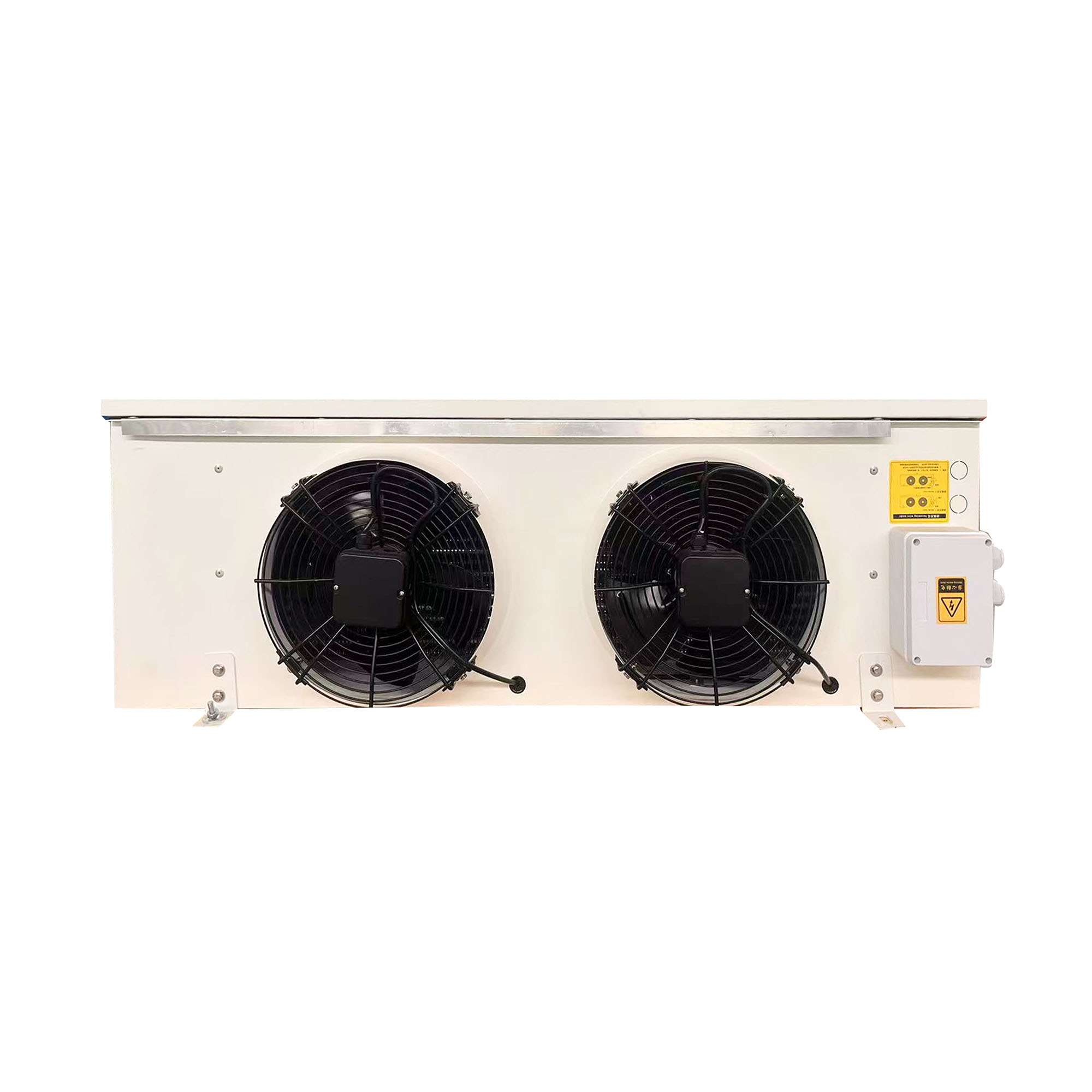
The quickest way to waste money on a cold storage project is to pick an evaporator based on a rough guess or a "one size fits all" rule. Instead, start with hard numbers from your own space. Measure the room dimensions, note the insulation type and thickness, and list every heat source inside—including lights, motors, forklifts, and even the respiration heat from stored produce. If you don't account for these loads properly, you'll end up with an evaporator that either runs constantly or short cycles, neither of which holds temperature steady.
Once you have the total heat load in BTUs per hour, match it to an evaporator's published capacity at your target temperature difference (TD). For a medium-temperature room holding at 35°F, a TD of 10°F is common, but for a freezer at -10°F, you may need a TD of 15°F or more to keep frost buildup manageable. Also check the coil's airflow rating in CFM—too little air and you get dead spots; too much and you risk drying out sensitive products. Defrost method matters as well: electric defrost works for most freezers, but off-cycle air defrost is cheaper for coolers above 34°F.
A final check that many people skip is verifying the physical fit and future flexibility. Look at the evaporator's dimensions, throw distance, and drain pan placement—especially if you have low ceilings or narrow aisles. If you plan to change what you store (say, shifting from dairy to fresh produce), choose a coil with a slightly wider capacity range or variable-speed fans. And always cross-check the manufacturer's capacity tables against your actual operating conditions, not just the nominal rating on the box. That small step removes most of the guesswork and prevents costly retrofits later.
The Certifications That Actually Matter for Refrigeration Room Evaporators
If you’re sourcing evaporators for a cold room, most of the badges on a datasheet are just noise. The marks that actually hold weight start with safety. In North America, a UL or ETL listing isn’t a nice-to-have; it means the unit passed electrical and mechanical safety testing. Without one, an inspector or insurance carrier can flag the installation, and that’s a headache you don’t want months after commissioning.
For performance, AHRI certification separates units that truly deliver rated capacity from those with inflated numbers. An AHRI certificate lets you size the evaporator without guessing, which matters more than any glossy spec sheet. If the room handles food, also look for NSF registration—it confirms the materials and design can be cleaned properly and won’t trap contamination.
CE marking in Europe or UKCA in Britain is mandatory but minimal; it won’t tell you anything about real-world capacity or durability. When comparing models, ask for the certificate number and verify it on the issuing body’s database. That one step filters out most weak claims faster than any comparison chart.
Custom Evaporator Builds for Unusual Container Dimensions and Climate Conditions
When off-the-shelf evaporator coils refuse to align with a client's storage setup, the next step is rarely a simple tweak. A chest freezer rebuilt for vaccine transport across sub-Saharan routes, for instance, demanded a coil bank shaped to follow a curved interior wall, leaving zero dead air space. We've handled builds where the coil depth had to drop below four inches to fit a narrow marine galley cabinet, yet still pull down to -18°C within six hours. The engineering focus stays on maintaining refrigerant velocity and oil return even when tube lengths run far shorter or longer than standard catalog specs.
Climate throws its own curveballs. An evaporator destined for a high-humidity coastal warehouse in Southeast Asia needed a wider fin spacing to shed condensate faster and resist corrosion from salt-laden air. We paired that with a hot-gas defrost cycle tuned to run only when frost thickness sensors cross a threshold, not on a fixed timer. In contrast, a unit for a high-altitude Andean storage facility required a different expansion valve profile to cope with lower air density and frequent temperature swings between day and night. Custom fan blade pitch and motor torque curves become non-negotiable when the ambient air can't be taken for granted.
The real test often comes down to serviceability in tight quarters. We've routed refrigerant lines through existing bulkhead penetrations, split a single evaporator into two linked sections to weave around structural beams, and even designed a slide-out coil tray for a refrigerated truck body that had only 14 inches of side clearance. Each build starts with a full thermal load calculation based on the actual container dimensions, insulation R-values, and the product's respiration heat if it's fresh produce. The result is an evaporator that doesn't just fit the box—it holds temperature stability within half a degree, cycle after cycle, without wasting energy on overcooling.
Shipping These Units Overseas: Minimizing Damage and Downtime
Getting heavy machinery across an ocean without ending up with a pile of scrap takes more than just bolting it to a pallet. The real work starts weeks before the container door closes. Each unit needs a custom tear-down plan: drain fluids, disconnect fragile electronics, and brace every moving part that could shift in rough seas. We learned early that salt spray finds every unprotected thread, so corrosion inhibitors and vacuum-sealed bags for sensitive components are non-negotiable. A single forgotten bolt can turn into a week-long rebuild on the other side.
The choice between roll-on/roll-off and flat-rack shipping changes everything. For tall or awkwardly shaped units, a breakbulk vessel often beats cramming into a standard box because you can secure directly to the deck and avoid double handling. But that also means exposure to weather, so we insist on marine-grade shrink wrap plus desiccant packs inside control cabinets. Every lashing point gets inspected twice, and we photograph the entire setup before departure. If a claim comes later, those photos are worth more than any insurance policy.
Downtime usually starts from miscommunication, not physical damage. A pre-shipment checklist shared with the receiving team prevents surprises like missing lifting lugs or a hydraulic line that wasn't capped. We tag every disconnected hose and cable with numbered labels that match a packing list, then send a video walkthrough the day before loading. The goal is simple: when the unit rolls off at the destination port, someone can start reassembly within hours instead of waiting on a tech to fly in and guess what went wrong.
After the Sale: Finding an Exporter Who Responds When Your System Needs Help
Too many buyers focus on price and delivery time when choosing an exporter, but what happens after the equipment arrives? A system failure doesn't care about your contract terms. You need someone who picks up the phone, not just a sales team that disappears once the invoice is paid. Real after-sale support means clear escalation paths and a named contact who understands your setup.
Before you commit, test their responsiveness. Ask for a mock support scenario during negotiations. How long does it take to get a technical answer? Do they offer remote diagnostics or on-site visits? A confident exporter will share examples of past emergencies they solved, maybe even connect you with a current client who can vouch for their support. No evasive answers.
Eventually, the cheapest exporter might cost you more when downtime hits. Build after-sale expectations into the purchase agreement, including response time targets and spare parts availability. And make sure you have a direct line to a real engineer, not a call center script. That is the difference between a supplier and a partner.
FAQ
Start with the exporter's ability to match coil fin spacing and circuiting to the actual cargo mix. Many quote the same nominal capacity but fail on partial-load humidity control, which leads to dried-out produce or excess frost. Ask for a recent field report from a similar container room setup, not a brochure.
Copper tubes with aluminum fins are common, but the fin coating matters more than the tube alloy in marine environments. Epoxy or anti-corrosion treatments can double coil life when containers sit near ports. Ask about salt-spray test hours and whether the distributor offers a bare-coil option for dry cargo.
The room's air distribution pattern determines whether temperature stays uniform without dead zones. Exporters should provide a throw-distance chart or velocity profile for the actual container height. If they only mention CFM, you are likely to get cold spots near the door and warm corners at the far end.
Beyond the usual CE or UL marks, request a refrigeration performance test at the design evaporating temperature, not just at standard rating conditions. A trustworthy exporter can share a calorimeter test report and a vibration or shock test for the motor-fan assembly. If they hesitate on either, move on.
Ask for the lead time on three specific parts: expansion valve, fan blade, and defrost heater. A reliable exporter will have local distributor stock or a bonded warehouse near major ports. Also check whether their service manual includes step-by-step fault codes, not just a parts list.
Buyers often compare kilowatts at -25°C evaporation but ignore the air inlet temperature difference. A unit with higher capacity can actually deliver less cooling if the rated TD is unrealistic. Normalize both capacity and airflow to the same entering air temperature and humidity before making a side-by-side choice.
In high-humidity tropical ports, the evaporator must handle a larger latent load, so the sensible heat ratio drops. A unit sized only for dry heat will run continuous defrost cycles. Provide the exporter with your worst-case dew point and cargo door opening frequency, then ask for a frost accumulation estimate.
Look for exporters who ship coils pre-charged with nitrogen and use steel corner brackets on wooden crates, not just cardboard. The fan motors should be locked with shaft braces to prevent bearing brinelling during ocean transit. A drop-test video or ISTA 3E certificate is a good sign.
Conclusion
Finding a container refrigeration room evaporator exporter who actually understands your operation takes more than comparing spec sheets. The reliable ones start by asking about your container's internal dimensions, door opening frequency, target temperature band, and whether the unit will sit in a tropical port or a subarctic yard. That matters because coil spacing, fan throw, defrost logic, and drain pan heating all shift with those variables. A trustworthy exporter will walk you through fin material options, corrosion-resistant coatings, and defrost methods rather than pushing one generic model. Certifications also need scrutiny: CE and UL are baseline, but for marine or offshore use, look for class society approvals or at least salt-spray test reports. If your containers have non-standard dimensions or you run multi-temperature zones, a factory that builds custom evaporators with adjustable fan speeds, reinforced mounting brackets, and quick-release drain pans will prevent years of headaches. Avoid exporters who quote before asking about your climate data or airflow layout.
Once the unit is built, the real test is how it leaves the factory. Proper export packaging means more than a cardboard box: insist on wooden crates with internal bracing, nitrogen holding charges to keep moisture out of the refrigerant circuit, desiccant packs, and shock or tilt indicators. These steps reduce hidden damage that shows up weeks after delivery. After the sale, your exporter's responsiveness becomes the deciding factor. You want a company that answers calls within hours, not days, and can walk your local technician through a compressor fault or a sensor calibration via video call. Ask whether they include a spare parts kit with common wear items, provide wiring diagrams in multiple languages, and have a warranty process that works across borders without requiring you to ship the entire unit back. A seasoned exporter will also help with customs paperwork, correct Incoterms, and insurance documentation so a single damaged shipment doesn't stall your cold chain.
Contact Us
Contact Person: Jack
Email: [email protected]
Tel/WhatsApp: +86-13335127698
Website: https://www.paulair-refrigeration.com