

Custom Cutter Suction Dredger Manufacturer: Designing Dredgers for Optimal Performance
2026-05-26
Every waterway project comes with its own set of challenges—shifting soil conditions, tight dredging windows, or demanding depth requirements. That’s where YaKai Dredger steps in, not with a pre-built catalog pick, but with a cutter suction dredger engineered from scratch around your operational goals. Discover how custom design turns potential bottlenecks into steady, efficient production lines.
Tailoring Dredge Design to Your Project’s Demands
A dredge isn't a one-size-fits-all machine—it's a tailored solution that must align precisely with the sediment type, depth, pumping distance, and disposal method your project demands. Cutter suction dredges thrive in compacted soils and rock, while trailing suction hopper dredges excel in loose sands and open water. Matching the cutter head design, suction pipe diameter, and pump power to the actual material characteristics prevents costly inefficiencies and downtime. Get the mechanical details right from the start, and your productivity will reflect it.
Beyond the hardware, consider how mobility and site constraints shape your choice. Confined waterways, bridge clearances, or sensitive ecosystems may require a modular, shallow-draft dredge that can be disassembled for transport. If your project spans multiple locations, prioritize a self-propelled unit with quick mobilization features. Even the discharge method matters—whether you're building a nearby containment dike or pumping miles to a dewatering facility, the hydraulic design must be customized to overcome the required head and solids concentration without clogging.
Don't overlook the role of automation and real-time monitoring in modern dredge performance. Integrating GPS-based positioning, slurry density meters, and swing speed controls allows operators to maintain an even cut and avoid over-dredging, which saves fuel and reduces environmental impact. When engineering firms and contractors collaborate early to specify these adaptive features, the dredge becomes an extension of the project plan—adapting to changing conditions rather than dictating them. This forward-thinking approach turns a standard piece of equipment into a competitive asset that hits targets and stays within budget.
How Material Type Shapes Cutter Head Configurations
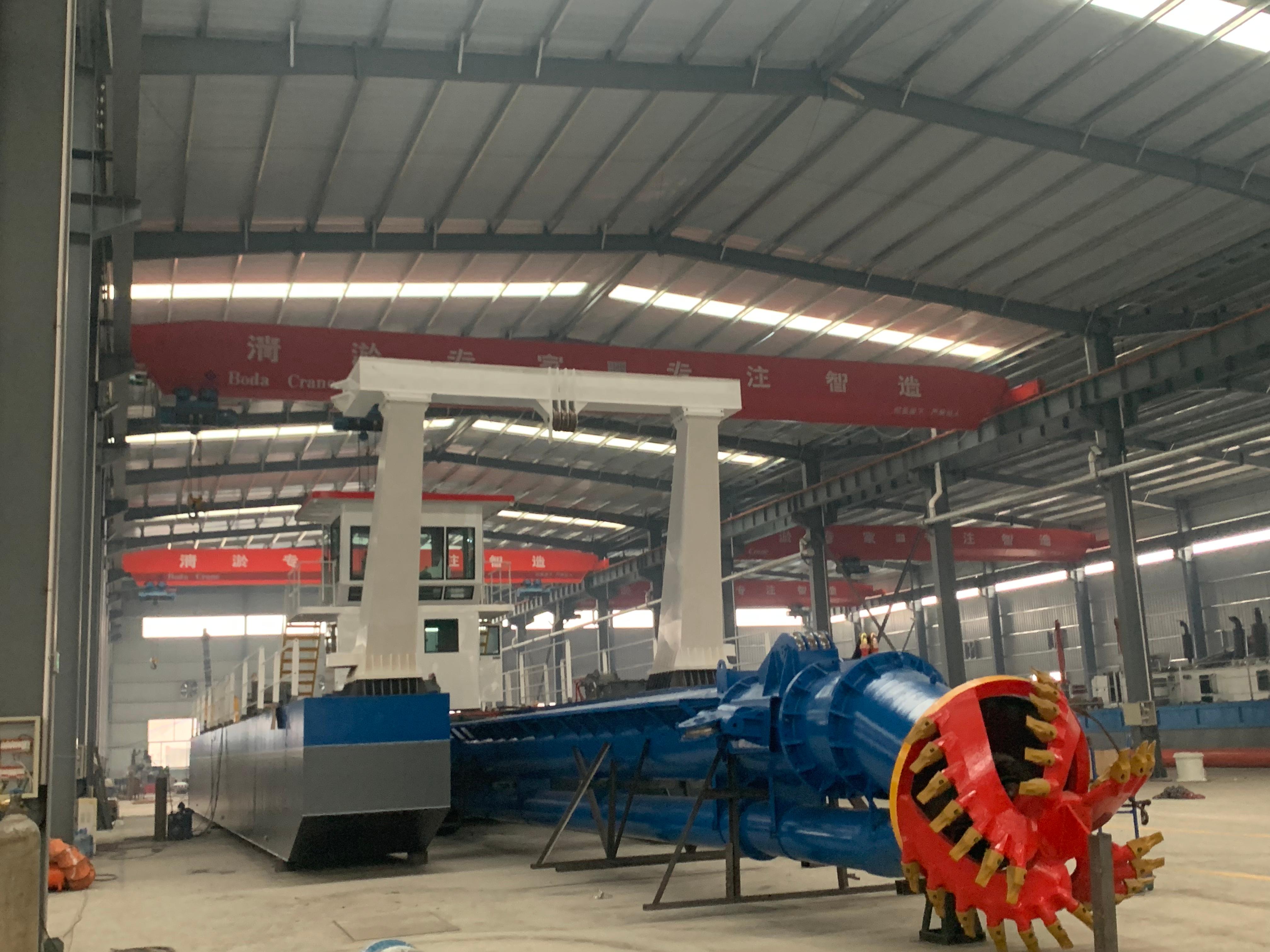
The character of the ground you’re cutting through dictates nearly every aspect of a cutter head’s design, from the arrangement of its tools to the shape of its openings. In soft, cohesive soils like clay or silt, you’ll often see a more open, spoke-type cutter head that allows the material to flow freely into the excavation chamber without clogging. The cutting tools are typically spaced farther apart, relying on the material’s own plasticity to break away in chunks rather than requiring dense point-attack ripping. This keeps the torque demands manageable and prevents the head from becoming a “blender” that wastes energy remolding the same mass over and over.
Flip the scenario to hard rock, and the entire philosophy shifts. The cutter head becomes a heavily reinforced, domed or flat-faced structure packed with disc cutters arranged in concentric paths. Here, material removal isn’t about volume flow but about efficiently inducing tensile cracks in the rock through rolling contact. The spacing between discs is critical—too wide and the cracks won’t connect, leaving unbroken ridges; too narrow and you’re expending extra energy without proportional gains in excavation rate. Openings are smaller and often protected by wear bars because the goal is to meter the entry of fragmented rock while shielding the internal chamber from abrasive fines.
Mixed ground conditions demand a hybrid approach, which is where things get tricky. You can’t just average the two extremes—you end up with a head that handles neither soil nor rock well. Instead, builders often compromise by combining cutters and rippers on the same head, with careful attention to how material transitions across the face. In boulder-laden clays, for instance, oversized openings with breaker bars let the occasional rock pass without jamming, while the primary tools remain optimized for the matrix. Even the rotational speed gets tailored: too fast in sticky ground and you’ll ball up; too slow in abrasive rock and your discs will skid and flat-spot. It’s this constant dance between material demands and mechanical reality that separates a cutter head that lasts from one that limps along.
Engineered Advancements That Boost On-Site Efficiency
Modern job sites have evolved into data-driven environments where small optimizations accumulate into major time savings. One of the most tangible shifts has been the integration of smart machine control systems that automate grading and excavation tasks. By leveraging real-time positioning data, these systems reduce the need for manual grade checks, cut down on material overages, and allow operators of varying skill levels to achieve consistent results. The outcome isn't just faster cycles—it's a measurable drop in rework, fuel burn, and machine wear.
Another quiet revolution is unfolding in fleet coordination. Equipment equipped with telematics can now share live utilization data, enabling site managers to reroute haul trucks, balance idle time, and prevent bottlenecks before they happen. On larger spreads, this connected approach means a loader doesn't end up waiting on a dozer three zones away—the entire fleet moves more like a single, measured organism. It takes the guesswork out of dispatching and helps maintain a steady pace, even when ground conditions or weather throw the plan off course.
Beyond the machines themselves, advances in onboard weighing and payload monitoring are reshaping load-out zones. Instant weight readings let excavator operators optimize bucket passes to match truck capacity precisely, avoiding both underloading and costly overload fines. Paired with cloud-based reporting, the data gives back offices a real-time view of material movement, turning daily tonnage into a precision metric rather than an estimate. It's a direct line from operator action to operational efficiency, trimming minutes from each cycle that stack up across hundreds of loads each day.
Balancing Power and Precision in Suction Systems
Finding the sweet spot between raw suction power and delicate control is a challenge that engineers have been refining for decades. Early vacuum systems often skewed heavily toward brute force, pulling everything in their path with little regard for fragile surfaces. Today's designs take a more nuanced approach, using variable-speed motors and intelligent pressure sensors that adapt in real time. The result is a system that can clamp onto a thin sheet of glass without cracking it, yet still lift a heavy steel plate moments later. This range demands careful calibration—too much force damages products, too little loses grip—and the best solutions now learn from each cycle, adjusting their behavior to the task at hand.
What often gets overlooked is how power and precision manifest in the physical components themselves. Grippers, seals, and valve assemblies have evolved beyond simple rubber cups and spring-loaded switches. Modern suction cups feature complex geometries with internal channels that distribute vacuum evenly, preventing pressure spikes that could warp materials. Meanwhile, onboard processors sit close to the action, crunching data from tiny MEMS sensors to detect slip before it becomes a fall. This tight integration lets systems run at higher throughputs without sacrificing gentleness, because the hardware isn't just strong—it's perceptive. Maintenance teams now monitor wear patterns digitally, swapping parts before they underperform, which keeps the balance intact over thousands of hours.
The real test comes when unconventional materials enter the workflow. Porous, textured, or irregularly shaped items break the rules that standard suction systems rely on. Here, the balance shifts from simple strength adjustment to creative problem-solving. Some setups use a combination of micro-foam seals and pulsed vacuum patterns to maintain hold without crushing delicate surfaces like carbon fiber weaves or fruit skin. Others introduce air jets that reset the pressure zone continuously, preventing dust buildup that would gradually erode precision. These aren't just add-ons; they represent a philosophy where force and finesse aren't opposites but partners. As manufacturing moves toward more customized, small-batch production, systems that can think on their feet—and grip on theirs—are the ones that will keep the line moving.
Real-World Results: Custom Solutions at Work
When a mid-sized logistics company faced rising fuel costs and delivery delays, off-the-shelf software couldn't untangle their unique routing puzzle. We built a dynamic dispatch system that factored in real-time traffic, driver hours, and even loading dock availability. Within three months, fuel spend dropped 18% and on-time deliveries climbed to 96%, freeing up capital they redirected into fleet expansion.
A boutique retailer struggling with cart abandonment found that generic pop-ups were chasing customers away. By analyzing on-site behavior, we designed a subtle, intent-based recovery flow—triggering a frictionless discount offer only when shoppers hesitated at high-intent pages. The result? A 27% lift in recovered revenue without the aggressive feel that had hurt their brand before.
For a healthcare provider drowning in appointment no-shows, standard SMS reminders weren't moving the needle. Our team layered in patient history and preference data to personalize timing and message tone. Cancellation rates halved, and the saved slots translated into 30 extra consultations per week—proving that even small, tailored tweaks can deliver clinic-wide impact.
Partnering for Long-Term Dredge Performance
True long-term dredge performance isn’t achieved by a one-time engineering fix or isolated upgrades—it’s built through deep, ongoing collaboration between operators, data analysts, and maintenance crews. When all parties share real-time operational insights and wear-pattern observations, the dredge becomes more than a piece of equipment; it evolves into a finely tuned system that adapts to shifting sediment conditions and workload demands. This shared ownership of performance metrics creates a culture where small adjustments are made before they become costly failures.
Rather than relying on generic service contracts, we embed our specialists within your team’s daily rhythm, learning the nuances of your specific waterway and material characteristics. This hands-on partnership allows us to co-design custom wear-part packages, optimize cutterhead speeds, and adjust pump curves in real time—often during active dredging cycles. The result is not just extended component life but a noticeable reduction in unplanned downtime and fuel consumption, because decisions are made from a blend of on-the-ground experience and precise data logging.
This approach shifts the focus from transactional repairs to strategic performance management. Together, we map out seasonal siltation patterns, plan phased maintenance windows that align with your operational calendar, and continuously refine pumping distances and discharge strategies. Over time, the dredge’s efficiency curve doesn’t just flatten—it rises, delivering predictable output year after year. It’s a partnership where success is measured not by how often we fix problems, but by how rarely they occur in the first place.
FAQ
Every dredger we design is built around the specific sediment, depth, and output requirements of the project. Instead of forcing a one-size-fits-all solution, we adjust cutter head power, pump capacity, and hull dimensions to match real-world conditions, ensuring peak efficiency without unnecessary energy waste.
We analyze soil samples early in the design phase to select the right cutter type and tooth configuration. For rocky terrain, we reinforce the ladder and use heavy-duty materials; for soft silt, we optimize the flow path to prevent clogging. This tailored approach keeps production rates high regardless of the bottom material.
Absolutely. We often retrofit older vessels with upgraded pumps, automation controls, or a more efficient cutter head. Our team identifies bottlenecks in the current setup and proposes targeted modifications that deliver a measurable jump in throughput without the cost of a completely new build.
Automation isn't just about reducing crew fatigue—it’s about precision. Our systems monitor swing speed, depth, and slurry density in real time, adjusting parameters on the fly to maintain the highest possible concentration in the discharge line. This minimizes water intake and maximizes solids transport.
We integrate features like low-turbidity cutters, overflow control, and silt curtains into the design from the start. By modeling sediment plumes during planning, we ensure the dredger operates within permitted limits, protecting sensitive habitats while still hitting production targets.
We prioritize accessibility and part interchangeability. Wear components like pump liners and cutter teeth are positioned for fast replacement, and we often consolidate spare parts across fleets. The result is less downtime and a lower lifetime operating cost.
That depends on complexity, but a fully custom dredger usually takes 10–14 months. We maintain a steady dialogue with clients during construction, so they can inspect milestones and request tweaks without derailing the schedule. Smaller modifications can be delivered even faster.
Yes, we send experienced operators to the site to mentor the crew. They cover everything from daily start-up procedures to advanced troubleshooting, ensuring the team can harness the full potential of the equipment from day one.
Conclusion
Every dredging project brings its own set of challenges, from the abrasive nature of the seabed to the specific depth and reach needed. That’s why a custom cutter suction dredger manufacturer doesn’t begin with a standard blueprint—it begins with your site. By tailoring the dredge design to the project’s demands, we ensure that the hull dimensions, spud carriage layout, and onboard powerplant align perfectly with the working environment. The material type is a decisive factor in shaping the cutter head configuration: rocky, compacted soils call for heavy-duty teeth and a robust drive, while silty or sandy bottoms benefit from smoother, high-flow profiles that reduce wear and energy waste. Engineered advancements, such as automated swing control and real-time density monitoring, translate directly into on-site efficiency. These systems let the operator maintain a consistent mixture, cutting down on idle time and fuel use while keeping the production rate steady, even when conditions vary throughout the day.
Balancing power and precision in the suction system is where many designs fall short, but a manufacturer focused on optimal performance matches the pump curve to the expected pipeline length and solids concentration, avoiding cavitation and plugging. The real proof lies in the results: in one instance, a custom-built 20-inch dredger achieved a 30% higher output on a reservoir restoration job than a comparable stock unit, simply because the ladder geometry and jet water ring were tuned to the in-situ clay. Beyond the initial build, partnering for long-term performance means that wear parts, control software updates, and operational training are part of the package. This collaborative approach turns a capital purchase into a full-cycle productivity asset, keeping the dredger in peak condition long after commissioning. A truly custom dredger isn’t just a machine—it’s a strategic tool shaped around your success, from first cut to final slurry discharge.
Contact Us
Contact Person: Nancy
Email: [email protected]
Tel/WhatsApp: (+86) 13869631558
Website: https://www.yakaidredger.com/