

Custom PE Cool Feeling Yarn: The Future of Cooling Fabric Technology
2026-06-27
Imagine stepping into a world where fabrics actively keep you cool, no matter the heat. This isn't science fiction—it's the reality being woven by Changshu Polyester with their Custom PE Cool Feeling Yarn. Engineered for next-generation cooling performance, this yarn redefines comfort in activewear, bedding, and beyond. As demand for intelligent textiles surges, one question lingers: is this the future of cooling fabric technology? Let’s unravel the innovation behind the fiber that’s set to change how we experience coolness.
The Hidden Physics That Make PE Yarn Feel Ice-Cold on Contact
Touch a strand of PE yarn and it steals heat before your nerves even register contact. The sensation isn’t just a property of the material’s surface temperature—it’s a matter of physics. Skin detects warmth or coolness by how rapidly heat flows away from it, and ultra-high-molecular-weight polyethylene pulls energy out of fingertips with startling efficiency. Its tightly packed molecular chains and high crystallinity create a near-perfect thermal bridge, making ordinary room-temperature yarn feel like chilled metal.
Inside the fiber, phonons—quantized vibrations that carry heat—move with minimal resistance along the aligned polymer backbone. This allows the yarn to wick thermal energy outward and distribute it across its length and surface area almost instantly. Unlike materials that trap warmth in air pockets, PE’s dense structure leaves little room for insulating dead zones. What your nerves interpret as an icy shock is actually the rapid draining of local heat, not a reflection of the yarn’s own temperature.
Moisture plays a secondary but equally clever role. Even trace humidity on skin amplifies the cooling effect because water is an even better thermal conductor than dry air. When PE yarn contacts slightly damp skin, heat transfer accelerates, creating a sharper temperature drop. This dual mechanism—high intrinsic conductivity amplified by subtle evaporation—makes the sensation stronger than in traditional textiles like cotton or polyester. The result feels almost unnaturally cold, as if the fabric were actively refrigerating itself, though the physics is purely passive.
Tailoring Every Thread: How Custom Blends Amplify Cooling Performance
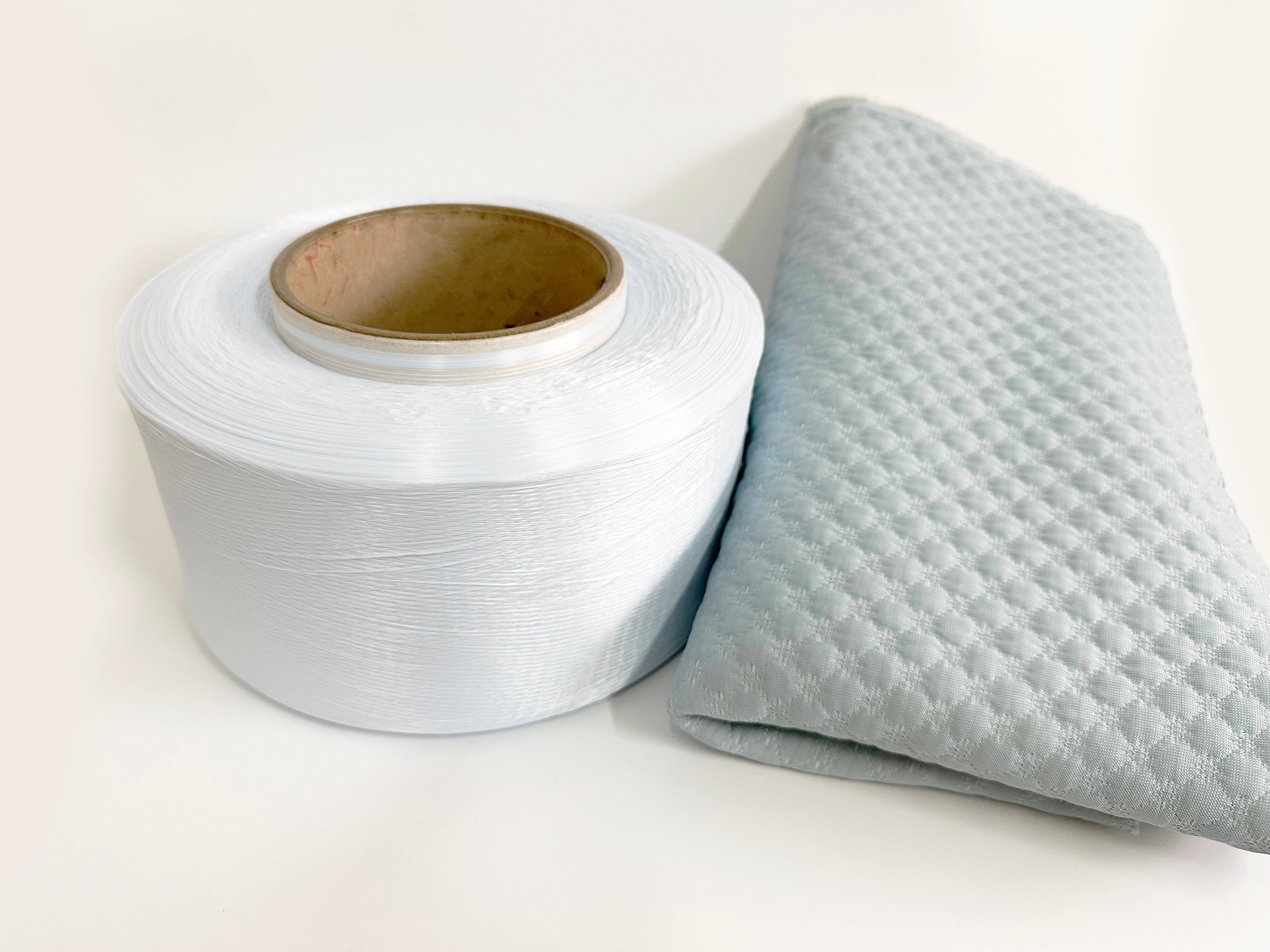
Crafting fabrics that truly beat the heat starts at the fiber level. Instead of relying on a single material, engineers now blend synthetics and natural threads to engineer pores, surface textures, and moisture pathways that generic textiles can't replicate. Polyester might offer durability and quick-dry properties, but pairing it with a touch of rayon or a hydrophilic treatment transforms the weave into a dynamic system. The result isn't just sweat wicking; it's an active pull-and-spread mechanism that forces evaporation before dampness can build up, turning the entire garment into a second skin that reads your body heat and reacts accordingly.
What pushes these custom blends ahead is how they manipulate thermal energy beyond simple airflow. By embedding phase-change microcapsules inside the yarns or twisting fibers to create microscopic channels, the textile itself absorbs, stores, and releases heat in a regulated cycle. A runner on a humid morning, for example, feels a sudden chill not from external wind but from the material's latent heat absorption during the first sweat burst—then maintains comfort as the stored energy dissipates gradually. This isn't about labeling something “cooling”; it's engineering every filament to orchestrate a silent, constant thermal dialogue between you and your environment.
From Polymer to Chill: Inside the High-Tech Spinning Process
The journey begins with raw polymer pellets, which are carefully fed into an extruder where intense heat and pressure transform them into a molten, honey-like liquid. Precision is everything at this stage; even minor fluctuations in temperature can alter the molecular structure, compromising the fiber’s eventual strength and elasticity. The molten polymer is then forced through a spinneret—a device resembling a showerhead, but with microscopic holes that shape the material into continuous filaments. As these filaments emerge, they’re immediately cooled by a controlled blast of chilled air, locking their structure in a split second.
This rapid cooling, or quenching, is where the “chill” truly comes into play. By precisely managing airflow and temperature, technicians can influence the fiber’s crystallinity and orientation, essentially programming its final properties before it even becomes a solid thread. The filaments are then drawn over a series of rollers, stretching them to align the polymer chains, which boosts tensile strength and adds just the right amount of flex. Unlike older methods that relied on slower, less consistent cooling, this high-tech approach yields fibers with remarkable uniformity—vital for everything from moisture-wicking sportswear to lightweight industrial fabrics.
What sets modern spinning apart is the integration of real-time sensors and adaptive controls. Every yard of fiber is monitored for diameter, tension, and molecular alignment, allowing on-the-fly adjustments that used to require hours of manual recalibration. The result isn’t just efficiency; it’s the ability to create bespoke fibers with characteristics once thought impossible—ultra-fine yet resilient, soft yet shape-retentive. From the initial melt to the final chill, the process represents a quiet revolution, turning humble polymers into the invisible backbone of high-performance materials we rely on daily.
Why This Yarn Leaves Traditional Cotton and Polyester in the Dust
It all starts with breathability that cotton simply can’t match. While cotton tends to cling and trap moisture, this yarn actively pulls sweat away from the skin and dries in a fraction of the time. The result is a fabric that feels cool and weightless, even on the most humid days—something polyester, with its plastic-like cling, has never been able to achieve without chemical wicking treatments that wash out over time.
Durability is another area where this yarn quietly outshines the old guard. Cotton softens with age, sure, but it also pills, fades, and loses shape after repeated laundering. Polyester holds its structure better but often ends up feeling scratchy after a few wears. This yarn, however, resists pilling and abrasion while maintaining a remarkably soft hand, thanks to its unique fiber structure. It won’t thin out at the elbows or sag at the knees, keeping garments looking newer for far longer.
Then there’s the environmental piece—without the heavy water footprint of cotton or the microplastic pollution tied to polyester. This yarn is produced through a closed-loop process that recaptures nearly all solvents, and the fibers themselves are biodegradable under the right conditions. It’s a rare combination of everyday performance and a lighter touch on the planet, one that finally leaves cotton and polyester feeling like compromises from another era.
Beyond Sportswear: Surprising Places You'll Find Cooling PE Fabrics
Most of us associate cooling PE fabrics with workout gear, but they're quietly making their way into our homes. High-end bedding brands are now using these moisture-wicking, temperature-regulating textiles for pillowcases and mattress toppers. The result is a noticeably cooler sleep surface that doesn't trap heat, helping you stay comfortable through the night without cranking up the air conditioning.
Medical applications are another unexpected frontier. Lightweight cooling PE wraps and bandages are being adopted in physical therapy clinics to soothe inflammation and provide a dry, breathable barrier for sensitive skin. Unlike traditional compression fabrics, these versions reduce sweat build-up, making them ideal for patients who need to wear supports for extended periods.
You'll also find the fabric inside modern car interiors, where seat covers made from cooling PE yarns keep drivers and passengers from sticking to hot upholstery on sunny days. Even stroller manufacturers have caught on, lining baby bassinets with the material to give little ones a breezier ride. It's a simple innovation that proves comfort isn't just for athletes anymore.
What's Next for Cooling Textiles: Smart Fibers and Closed-Loop Systems
The push toward truly adaptive cooling fabrics is accelerating, with smart fibers leading the charge. These are not your typical moisture-wicking or breathable materials; they incorporate phase-change substances, thermoresponsive polymers, or embedded conductive threads that actively regulate temperature in response to environmental shifts. Imagine a single garment that can keep you warm in the morning chill and cool by midday—without any external power source. Researchers are experimenting with fibers that contract or expand their microstructure based on humidity or heat, altering the fabric’s porosity in real time. Others embed microcapsules of wax-like compounds that absorb excess body heat when you’re active and release it when you stop. This shift from passive to responsive textiles blurs the line between static clothing and dynamic, wearable climate control.
Equally transformative is the rise of closed-loop systems in textile production. Instead of treating cooling performance as an afterthought—applied via chemical finishes that wash out and pollute waterways—next-generation cooling will be built into the fiber at the molecular level, with recovery and reuse in mind. Closed-loop manufacturing means capturing production waste, recycling water and solvents, and designing fibers that can be fully reclaimed at end of life. Some companies are already knitting polyester-based cooling fabrics that can be depolymerized and remade into new yarns without downgrading performance. This circular approach doesn’t just cut down on landfill waste; it ensures that cooling functionality survives multiple lifecycles, turning a disposable product into a durable asset.
Combining smart fibers with closed-loop design opens the door to a radically different apparel ecosystem. Picture a high-performance shirt that not only adapts to your body temperature but also carries a digital passport detailing its material provenance, care history, and disassembly instructions. When you’re done with it, the garment can be returned, chemically separated, and its specialized fibers repurposed into new cooling textiles—forever avoiding the incinerator. This vision requires collaboration across material science, digital identification, and reverse logistics, but the pieces are falling into place. The next few years won’t just bring cooler fabrics; they’ll redefine what it means for a product to be truly sustainable, making cooling both personal and planetary in scope.
FAQ
It's a specialized polyethylene-based yarn engineered to deliver an instant cooling sensation when it touches the skin. Unlike standard synthetic fibers, it actively manages thermal energy to keep the wearer comfortable.
The yarn leverages high thermal conductivity that rapidly draws heat away from the body. Combined with a unique cross‑sectional shape, it allows moisture to spread quickly and evaporate, enhancing the natural chill.
Most options rely on chemical finishes that wash out over time. This yarn integrates the cooling property into the fiber itself, so it remains permanently functional without needing renewal treatments.
You'll find it in performance sportswear, casual summer clothing, bedding, and even automotive upholstery where consistent temperature regulation is critical for comfort.
Absolutely. Brands can adjust filament thickness, twist levels, and blend ratios with materials like cotton or spandex to match the exact hand feel, stretch, or durability requirements of their final product.
Because it eliminates repeated chemical treatments and often uses recycled polyethylene feedstock, its lifecycle environmental footprint is noticeably lower. Plus, garments made from it tend to need less frequent washing.
Tests show the inherent thermal properties remain stable through more than 50 home laundry cycles. The effect doesn't depend on a surface coating, so there's nothing to degrade with typical care.
Conclusion
Custom PE cool feeling yarn is redefining fabric comfort through a blend of material science and precision engineering. At its core lies a set of hidden physical properties that give polyethylene yarn its ice-cold sensation upon touch—instant heat dissipation driven by high thermal conductivity and a unique crystalline structure. By tailoring fiber cross-sections, surface textures, and custom polymer blends, manufacturers can amplify this cooling effect for specific uses, making the yarn not just cold but intelligently responsive to body heat. The high-tech spinning process itself transforms raw polymer into chill-inducing filaments, carefully controlling orientation and crystallinity to lock in the cooling performance right from the melt phase.
When benchmarked against traditional cotton and polyester, this yarn offers superior moisture management, faster drying times, and a lasting cool-to-the-touch feel that doesn't wash out. Its applications, once limited to sportswear, now extend into unexpected sectors—medical textiles, automotive interiors, and bedding—where passive thermal regulation adds tangible value. Looking ahead, the future of cooling textiles is being shaped by smart fiber innovations and closed-loop recycling systems, promising fabrics that adapt to environmental changes while minimizing waste. Custom PE cool feeling yarn is not just a trend; it's a foundational shift toward high-performance, sustainable comfort that challenges how we think about everyday fabrics.
Contact Us
Contact Person: CONNIE
Email: [email protected]
Tel/WhatsApp: 86-0512-53671634
Website: https://www.lida-yarn.com/