

Custom Plastic Push Pull Connectors That Improve Device Reliability and Serviceability
2026-11-18
When a medical device fails mid-procedure or a field instrument won’t reseat after maintenance, the culprit is rarely the sensor or the software—it’s often the connector. Custom plastic push pull connectors are quietly changing that equation, combining secure latching with quick, tool-free disconnection to improve both device reliability and serviceability. In this post, we’ll look beyond generic circular options and explore how tailored geometries, keying, and material choices can solve real assembly and durability problems. For teams that need more than an off-the-shelf fit, REUNION has been turning those requirements into production-ready connector designs worth a closer look.
Tool-Free Release That Keeps Service Intervals Short
Routine upkeep tends to drag when every panel or guard depends on a specific wrench, socket, or hex key. This design removes that friction. A simple hand-operated release lets technicians open access points in seconds, with no tools to gather, drop, or misplace. The mechanism is built for repeated use, so the motion stays smooth even after months of exposure to dust and vibration.
Because the release works without tools, there is less temptation to force a stuck fastener or leave a cover half-secured. That directly protects surrounding hardware from unnecessary wear. It also means a single operator can handle most checks without walking back to a toolbox, which keeps short service tasks from turning into longer stops.
The practical outcome is a maintenance routine that fits into tighter windows. Teams can inspect, clean, or swap components faster, and the equipment returns to work sooner. Over time, those small time savings add up, especially in facilities where every minute of downtime carries a cost.
Why Retention Stability Matters More Than Initial Mating Force
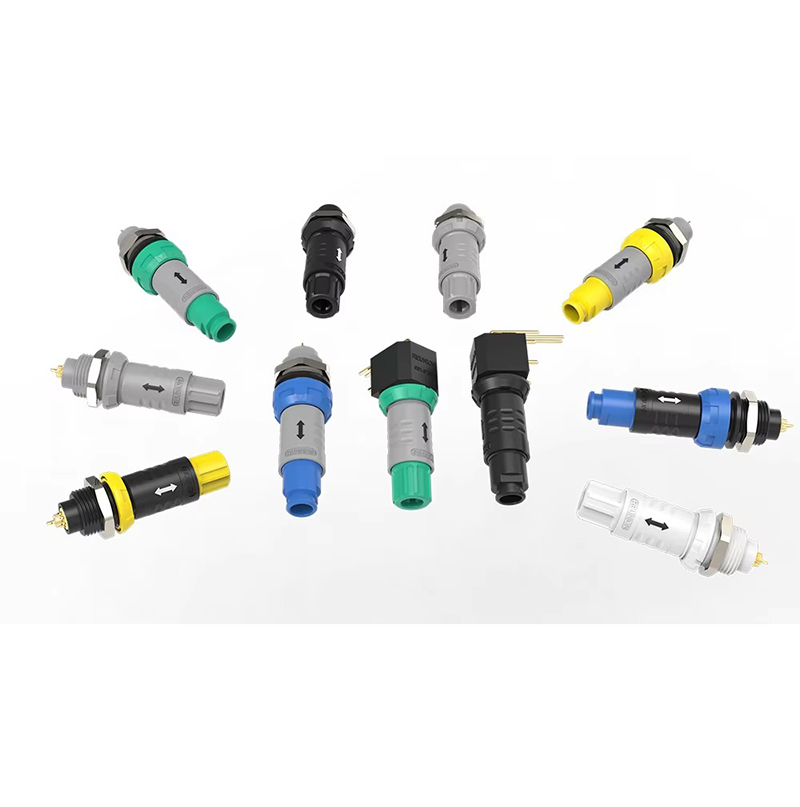
Insertion force gets a lot of attention on the production floor because it shows up immediately in feel and assembly effort. Retention stability, by contrast, only reveals itself weeks or months later in the field. Yet it is the better predictor of whether a terminal pair will survive vibration, thermal expansion, and repeated micro-movement without developing intermittent opens.
A high initial mating force can mask a weak contact system. If the base material relaxes or the spring member loses its preload after a few hundred thermal cycles, the connector may still feel acceptable during first assembly but drift into marginal contact later. Stable retention means the normal force stays inside a predictable band over time, keeping contact resistance low while avoiding the accelerated wear that comes from over-stressed beams.
For that reason, designs should be judged less by the first insertion number and more by how the terminal behaves after stress relaxation, heat aging, and repeated cycling. A slightly higher initial force that remains consistent is usually a better trade-off than an impressively low first force that fades once the housing and metal settle into service conditions.
Custom Keying and Color Coding for High-Density Device Panels
On dense panels where dozens of ports sit side by side, the difference between a quick fix and a long troubleshooting session often comes down to how fast a technician can spot the right connection. Custom keying turns identical-looking modules into distinct physical or logical groups, so a specific card or signal path can be identified before a cable is ever plugged in.
Color coding takes that same idea further by giving each signal type, destination, or priority level a visual shorthand. Rather than reading tiny labels under dim rack lighting, engineers can follow a color band or keyed edge straight to the correct row. Some facilities reserve one color for primary feeds, another for backup paths, and a third for intercom or control traffic, which cuts down on cross-patching mistakes during late-night maintenance.
The real value appears when panels scale beyond what a single person can hold in memory. A well-planned scheme of keying and colors makes high-density layouts self-explanatory at a glance, even for someone walking into the room for the first time. It also leaves room for local conventions, so a team can adapt the system to the way they actually work instead of forcing a generic layout onto a one-off install.
Glass-Filled Housings That Shrug Off Coolants and Cleaning Agents
Coolant leaks and aggressive cleaning solvents have a way of finding plastic enclosures long before the service interval arrives. Glass-filled housings hold their shape and surface finish in these conditions because the embedded glass strands resist the micro-swelling and embrittlement that plague unfilled materials.
In many sensor and connector bodies, the failure starts small: a hairline crack around a mounting boss or a gasket seat that no longer seals flat. Glass-filled grades reduce that risk by staying dimensionally stable after repeated contact with glycol-based coolants, alkaline degreasers, and alcohol wipes. The result is less torque relaxation at fasteners and fewer leak paths developing around seals.
Specifying these housings shifts the discussion away from frequent replacement toward long-term repeatability. Maintenance crews can wipe down equipment with standard cleaning agents without worrying about surface hazing or gradual loss of mechanical strength, which keeps electrical connections and sensing faces protected across thousands of washdown cycles.
Strain Relief Designed Around the Cable, Not Added as an Afterthought
The concept here is simple but often overlooked: the strain relief should be shaped by the cable it protects, not bolted on after the housing is already locked in place. By starting with the cable's bend radius, outer diameter, and the way it naturally flexes during use, the relief becomes a continuation of the cable rather than a rigid collar fighting against it. This means fewer stress points, less chance of the jacket pulling away from the connector, and a smoother curve that actually guides the cable through repeated motion.
When the strain relief is designed around the cable from the first sketch, it can taper gradually, match the cable's stiffness, and leave just enough clearance for heat shrink or overmolding to grab hold. The result is a part that doesn't look like an afterthought—no abrupt step, no awkward bulge, no zip-tie workaround. Instead, the transition from connector to cable feels intentional, almost invisible, because the geometry was derived from the cable itself rather than forced onto it.
In practice, that approach shows up in details like a longer internal cavity for the cable's natural bend, or a durometer selection that softens toward the exit instead of staying uniformly hard. It also means fewer iterations later, because the relief isn't being reworked to fix a failure—it was already in tune with how the cable moves, coils, and hangs. The cable defines the shape, and the strain relief simply follows.
One-Handed Operation in Tight Spaces Without Sacrificing Connector Security
Working inside a rack or behind a bulkhead leaves little room for a second hand, so the connector shell itself has to guide the mating process. A slight taper near the interface helps the plug find the receptacle before the contacts engage, while shallow knurling or a soft-touch collar gives enough grip without adding diameter. The locking action is tuned so that a single thumb can push or twist the collar through its full travel, ending in a firm detent that is felt through the fingers rather than read from a label.
That tactile confirmation matters more than a visual indicator when the connector is hidden behind cable bundles or mounted at an awkward angle. Some designs use an internal leaf spring or ramp profile that builds resistance just before the lock seats, so the operator gets a clear click at the end of travel. If the connector is not fully seated, the collar will not settle into its locked position, which leaves a small but noticeable gap or a collar that remains slightly proud of the body.
Security is not achieved by adding bulk or requiring extra tools. Instead, the mating force and the retention force are separated: a light push aligns and seats the contacts, while a short collar rotation engages the locking balls or latching fingers. This keeps one-handed effort low but maintains a high pull-out rating. The result is a connector that can be installed blind, with gloves, in a narrow chase, without someone having to choose between reaching it and locking it properly.
FAQ
They are built around a specific device rather than asking the device to adapt to an off-the-shelf shell. The latch travel, cable exit angle, flange shape, and keying can all be set to match how a technician actually reaches the unit, which cuts both assembly errors and service time.
Yes. The housing can follow the available space instead of requiring a larger panel opening. That includes offset flanges, low-profile bends, custom strain relief, and non-standard mounting points, so a connector problem does not turn into an enclosure redesign.
Engineering resins handle that well when the latch and wall sections are designed for the expected load. The material also damps sharp impacts better than some metal shells and will not corrode in humid or washdown settings, but the resin grade and glass fill need to match the mechanical demand.
A clean, low-effort click on insertion and a deliberate pull to release. The retention should stay consistent over thousands of cycles, and the latch should not loosen enough that normal cable weight or vibration causes an accidental disconnect.
In equipment that is opened often or in cramped conditions. Color coding, keying, and obvious tactile feedback let workers swap a module or cable assembly without reading a manual, and the push-pull motion removes the need for tool clearance around the connector.
They can. The seal can be designed into a stationary interface so it does not twist or wear during mating. With the right gasket placement and latch compression, a push-pull connector can stay fast to operate while meeting the required dust or water protection for the device.
It comes down to selecting a resin with the right impact and fatigue behavior, avoiding sharp internal corners, and designing the latch as a controlled flexure instead of a rigid snap. Prototype cycling and thermal testing then confirm that the molded part holds up before production tooling is cut.
Custom tooling usually adds upfront time and a higher initial order compared to buying a stock part, but it often removes secondary brackets, adapters, and rework. Once the mold exists, repeat orders are straightforward and the unit cost can become favorable for a connector that fits without compromise.
Conclusion
Tool-free release changes how maintenance teams interact with medical and industrial equipment. A connector that disconnects without a separate tool keeps service intervals short, particularly when access is limited and gloves make fine motor movements harder. But easy release only works if it does not come at the expense of long-term holding strength. Retention stability after repeated cycles matters more than a high initial mating force; a plug that seats firmly and stays put through vibration and thermal shift is more valuable than one that simply feels stiff at first insertion. Glass-filled housings extend that reliability by resisting coolants, oils, and cleaning agents without becoming brittle or discolored. Strain relief is also built around the actual cable path rather than added later, which reduces stress at the termination point when the cable is pulled or flexed during routine service.
In dense device panels, custom keying and color coding remove the guesswork from reconnection. Technicians can quickly identify the correct port by color and key shape, which lowers the risk of cross-mating and saves time during reassembly. The geometry also allows one-handed operation in tight spaces without sacrificing connector security. The latch stays engaged until the operator applies a deliberate release motion, so panels can be opened and closed confidently without accidental disconnects. These details may seem small, but they directly influence device uptime and serviceability in environments where lighting is poor, space is limited, and downtime carries real cost.
Contact Us
Contact Person: Hayley Liang
Email: [email protected]
Tel/WhatsApp: +86 13480625451
Website: https://www.reunion-china.com/