
Custom Swiss-Type Precision Parts Machining Solutions for Complex High-Precision Components
2026-05-21
In the world of high-precision manufacturing, even a micron can make the difference between success and failure. Complex components demand more than just standard CNC machining—they require Swiss-type precision, a specialty where WINNRUI CNC has quietly excelled for years. But what truly sets their solutions apart? It’s not just the tolerances they hold, but the way they turn challenging geometries into production-ready parts without compromising speed or cost. Whether you're pushing the limits of medical devices or aerospace systems, discovering how custom Swiss-type machining can unlock new possibilities might just change your next design.
Micron-Level Precision with Swiss-Type Turning
Swiss-type turning achieves micron-level precision through a unique sliding headstock design that feeds bar stock through a guide bushing, supporting the workpiece mere millimeters from the cutting tool. This eliminates deflection and vibration, even when machining long, slender components, allowing tolerances tighter than ±2 microns to be consistently held across production runs.
The machine’s ability to perform multiple operations in a single setup—turning, milling, drilling, and threading—without repositioning the part dramatically reduces cumulative errors. Paired with synchronized subspindles and live tooling, it delivers finished components straight off the machine, often eliminating secondary grinding or polishing steps entirely.
Custom Machining for Complex Micro-Components
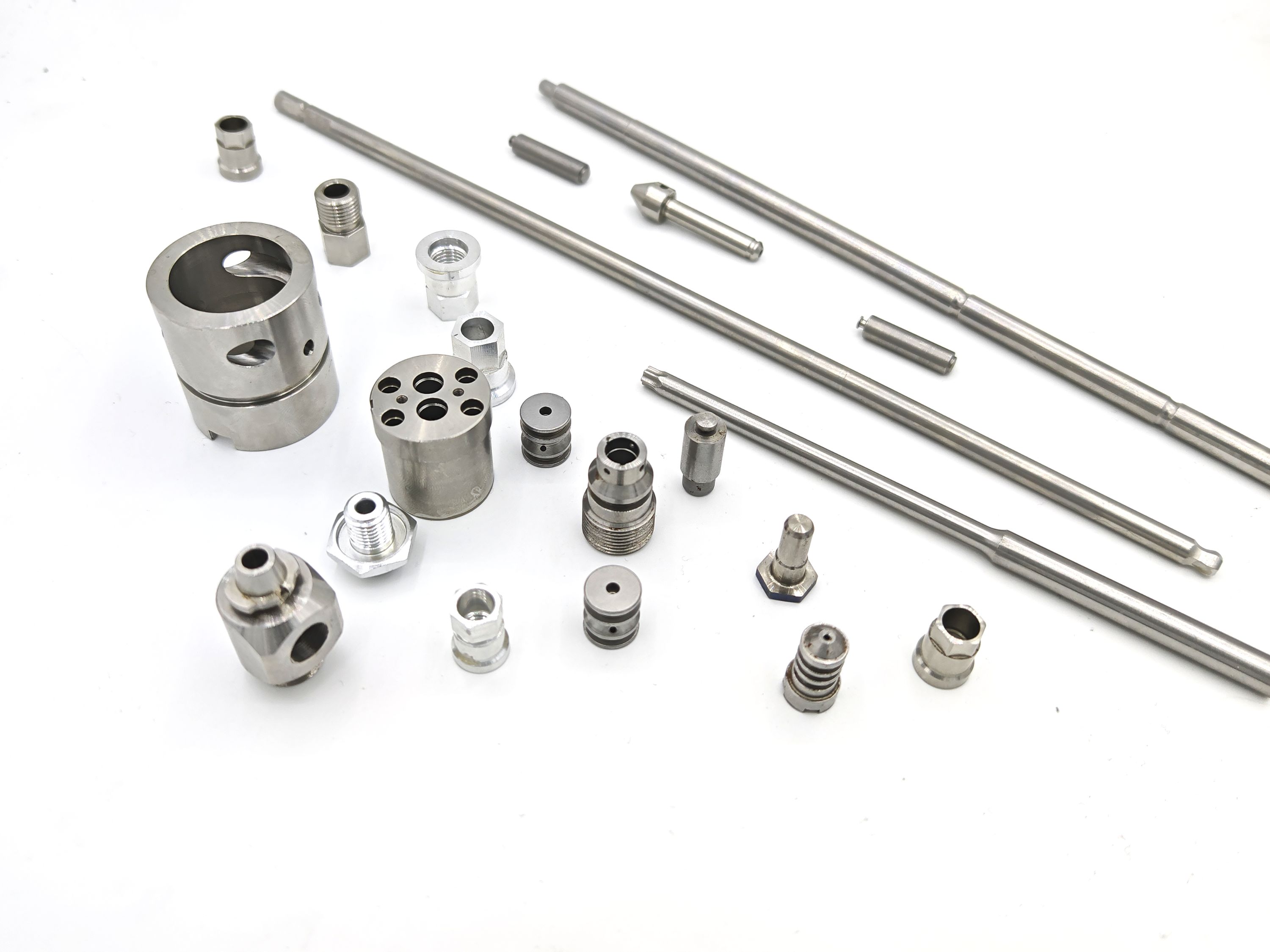
Precision in micro-component fabrication hinges on more than just scaled-down equipment. Our approach integrates advanced multi-axis machining, in-house tooling design, and real-time metrology to hold tolerances under 5 microns. This is critical when geometries involve intersecting bores, ultra-thin walls, or exotic alloys that challenge vibration control and thermal stability. By embedding sensor feedback directly into the cutting cycle, we adapt parameters on the fly, ensuring surface finishes remain consistent even across batch runs.
You won’t find off-the-shelf solutions for parts that measure less than 2 mm in overall length yet require internal features with ±0.002 mm accuracy. That’s why every project begins with a collaborative design-for-manufacturability review. We often suggest subtle alterations—like adjusting a radius to eliminate a fragile set-up or reorienting a feature to reduce tool changes—that compress lead times and improve repeatability without compromising function. The result is a streamlined process from prototype to production, even for quantities ranging from ten to ten thousand.
Advanced Multi-Axis Capabilities for Intricate Parts
When dealing with components that feature undercuts, deep cavities, or complex curvatures, conventional machining often falls short. Advanced multi-axis systems overcome these limitations by tilting and rotating the tool or workpiece in ways that open up otherwise inaccessible areas. This dynamic orientation dramatically reduces the need for multiple setups, enabling a seamless transition from roughing to finishing without manual intervention, and preserving the design intent of the most challenging geometries.
The true advantage of multi-axis machining lies in its ability to maintain contour accuracy across freeform surfaces. With simultaneous movement along five or more axes, the cutting tool can hug a compound curve at a consistent angle, delivering a consistent finish and tighter tolerances. This is particularly critical in industries where surface integrity directly affects performance, such as impellers with sleek blade profiles or orthopedic implants that must mirror anatomical shapes.
Beyond precision, modern multi-axis platforms intelligently manage chip evacuation and coolant delivery in deep recesses. By reorienting the part during cutting, they prevent chip buildup that would otherwise mar the surface or break delicate tools. The result is a predictable, unattended process that produces intricate parts with refined details and reliable repeatability, making once-prohibitive designs fully manufacturable at scale.
High-Volume Production Without Sacrificing Quality
Scaling production often triggers a tug-of-war between speed and precision, but the two don’t have to be enemies. By embedding real-time monitoring systems that flag deviations the moment they occur, teams can correct issues before they ripple across batches. This proactive approach turns quality assurance from a final gatekeeper into an integral part of every production cycle, ensuring that thousands of units match the care of the first prototype.
Workforce empowerment plays an equally vital role. When operators are trained to understand not just their tasks but the physics behind the processes, they become frontline problem-solvers rather than button-pushers. Pairing this deep knowledge with modular equipment designs allows rapid changeovers without recalibration drift, so high throughput never comes at the expense of consistency. The result is a rhythm where each repeat is as reliable as the last, no matter the volume.
Material Versatility from Titanium to Plastics
The ability to work with such a wide spectrum of materials is what sets modern manufacturing apart. Titanium, with its remarkable strength-to-weight ratio and corrosion resistance, demands exacting tolerances and specialized tooling, yet delivers parts that thrive in aerospace and medical implants. On the other end, engineering-grade plastics like PEEK or Ultem offer chemical resistance and electrical insulation, opening doors to lightweight, complex geometries that metal simply can't achieve. This breadth isn't just a checklist—it’s the difference between a one-size-fits-all approach and a tailored solution that actually matches the demands of the application.
Shifting from rigid metals to flexible polymers without missing a beat takes more than just switching out stock. It requires deep familiarity with how each material behaves under stress, heat, and during the machining or molding process. A shop that handles titanium day in and day out understands its tendency to work-harden and the need for rigid setups, while that same team can pivot to machining acrylic with polished edges and no micro-cracks. The real value surfaces when you’re not forced to compromise on design intent just because a supplier only handles a narrow band of substances.
This versatility also accelerates iteration. Prototyping in aluminum before moving to a carbon-fiber-filled nylon for end-use parts can happen under one roof, slashing lead times and miscommunication. It means fewer vendors to manage, fewer compatibility headaches, and a more streamlined path from concept to reality. Whether the priority is high-temp performance, biocompatibility, or simply cost-efficiency at scale, having genuine competence across the material spectrum unlocks possibilities that a limited palette never could.
Engineering Support for Challenging Designs
When a concept pushes the limits of conventional thinking, our team steps in to transform obstacles into viable solutions. We’ve seen firsthand how ambitious projects can hit roadblocks during prototyping or scaling, and that’s exactly where our engineers thrive. Instead of applying one-size-fits-all methods, we collaborate closely with your in-house staff to understand the specific constraints—whether they’re material limitations, thermal management headaches, or miniaturization demands—and then tailor support that addresses the real pain points.
Our approach draws on cross-disciplinary know-how spanning mechanical, electrical, and software domains, so we rarely look at a problem from a single angle. On a recent wearable device project, for instance, we helped re-architect the power delivery network to slash noise without adding bulk, all while keeping the industrial design intact. That kind of hands-on involvement means we’re not just advisors; we get into the details, run simulations, build test rigs, and iterate until the design performs reliably under real-world conditions.
Beyond technical fixes, we provide the kind of pragmatic guidance that keeps development timelines moving. Because we’ve navigated similar tightropes before, we can flag potential compliance snags or supply chain pitfalls early, saving you from late-stage rework. Ultimately, the goal isn’t simply to get a design to “work”—it’s to refine it into something robust, manufacturable, and ready for the demands of users who expect nothing less than flawless execution.
FAQ
Swiss-type parts are turned components produced on sliding headstock lathes where the bar stock moves past a fixed tool, offering exceptional support right at the cut. This design eliminates deflection on long, slender parts and allows multiple operations in one setup, making it ideal for intricate geometries that standard lathes struggle with.
Through a combination of high-precision spindles, vibration-dampened construction, and real-time tool wear compensation, Swiss machines routinely hold tolerances down to a few microns. Climate-controlled environments and specialized tooling further ensure that every batch mirrors the last, even on features like tiny undercuts or fine threads.
You’ll find these parts in medical devices—think bone screws and miniature surgical instruments—as well as aerospace fuel system components, watch movement plates, and electronic connector pins. Anywhere a tiny flaw could mean catastrophic failure, Swiss machining is the default choice.
The process thrives on free-machining metals like 303 stainless, 6061 aluminum, and leaded brass, but it also handles tougher alloys including titanium grades and Inconel with proper tooling. Engineering plastics such as PEEK and Delrin are equally viable, though highly abrasive or gummy materials often require custom cutting strategies.
Beyond just owning the equipment, a specialist brings deep knowledge of micro-tooling dynamics, an in-house metrology lab for first-article inspections, and the ability to integrate secondary processes like thread rolling or laser marking. They also engage early with design teams to suggest geometry tweaks that slash cost without sacrificing performance.
It starts with collaborative design-for-manufacturing reviews where potential chip evacuation or tool access issues are flagged. Process simulations and a small pre-production pilot run validate the full workholding and toolpath sequence, after which statistical process control monitors critical dimensions in real time to lock in quality.
Absolutely. The same multi-axis platform that churns out millions of connector sleeves can be reprogrammed overnight for a handful of prototype medical implants, thanks to quick-change tooling holders and modular guide bushings. This flexibility eliminates the need for separate low-volume setups and dramatically shortens lead times.
Conclusion
Achieving micron-level accuracy in complex, high-precision components demands a machining approach that goes beyond conventional limits. Our Swiss-type turning solutions are built around this very principle, offering manufacturers the ability to produce intricate micro-components with tolerances measured in microns. By integrating advanced multi-axis capabilities, we can handle the most demanding part geometries in a single setup, dramatically reducing cycle times and eliminating stack-up errors that plague secondary operations. This process excels not only with traditional metals but also extends to challenging materials like titanium, Inconel, and engineering-grade plastics, giving designers the freedom to select the optimal material for their application without compromising precision or surface finish.
What truly sets our service apart is the deep engineering collaboration we bring to every project. Our team works alongside your design staff from prototype through to high-volume production, refining part designs for manufacturability while maintaining the integrity of your original specifications. The result is a seamless transition to scalable production runs where consistency and quality remain paramount, even under the most demanding delivery schedules. Whether you need a few hundred or several million parts, our Swiss-type machining process ensures that each component meets the same exacting standards. With on-the-fly tool adjustments, real-time process monitoring, and a culture of continuous improvement, we turn challenging designs into reliable, production-ready realities.
Contact Us
Contact Person: Tim
Email: [email protected]
Tel/WhatsApp: +86 15522553731
Website: https://www.winnrui-cnc.com/