Durable HDPE Geomembrane Liner: The Definitive Guide to Long-Lasting Containment Solutions
2026-08-07
When it comes to reliable, long-term containment, the material you choose can make or break your project. From hazardous waste ponds to decorative water features, the demand for durable, leak-proof liners has never been higher. That’s why HDPE geomembrane liners have become the industry standard—and in this guide, we’ll show you why. But before you dive into technical specs, consider what sets a top-tier solution apart: field-tested performance, expert support, and a brand that stands behind its products. At JInseed Geosynthetics Solution, we’ve spent years perfecting HDPE liners that resist punctures, chemicals, and UV degradation, ensuring your containment lasts for decades. Ready to learn how the right liner saves you time, money, and headaches? Let’s explore the definitive guide to durable HDPE geomembrane liners—and why it matters for your next project.
What Makes HDPE the Gold Standard in Geomembrane Polymers
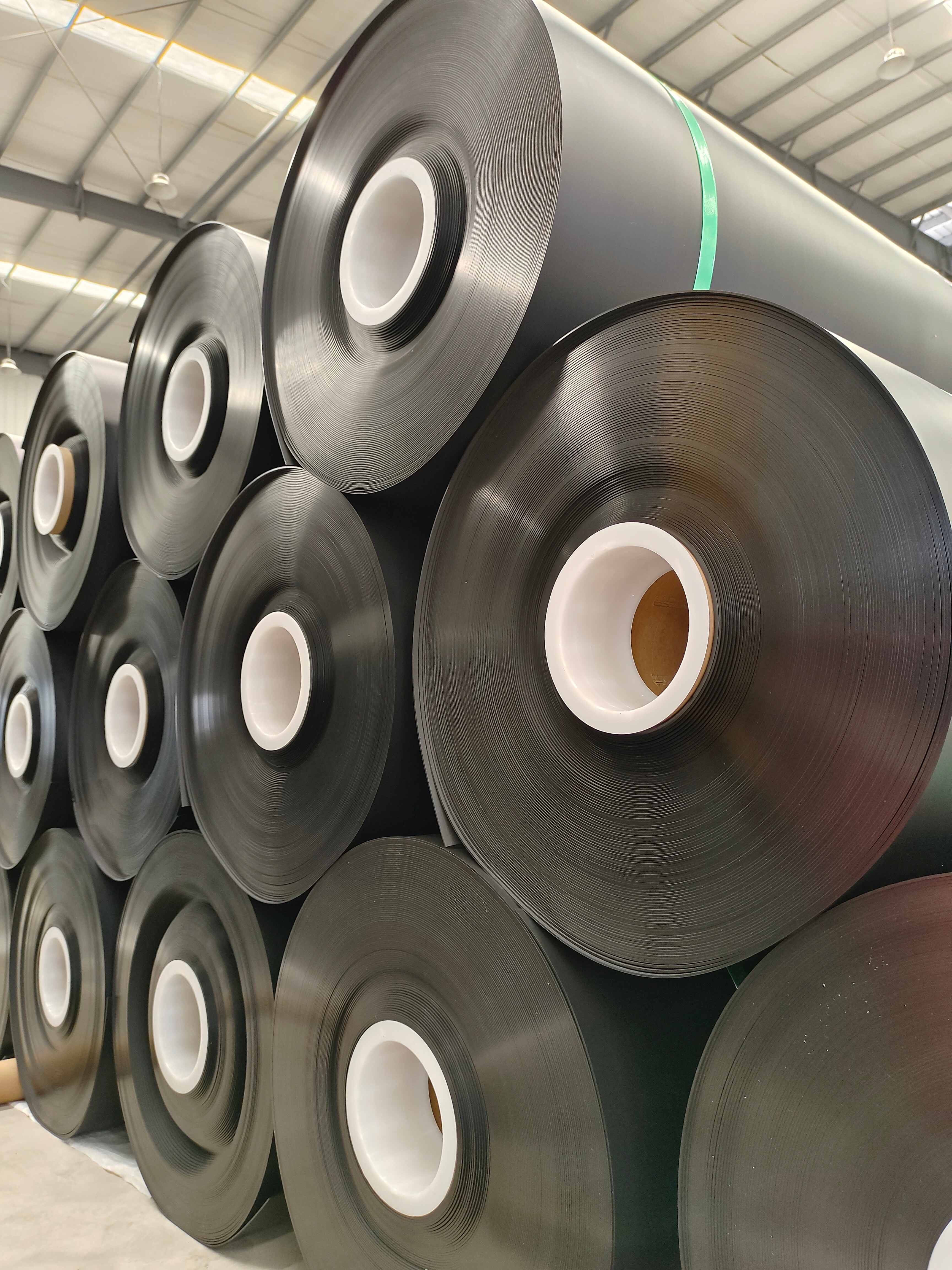
HDPE owes its dominance to a rare combination of chemical toughness and physical resilience. Unlike many polymers that soften or degrade when exposed to harsh leachates, acids, or hydrocarbons, high-density polyethylene remains virtually inert. This stability comes from its tightly packed molecular chains, which also grant it an exceptionally low permeability. In landfill liners or industrial ponds, that translates into decades of reliable containment without the silent threat of gradual chemical attack.
Beyond the lab results, what sets HDPE apart is how it performs at the project level. Its flexibility allows panels to conform to uneven subgrades without stress cracking, while the ability to fusion-weld seams creates a continuous, monolithic barrier. Installers value the material’s light weight and wide-width rolls, which reduce on-site joints and speed up deployment. When you tally the long service life, minimal maintenance, and proven track record across climate extremes, it becomes clear why engineers keep returning to HDPE as the default choice for critical containment.
Lifespan Decoded: How Decades of Service Are Achieved
The secret to exceptional product longevity rarely lies in a single breakthrough. Instead, it emerges from a deliberate philosophy of design where every component is over-engineered to endure stress far beyond its expected operating conditions. Engineers prioritize materials that resist fatigue, such as high-grade alloys and reinforced polymers, and they integrate redundant systems that silently take over when primary ones falter. This layered approach, often invisible to the end user, forms the foundation for decades of unwavering service.
Maintenance, too, is woven into the product's DNA rather than treated as an afterthought. Modular architectures allow worn elements to be replaced in minutes, not hours, while onboard diagnostics constantly monitor the health of critical subsystems. Field technicians receive real-time data, often before a failure can propagate, enabling a proactive model that prevents catastrophic breakdowns. This seamless blend of predictive intelligence and human expertise creates a self-reinforcing cycle where each intervention boosts the system's resilience, pushing its operational horizon far into the future.
Beyond the physical and procedural aspects, a culture of continuous refinement plays a defining role. Feedback from the field is meticulously catalogued and fed back into the production line, where it shapes minor adjustments to machining tolerances or seal formulations. These incremental improvements, accumulated over years, compound into a lineage of products that grow more robust with each generation. It is this relentless, unglamorous pursuit of marginal gains that ultimately turns a machine from a mere tool into a lasting legacy.
Invisible Enemies: Chemical and UV Stress on Liners
Sure, everyone worries about tears and punctures, but the real threats to a liner often work silently, out of sight. Chemical attack and ultraviolet radiation don’t announce themselves with a sudden gash—they slowly degrade the polymer chains, creeping in from the surface and steadily compromising the material’s integrity. By the time you notice the cracking, discoloration, or loss of flexibility, the damage may already run deep.
Chemicals are chameleons. A liner might hold up perfectly against one substance while crumbling within months against another that barely registers on a compatibility chart. Landfill leachate, agricultural runoff, even the seemingly benign soil additives can alter pH levels or introduce plasticizing agents that soften or swell the liner. The problem worsens with temperature—warmer environments accelerate chemical reactions, turning what should be a decades-long service life into a short-term gamble.
UV exposure is no less insidious. Even lab-aged samples don’t always mirror field conditions, where cyclic strain, heat buildup, and micro scratches from dust amplify the assault. A liner that passes an accelerated weathering test might still fail prematurely if it’s installed under constant tension or left uncovered through an unusually harsh summer. The only real defense is a layered one: robust stabilization packages, thorough site-specific chemical assessments, and a willingness to sacrifice the convenience of “standard” specifications for something that actually works where you’re putting it.
Sloppy Seams, Costly Leaks: Mastering Installation Craftsmanship
Even the finest materials can fail if the seams aren’t handled with care. A rushed overlap or a misaligned edge might look trivial at first glance, but water has a relentless way of finding those tiny gaps. Over time, what starts as a faint stain can turn into rot, mold, or structural damage that costs far more than the original installation. It’s not just about following the manual—it’s about reading the surface, understanding how temperature and tension will play out over the years, and making every seal as if it’s the only line of defense.
Real craftsmanship shows in the details that nobody sees once the job is done: the clean cut, the proper primer, the overlap that accounts for expansion and contraction. A skilled installer knows that a seam isn’t just two materials meeting—it’s a transition that has to breathe and flex. Using the right adhesive, smoothing it evenly, and allowing the bond to cure without disturbance separates a durable seal from a future headache. Those extra few minutes spent trimming and aligning pay back in years of leak-free performance.
In the end, installation mastery isn’t about speed or shortcuts. It’s about respecting the materials and the physics at play. When you treat every seam as a potential failure point and reinforce it with patience and precision, you’re not just building a roof or a facade—you’re safeguarding what’s underneath. The cost of a sloppy job isn’t just a callback; it’s the slow, silent toll of water intrusion that diminishes a structure’s integrity. That’s why the best installations are the ones you never hear about—they simply work, season after season.
Expanding Frontiers: Innovative Uses You Haven’t Considered
Beyond chatbots and recommendation algorithms, artificial intelligence is quietly reshaping industries in ways most people never see. From predicting machinery breakdowns before they happen to composing original music that feels deeply human, the technology's reach has stretched far past the obvious. It's not about replacing people—it's about amplifying what we can do in the spaces we overlook.
Take agriculture, for instance. Satellites and drones now scan fields, feeding data into models that tell farmers exactly when to water, fertilize, or harvest—down to the individual plant. The result? Higher yields with less waste. Meanwhile, in healthcare, AI isn't just reading scans; it's helping design personalized treatment plans by sifting through millions of research papers in seconds, spotting connections human doctors might miss.
The real surprise might be in creative fields. AI tools are being used to restore lost historical recordings, generate interactive storytelling experiences, and even design novel protein structures for drug discovery. As these technologies evolve, the line between tool and collaborator is blurring, opening doors to solutions we haven't even thought to ask for yet.
When Cheaper Isn't Better: The Economics of Durable Liners
At first glance, opting for a low-cost liner seems like a smart budget move. The upfront savings are obvious and the immediate impact on project expenses feels like a win. But this perspective rarely accounts for the hidden costs that creep in over time. Frequent replacements, unexpected failures, and the labor to manage constant repairs quietly erode those initial gains until the 'cheaper' option actually becomes the more expensive one.
Durable liners flip the script by turning a one-time purchase into a long-term asset. The materials and construction might carry a higher price tag today, but they delay the next replacement cycle by years or even decades. This shifts spending from a recurring headache to a predictable, amortized investment. The real calculation includes reduced downtime, less waste, and fewer resources diverted toward emergency fixes.
Beyond the balance sheet, there's an operational quietness that comes with reliability. Teams aren't pulled off primary tasks to patch leaks or swap out degraded sheets. The constant background noise of maintenance scheduling disappears. That kind of stability is rarely listed on an invoice, but it shows up in project timelines and morale—and ultimately tilts the economic argument firmly in favor of spending more wisely the first time.
FAQ
It’s a high-density polyethylene sheet engineered to block liquids and gases from passing through. Think of it as a heavy-duty plastic barrier used in large-scale projects where leaks aren’t an option.
HDPE stands out for its resistance to chemicals, UV rays, and punctures. It stays flexible even in cold weather and won’t break down easily, making it a go‑to for demanding environments like landfills or chemical tanks.
They’re all around us: beneath landfills, inside mine tailing ponds, lining fish farms and reservoirs, behind retaining walls, and even under artificial lakes. Basically anywhere that needs a watertight or gas-tight seal.
When installed correctly and not subjected to sharp rocks or extreme abuse, it can easily exceed half a century. Some studies point to a service life well beyond 100 years, thanks to its inherent antioxidant and UV stabilisers.
Surface prep is key—no jagged stones or roots. Seams are welded using hot air or extrusion welding, then tested with vacuum boxes or air pressure. A rushed install often leads to leaks later, so patience and precision pay off.
Absolutely. It shrugs off acids, alkalis, and most industrial solvents. Temperature swings from freezing to baking heat don’t phase it because the polymer remains dimensionally stable and maintains its elongation properties.
Thickness isn’t just a number—it affects puncture resistance, seam strength, and overall durability. For a temporary pond, 0.5 mm might be fine, but a hazardous waste cell often demands 2.0 mm or thicker. Always match it to the engineering specs.
Its main green credential is preventing leaks into soil and groundwater. While it’s plastic, its long life means fewer replacements and less material waste. Plus, at the end of its life, HDPE is recyclable into other products.
Conclusion
Durable HDPE geomembrane liners have earned their reputation as the premier choice for containment projects by combining exceptional chemical resistance, flexibility, and longevity. The material’s high-density polyethylene structure forms a nearly impermeable barrier that withstands aggressive chemicals, acids, and hydrocarbons, making it indispensable for landfills, mining heap leach pads, and wastewater ponds. Unlike alternative polymers, HDPE’s tightly packed molecular chains resist stress cracking and oxidative degradation, ensuring that the liner maintains its integrity even under harsh, long-term exposure. This inherent durability is precisely what sets HDPE apart as the gold standard, delivering a service life that often spans several decades when properly engineered and installed.
Yet achieving this multi-decade performance hinges on meticulous seam welding and rigorous quality control during installation. Poorly executed welds become the weak links where leaks originate, underscoring the fact that craftsmanship is as vital as the material itself. UV stabilizers and antioxidant packages protect the liner from sunlight and chemical attack, but only a defect-free installation allows those additives to do their job. Moreover, the economics of durable liners reveal that upfront savings on cheaper materials or rushed installation are quickly erased by repair costs, environmental liabilities, and premature replacement. As the frontiers of HDPE use expand into novel applications like floating covers, secondary containment, and aquaculture, the lesson remains clear: prioritizing quality and expert installation is the only path to genuinely long-lasting containment solutions that justify the investment.
Contact Us
Contact Person: Jerry Qiu
Email: [email protected]
Tel/WhatsApp: +65 84265294
Website: https://www.jinseed-geo.com