

High Quality Food Grade Fumed Silica for Safe Food Processing
2026-11-16
When it comes to food safety, every ingredient matters—even the ones you can’t see. High-quality food grade fumed silica plays a silent but crucial role in keeping powders free-flowing and production lines running smoothly. Yet not all silica is created equal. That’s why forward-thinking processors turn to Zhonglian for a material that meets rigorous purity standards without compromise.
Is Your Anti-Caking Agent Quietly Ruining Batch Consistency?
Even small shifts in anti-caking agent particle size or surface chemistry can create dead zones in your mixer, leaving pockets of powder that refuse to blend evenly. Those invisible clumps don't just slow down your line — they change the bulk density from one batch to the next, so your fill weights drift and your tableting pressure needs constant adjustment.
Most anti-caking agents are hygroscopic by design, pulling moisture away from the main powder. But when humidity spikes or the agent sits too long in a hopper, it saturates and starts bridging instead of flowing. That means the same recipe can produce a free-flowing powder on Monday and a sluggish, lumpy mess on Wednesday, with no change in your ingredient list.
Instead of chasing the symptoms, check the particle size distribution and moisture uptake of the anti-caking agent itself. Switching to a coated grade or adding it at a different stage of mixing often restores the consistency you thought you already had.
Food Grade Fumed Silica Purity Tests Every Processor Should Demand
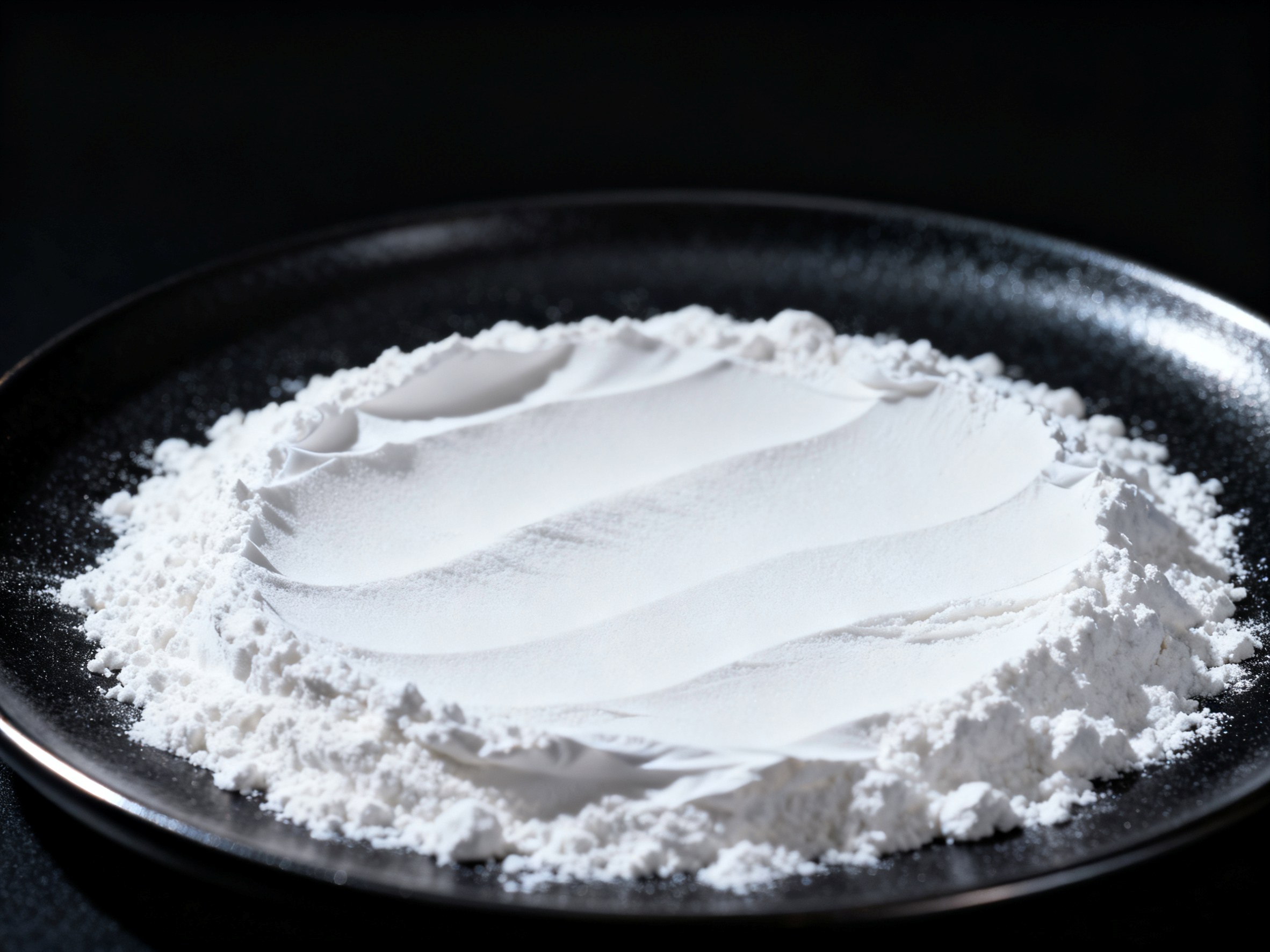
When a batch of food grade fumed silica arrives, the certificate of analysis only tells part of the story. A processor should insist on direct confirmation of elemental impurities, especially lead, arsenic, cadmium, and mercury, using ICP-MS. If those metals show up above single-digit parts per million, the material has no place in a food-contact or edible formulation.
Microbial cleanliness matters just as much as chemical purity. Demand a full microbial panel—total aerobic count, yeast and mold, plus absence of E. coli, Salmonella, and Staphylococcus aureus. Because the powder is dry, bad storage can still introduce spores, so a low moisture specification below 1.5% should be verified by loss-on-drying rather than accepted from the supplier's word.
Don't overlook the structural assays that reveal whether the silica has been cut with cheaper extenders. A purity-focused spec should include loss on ignition under 2%, a pH in the 3.7–4.5 range for hydrophilic grades, and a BET surface area within the narrow window promised for the grade. If any of these three drift outside tolerance, downstream thickening, anti-caking, or clarity performance will likely fail long before a formal purity certificate catches it.
The Moisture Barrier Effect That Keeps Dry Blends from Clumping
Dry blends turn into solid bricks when humidity sneaks into the package. The moisture barrier effect interrupts that process by giving each particle a thin, protective shell that water vapor can't easily penetrate. Instead of forming liquid bridges between granules, the moisture stays in the air space or gets locked away by ingredients designed to grab it first.
Formulators often rely on a small amount of silica, calcium silicate, or a modified starch. These powders are far finer than the main blend, so they coat the larger particles and fill the microscopic gaps where condensation tends to collect. Some mixes go further and use fat-encapsulated acids or flavors; the lipid layer repels water while still dissolving when the blend hits liquid.
You can see the result immediately when you scoop a spice rub on a humid day and it falls apart instead of clumping into chunks. That free-flowing behavior isn't just cosmetic. It keeps portioning accurate and prevents the frustration of pounding a hardened jar against the counter. A well-designed moisture barrier quietly preserves both texture and shelf life without changing the way the blend tastes or mixes.
Safe Food Processing Starts with Choosing the Right Silica Grade
Every batch of food that moves through a processing line carries a hidden risk of contamination—not just from the ingredients themselves, but from the materials used to filter, clarify, or stabilize them. Silica, particularly amorphous precipitated silica, is widely used in food production for everything from anti-caking in powdered spices to fining agents in beer and wine. Yet the term “silica grade” can be misleading. A product labeled as high purity might still fail if the particle size distribution is wrong for your specific process, or if the trace metal profile exceeds the strict limits set for direct food contact. Getting the grade right isn’t a paperwork exercise; it’s about matching the physical and chemical fingerprint of the silica to the exact point where it touches your product.
Many processors default to whatever silica grade was used in a previous campaign or recommended by a supplier’s generic datasheet. That approach quietly undermines safety. A silica intended for industrial coatings may have the same SiO2 backbone but carry residues of processing aids, or a surface area so high that it binds flavor compounds unexpectedly. In food applications, even small differences in pore volume or pH can change how the silica interacts with lipids, proteins, or moisture. The right grade often means one that has been specifically engineered for low soluble iron, minimal heavy metal leaching, and a narrow particle size range that prevents dusting while still providing the required functional surface. Skipping that evaluation can lead to off-tastes, instability, or a recall if a contaminant is later traced back to an overlooked excipient.
A practical way to narrow the field is to work backward from the final food matrix. Ask what the silica must do—keep a powder free-flowing without absorbing too much oil, or pull haze-forming proteins out of a beverage without stripping desirable aroma compounds. Then demand a grade that has documented performance under those exact conditions, not just a certificate of analysis showing compliance with a generic food additive monograph. The safest choice often comes from smaller, application-specific silica lines where the manufacturer has already tested for things like migration, extraction, and sensory neutrality. In food processing, the right silica grade is never the one that merely passes a checklist; it’s the one that disappears into the process without leaving a trace you have to worry about later.
How Fumed Silica Prevents Clumping in High-Speed Mixing Lines
Fumed silica's chain-like aggregates act like microscopic spacers between powder particles. In a high-speed mixer, mechanical shear can force dry ingredients into dense clumps, especially when moisture or static charge is present. The silica particles, typically only 7–40 nanometers in primary size, wedge themselves between larger host particles and interrupt the contact points that lead to caking. This physical separation happens almost instantly under the turbulent mixing action, keeping the blend free-flowing even as throughput ramps up.
What makes it work at line speed is the way fumed silica coats particle surfaces rather than simply blending in. The high surface area—often 200–400 m²/g—allows a small dose, usually 0.1–0.5% by weight, to cover a huge number of host particles. Under intense shear, those silica aggregates stay put instead of being knocked off, maintaining a consistent barrier that stops fines from fusing into hard lumps. Operators notice fewer screen blockages and more uniform discharge from the mixer.
There is also a moisture-buffering effect that supports the mechanical action. Fumed silica can adsorb trace humidity on particle surfaces, reducing the liquid bridges that turn powders sticky. In high-speed lines where residence time is short, this dual role—physical spacer and moisture scavenger—means clumping is suppressed before it can start, not just broken up after the fact.
What High Quality Fumed Silica Means for Food Safety Compliance
Food-grade fumed silica carries obligations that go well beyond basic purity numbers. A high-quality product starts with a tightly controlled manufacturing process that keeps heavy metals, coarse particles, and crystalline silica at levels well under the limits set by major food safety authorities. This consistency matters because even small variations in surface area or aggregate size can change how the silica disperses in powdered foods, how well it prevents caking, and whether it stays within safe use ranges under different processing conditions.
For food manufacturers, choosing a high-purity fumed silica also simplifies traceability and audit readiness. Suppliers that document each batch against recognized standards remove guesswork from the compliance file, especially when blends contain sensitive ingredients or when finished products target markets with stricter additive rules. The practical result is fewer reformulation surprises and a cleaner path through regulatory review, without sacrificing the anti-caking and flow-control performance that led to the ingredient's use in the first place.
FAQ
It's an ultra-fine, high-purity form of silicon dioxide produced through flame hydrolysis. The food grade version meets strict purity limits for heavy metals and microbial contamination, while industrial grades may contain residues or additives that aren't safe to ingest.
It acts as an anti-caking agent, keeping powders free-flowing even in humid conditions. It can also stabilize emulsions, thicken liquids, and carry flavors or nutrients without affecting taste or odor.
Food grade fumed silica is widely accepted by regulatory bodies like the FDA and EFSA as a direct food additive. It's inert, doesn't break down in the digestive tract, and passes through the body unchanged. The key is using a grade that has been tested for low levels of impurities.
Ask for a certificate of analysis showing compliance with FCC or JECFA specifications, including heavy metal limits, loss on drying, and particle size distribution. Also check that the manufacturing facility follows GMP and the packaging is food-contact safe.
It works in both. In liquids like beverages or sauces, fumed silica can create a stable suspension, prevent settling, or adjust viscosity without making the product cloudy. The hydrophilic or hydrophobic surface treatment matters for the specific application.
Usually between 0.1% and 2% by weight, depending on the desired effect. Anti-caking often needs less than 1%, while thickening or suspending may push toward the higher end. Overuse can give a dry or gritty mouthfeel, so formulators test carefully.
No, when used at recommended levels it's essentially invisible. It has no flavor or odor, and because of its extremely small particle size and high purity, it doesn't change the color or clarity of most foods.
Keep it in a cool, dry place away from strong odors and moisture. The bags or containers should be sealed tightly after opening because the powder is very light and can absorb humidity, which reduces its anti-caking performance.
Conclusion
The quiet failure of an anti-caking agent can unravel an entire production line, yet many processors overlook the root cause until batch inconsistencies surface. High quality food grade fumed silica directly addresses this hidden variable with controlled purity and a consistent particle structure that keeps dry blends flowing uniformly, even under the stress of high-speed mixing. Instead of settling for generic silica that may introduce contaminants or erratic absorption, demanding rigorous purity tests—such as heavy metal limits, microbial counts, and residual moisture content—becomes non-negotiable. This level of scrutiny ensures the silica functions as a reliable processing aid, not a quality risk. In practical terms, fumed silica forms an invisible moisture barrier around individual particles, preventing the capillary bridges that lead to clumping and caking. That barrier remains stable across fluctuating humidity and long storage windows, so the blend you ship is the blend your customer receives.
Beyond performance, selecting the correct silica grade anchors your food safety compliance. A high quality fumed silica is manufactured under strict hygienic conditions, free from contaminants that could trigger recalls or audit failures. It integrates seamlessly into dry mixes—spices, powdered beverages, baking blends—without altering flavor, odor, or mouthfeel. Processors gain a dual advantage: smoother line efficiency and documented safety. While low-cost alternatives may appear tempting, they often introduce variability that quietly erodes batch consistency and undermines regulatory standing. The right grade, verified through transparent supplier data, turns an invisible ingredient into a proactive safeguard. In high-speed mixing lines, where heat and shear can accelerate moisture uptake, high quality fumed silica maintains free-flow behavior, reduces downtime from bridging, and supports clean label expectations by functioning at low usage levels. Ultimately, safe food processing is not a single decision but a chain of deliberate choices—and fumed silica is one link that silently holds the rest together.
Contact Us
Contact Person: Levin Wang
Email: [email protected]
Tel/WhatsApp: 8618668999988
Website: https://www.silicaplant.com/