

High Quality HIFU Transducer: What to Look for and Why It Matters
2026-08-17
Choosing a HIFU transducer isn't just about ticking a spec sheet—it's about knowing which details actually affect treatment depth, energy consistency, and long-term reliability. With a flood of options claiming 'high quality,' clinicians need a clear-eyed way to evaluate what's under the housing. In this post, we unpack the design and material choices that separate dependable transducers from costly compromises, and why brands like Siansonic build their reputation on these exact details.
Core Material Choices That Define Transducer Performance
The heart of any transducer lies in the materials that convert one form of energy into another, and this selection often dictates the device's sensitivity, bandwidth, and durability. While piezoelectric ceramics like PZT dominate many applications due to their high coupling coefficients, their brittleness and temperature limitations push designers toward alternatives such as single-crystal relaxor ferroelectrics or piezoelectric polymers. Each option brings a distinct trade-off: crystals offer exceptional electromechanical response but remain costly and difficult to shape, whereas polymers like PVDF provide flexibility and broad frequency response at the expense of lower output.
Beyond the active element, the backing and matching layers are equally consequential, though frequently overlooked in casual discussions. A poorly chosen backing material can reflect acoustic energy back into the element, creating ringing artifacts that blur time-domain resolution. On the other hand, an overly absorbent backing sacrifices sensitivity. Matching layers must bridge the large acoustic impedance mismatch between the active material and the medium—whether air, water, or tissue—and a single quarter-wavelength layer is rarely sufficient for broadband performance. Sophisticated designs stack multiple layers with graded impedances, each material chosen for its attenuation, thermal stability, and bonding compatibility.
Finally, the emergence of lead-free materials and additive manufacturing is reshaping the material landscape. Environmental regulations increasingly restrict lead-based ceramics, prompting research into bismuth sodium titanate and potassium sodium niobate compositions that approach PZT's performance without the toxicity. Concurrently, 3D-printed piezocomposites allow for engineered porosity and complex geometries that were previously impossible with conventional machining. These innovations don't simply replace existing materials—they open new transducer architectures where the material itself becomes a tunable design parameter rather than a fixed constraint.
Frequency Stability: The Silent Factor Behind Consistent Results
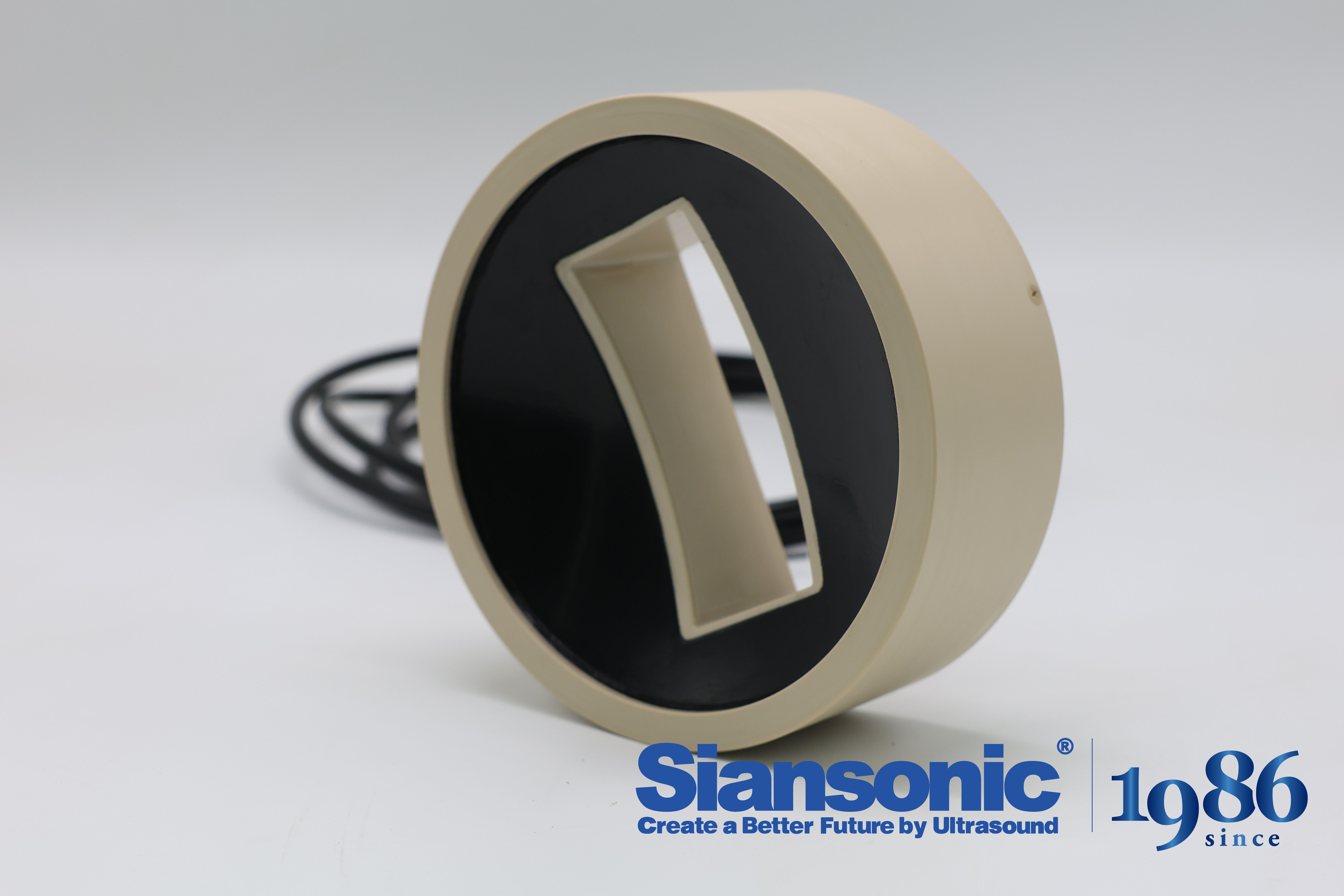
Ask anyone choosing a frequency reference and the conversation usually stops at accuracy. But stability is what keeps a system honest after the warm-up period ends. A clock that drifts only a few parts per million might look flawless on a bench, yet put it inside an enclosure with a heat-generating power supply and that tiny shift accumulates. Over a day, a 1 ppm drift becomes more than 86 milliseconds—enough to break tight synchronization or push a radio outside its guard interval.
What trips people up is that short-term jitter and long-term drift are different problems wearing the same name. A phase noise plot won't show a slow wander caused by aging or humidity, and an overnight soak test won't reveal the microphonic glitch that only appears when a fan kicks on. Matching the stability grade to the actual thermal and mechanical environment—not the ideal datasheet conditions—tends to separate designs that survive field deployment from ones that only work at a demo.
How Focal Geometry Impacts Treatment Precision
The shape of the focal volume does more than define where energy lands—it dictates how confidently clinicians can spare adjacent tissue. A tight, symmetric focal spot with steep dose falloff keeps the high-dose region compact, reducing the chance that microscopic extensions of the target are missed while protecting nearby critical structures. When the geometry is irregular or elongated, however, treatment planning becomes a balancing act: margins are expanded to cover uncertainties, but each millimeter added can push dose into organs at risk.
Different delivery platforms shape their focal zones differently. Some produce near-spherical distributions that are ideal for small, well-circumscribed lesions, while others create elliptical or conformal fields that better match complex tumor volumes. The key is not just the nominal focal size but the gradient at its boundary—a steep gradient allows for sharper delineation between target and normal tissue, which translates directly into safer dose escalation.
In practice, focal geometry also interacts with motion and setup error. A very small, sharply defined focus may be less forgiving if the target shifts between fractions or if patient positioning varies. Clinicians often choose a focal geometry that balances precision with robustness, ensuring that the intended treatment volume receives the prescribed dose even under realistic conditions. This trade-off is where the art of treatment planning meets the physics of beam delivery.
Thermal Management: Why Heat Dissipation Can't Be Overlooked
Inside any high-performance electronic system, the difference between stable operation and sudden failure often comes down to how well excess heat is routed away from critical components. A processor running at full load, a battery pack during rapid charging, or a power inverter in an electric vehicle each generates thermal loads that, if left unmanaged, push materials past their safe operating limits.
Effective heat dissipation does more than prevent shutdowns. It preserves signal integrity, slows electromigration in interconnects, and keeps thermal expansion cycles from cracking solder joints. In tightly packed designs, even a few degrees of extra temperature rise can halve the expected lifespan of capacitors or increase leakage current in transistors enough to corrupt data paths.
The real challenge is that cooling solutions must scale with both power density and form factor. Passive strategies like vapor chambers and graphite sheets work only when there is a clear path to a cooler surface, while active approaches—fans, liquid loops, thermoelectric modules—add complexity and points of failure. Designers who treat thermal management as an afterthought usually rediscover the same lesson during late-stage testing: heat is not a minor byproduct, it is a design constraint that shapes board layout, enclosure materials, and even firmware throttling behavior.
Signs of a Transducer Built for Clinical Longevity
A transducer that holds up in daily clinical use doesn't just survive an occasional drop—it's designed around the repetitive realities of patient care. Look for models where the cable strain relief is thick and tapered rather than a thin rubber boot, and where the connector pins are recessed to resist bending when techs coil the cable between exams. The housing should feel dense and seamless, not hollow, because repeated disinfection with quaternary ammonium or hydrogen peroxide wipes gradually eats away at cheap plastics and adhesives.
Materials tell you more than marketing sheets. A lens made from medical-grade silicone or a multi-layer acoustic stack with a chemically bonded matching layer is a sign the manufacturer accounted for long-term acoustic stability, not just initial image quality. Pay attention to the seams: transducers with ultrasonic welding or overmolded joints tend to stay sealed against gel and cleaning fluids far longer than ones glued together. If the strain relief pulls away from the housing after a few hundred flex cycles, that's a failure point many budget probes share.
The most credible sign is usually hidden in the service record. Ask for mean time between failures across a fleet, or whether the vendor offers a multi-year warranty on the acoustic stack rather than just the cable. Some clinical engineering teams track how often a specific transducer model gets sent out for delamination or dead elements—those numbers rarely appear in brochures but speak louder than any spec sheet. A transducer built for longevity is one where the manufacturer can point to five-year-old units still producing clean images without rework.
Matching Layers and Acoustic Efficiency: The Hidden Credibility Test
Acoustic matching layers often get reduced to a materials checklist, but the real evaluation lies in how well those layers translate electrical input into consistent, wideband acoustic output. A transducer can list impressive component specs yet still fall short when its internal impedance transitions are poorly graded. The hidden credibility test isn't about marketing numbers—it's about the thickness, density, and compliance of each intermediary layer working together to minimize reflection and maximize forward transmission. If the transition from piezoelectric element to tissue or water isn't smooth, you'll see ringing, dropouts, and a frequency response that looks good on a datasheet but fails under pulse-echo conditions.
Most manufacturers focus on the backing material and the front face, but the matching layer is where energy either passes through or bounces back. A layer that's too thin or too stiff can turn a promising design into a narrowband device with poor axial resolution. The credibility test emerges when you compare measured insertion loss against the theoretical quarter-wave prediction—any deviation beyond a few percent suggests uncontrolled fabrication tolerances or a mismatch in acoustic impedance that the vendor couldn't hide. This isn't about one perfect material; it's about how the whole stack behaves under thermal cycling and prolonged drive.
When you're assessing a supplier or a new transducer line, ask for time-domain reflectometry data and broadband insertion curves, not just a center-frequency spec. The hidden credibility shows up in the trailing edges of the pulse: clean, fast decay means the matching layers are doing their job; long, low-level oscillation means energy is trapped in the stack. Acoustic efficiency is rarely a single number—it's a shape, a decay envelope, and a tolerance for real-world loading. That's the test most spec sheets can't pass.
FAQ
Look at how the manufacturer characterizes acoustic power stability and focal spot over time, not just peak numbers on a datasheet. A transducer that shifts its focal length by a few millimeters after extended pulsing can turn a precise ablation into an off-target injury risk.
Hard PZT ceramics such as PZT-8 are usually preferred over softer PZT-4 because they tolerate high electric fields with less heat build-up and depolarization. Single-crystal composites can improve efficiency but need careful matching to the drive electronics to avoid spurious modes.
In HIFU, even a few percent reflection at the transducer-to-tissue interface becomes waste heat inside the probe and reduces delivered energy. A good matching layer stack balances acoustic impedance and thermal conductivity, keeping the front face cooler while maximizing transmission.
A sharply defined focus with minimal side lobes lets you ablate a small volume without preheating surrounding tissue. Transducers with poorly controlled aperture shaping or mechanical lens errors can produce a comet-shaped focus that spreads energy unevenly.
Ask for accelerated life-test data showing impedance and capacitance drift after thousands of cycles at rated power. Also check whether the housing design allows easy inspection of the cable strain relief and fluid path; failures there are common in field use and often overlooked in bench tests.
Active cooling, whether by circulated water or forced air over the backing, prevents the piezoelectric element from losing efficiency as it heats. Without it, the transducer may still meet specs briefly but will derate during long treatment sessions, forcing pauses or reducing ablation volume.
A transducer with a reactive impedance far from the amplifier's ideal load will reflect power back into the electronics, causing inefficiency and possible damage. Proper impedance matching networks not only protect the system but also stabilize the output waveform, which is essential for repeatable lesion formation.
Conclusion
A high-quality HIFU transducer is defined by more than just its ability to generate focused ultrasound energy. The core material—whether lead zirconate titanate (PZT) composites or single-crystal piezoelectrics—sets the baseline for electromechanical coupling and bandwidth, directly influencing how efficiently electrical power becomes acoustic output. Yet even the finest material underperforms without tight frequency stability; drift of just a few kilohertz can shift the focal zone and produce inconsistent lesion sizes. Equally critical is focal geometry: a well-designed spherical or phased-array lens keeps the focal spot tight and predictable, which matters when millimeters separate therapeutic effect from collateral damage.
Thermal management is often the silent killer of transducer longevity. Without adequate heat dissipation—through backing layers, passive cooling fins, or active fluid channels—the piezoelectric element degrades, leading to output drift and eventual failure. Signs of clinical-grade build quality include robust electrical insulation, sealed housings against coupling gel ingress, and connectors rated for thousands of mating cycles. Finally, matching layers are the hidden credibility test: a precisely tuned acoustic stack maximizes energy transmission into tissue while minimizing internal reflections, which directly translates to deeper penetration and more uniform heating. Selecting a transducer that excels across all these domains is not a luxury but a prerequisite for reproducible patient outcomes.
Contact Us
Contact Person: Ivy Zhang
Email: [email protected]
Tel/WhatsApp: +86 1081502288
Website: https://www.siansonic.com/