

LLLT for Hair Loss: How to Choose the Right Device for Your Needs
2026-08-31
If you've been researching low-level laser therapy (LLLT) for hair loss, you already know it can work. But with so many devices on the market, choosing the right one isn't just about picking the highest price or the fanciest design—it's about matching the technology to your specific needs, from wavelength and power density to treatment coverage and session time. Get that wrong, and months of effort can go nowhere. As a trusted manufacturer, GUANG TAI has seen firsthand how the right device makes all the difference. Here's what to look for before you commit.
What the Light Is Actually Doing at the Follicle Level
The follicle isn’t just a passive tube that light happens to pass through. Photons with wavelengths in the red and near-infrared range penetrate the scalp and get absorbed by cytochrome c oxidase inside the mitochondria of follicle cells. That absorption shifts the enzyme out of its inhibited state, allowing the electron transport chain to produce more ATP. In practical terms, the hair matrix cells suddenly have a larger energy budget to spend on division and protein synthesis, which is why low-level light can nudge a dormant follicle back into the anagen phase without raising tissue temperature.
What’s less obvious is that the light also loosens the local grip of nitric oxide. Nitric oxide normally binds to cytochrome c oxidase and slows respiration, but photon absorption displaces it. The freed nitric oxide diffuses into nearby capillaries and relaxes the smooth muscle, increasing blood flow to the papilla. That means the follicle isn’t just getting more ATP—it’s also getting a better supply of oxygen, hormones, and nutrients at the exact moment its metabolic demand rises.
The effect is frequency-dependent and dose-sensitive. Wavelengths below roughly 600 nm scatter too much in the skin, while wavelengths above 1100 nm get absorbed by water before reaching the bulge region. Within the useful window, the follicle behaves more like a chemical battery being recharged than a simple switch being flipped. Cells that were barely holding on in telogen start transcribing growth factors again, and the dermal papilla re-establishes the signaling loop that keeps hair shaft production running for months at a time.
Wavelength and Power: The Numbers That Actually Count
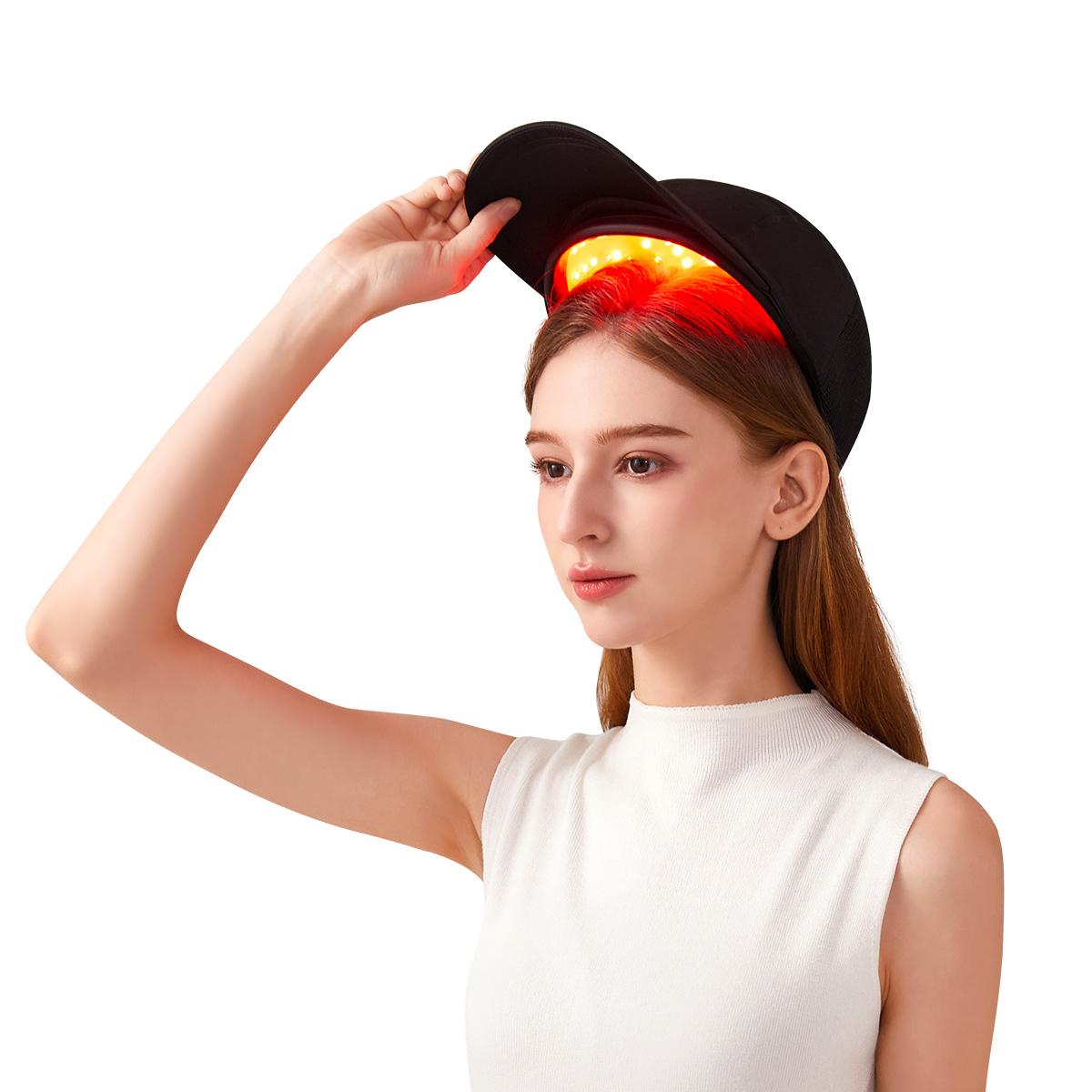
When you strip away the marketing gloss, a light-based device really comes down to two figures: the wavelength it emits and the power it delivers. Everything else—the shape of the handle, the app connectivity, the carrying case—is secondary. Those two numbers determine whether the light reaches the right depth and whether it does anything useful once it gets there.
Wavelength controls how deeply the energy penetrates and what it interacts with along the way. Shorter wavelengths in the visible range, like red light around 630–660 nm, are absorbed closer to the surface and work well for skin-level concerns. Push into the near-infrared range, roughly 800–850 nm, and the light travels farther, reaching muscle and deeper tissue. Choosing the wrong wavelength is like trying to water a deep-rooted plant by misting the leaves.
Power, often measured in milliwatts per square centimeter, tells you how much energy actually arrives at the target area. A device can have an impressive-looking wavelength spec, but if the power density is too low, you’ll get little more than a warm glow. Conversely, cranking up the power without proper cooling or pulsing can turn a treatment into a burn risk. The useful range is narrower than most people expect, and it’s worth checking whether a device publishes real irradiance numbers instead of vague clinical-strength claims.
Device Shape and Fit: More Than Just a Style Choice
Device shape and fit go far beyond aesthetics. The way a device curves against your palm or rests against your ear determines how naturally it becomes part of your daily routine. A slightly tapered edge can mean the difference between a secure, comfortable grip and constant readjustment. Ergonomic choices like rounded corners or a subtle ridge aren't accidental details; they shape how you hold, carry, and interact with the device for hours on end.
Fit also influences usability in quiet, practical ways. A device that sits flush in a pocket won't snag on fabric or dig into your hip. One that balances weight evenly won't strain your wrist during a long call. Manufacturers sometimes alter thickness by just a millimeter or shift the button placement by a few degrees, and users immediately notice the difference in daily comfort. These small decisions accumulate into a sense of confidence — the device feels like it was made for your hand, not just for a shelf.
Over time, the right shape becomes invisible. You stop noticing the device and start using it without friction. That's the real test: a form factor that disappears into the task, letting your fingers find the controls without looking and your grip stay relaxed after an hour. When shape and fit are done well, they don't call attention to themselves. They simply let the device feel like an extension of your own movement, which is far more valuable than any color or finish.
Avoiding the Hype: Red Flags in Product Listings
Most product pages try to sell you a feeling, not a fact. You'll see words like “revolutionary,” “game-changing,” or “limited time only” without any real explanation of what the product does differently. When a listing leans on emotional language instead of measurable details, it's usually hiding something—thin materials, vague specs, or a feature that sounds better than it works.
Another red flag is the overuse of social proof that can't be verified. Screenshots of five-star reviews, “as seen on” logos, or claims of being a bestseller with no source attached are easy to fake. Genuine products don't need to shout about their popularity; they let the build quality, clear photos, and honest answers to customer questions speak for themselves.
Finally, watch for missing or buried information. If you have to dig through paragraphs of marketing fluff to find basic things like dimensions, materials, battery life, or warranty terms, that's a deliberate choice. A confident seller puts the boring facts up front. When the hype is loud and the specs are quiet, your money is probably safer staying in your pocket.
Will You Actually Use It? Convenience Factors That Decide Success
Most tools die in the gap between good intentions and actual daily friction. You might love an app's interface, but if it takes four taps to log a single expense or forces you to switch between three screens to finish one task, the novelty wears off within a week. The real question isn't whether something is powerful—it's whether the path from "I need to do this" to "done" feels almost invisible. Convenience lives in small details: default settings that actually match how you work, shortcuts that don't require memorizing a manual, and recoverability when you tap the wrong thing.
That's why features alone rarely predict success. A clunky but habit-forming tool beats a polished but high-effort one, because people default to whatever demands the least mental energy. Think about the products you kept using after the trial period—chances are they removed a step you didn't even notice, or let you finish a task without leaving your current context. If a tool can't earn a spot on the home screen or become a keyboard shortcut in the first ten uses, it's already losing to the friction-free alternative: doing nothing.
Patience Is Part of the Protocol: Reading Early Signs
Most early warnings don't look like warnings. They're slight drifts in a metric, a change in tone, a number that sits just outside the usual band. When you're trained to act fast, the temptation is to treat any deviation as meaningful. But impatience here costs more than missed time—it misreads noise as signal. Patience isn't the absence of response; it's the discipline of waiting until the pattern has enough weight to stand on its own.
Reading early signs well means paying attention to how things change, not just that they changed. A single outlier might be a fluke. Two outliers in the same direction, spaced apart, start to feel like a current. The real craft is in noticing the relationship between small events—the cadence, the acceleration, the absence of expected variation. You're not looking for a clear message; you're watching a story take shape slowly.
Some groups formalize this by requiring a signal to repeat before they escalate. Others wait for independent confirmation from a second source. It feels slow in the moment, but it filters out the noise that panic produces. The protocol isn't there to delay action forever—it's there to make sure that when you do move, you're moving because of evidence, not anxiety.
FAQ
Plenty. The number of diodes, their placement, the wavelength range, and whether the device uses lasers or LEDs all change how much light actually reaches your follicles. A cap with clustered diodes around thinning areas covers more scalp surface than a comb you have to move section by section. Treatment time also varies widely—some models require 25 minutes daily, others only 10 minutes every other day, so real-world convenience matters as much as the spec sheet.
Think about where your thinning is and how consistent you'll be. A cap or helmet is mostly hands-free and covers the whole top of the head, which helps if you have diffuse thinning or a busy schedule. A comb gives you more targeted control for specific spots like a receding hairline, but you have to part your hair and move it manually, which some people find tedious. If you'll realistically use it while watching TV or working at a desk, a cap might win. If you need to treat a small area and don't mind the extra effort, a comb can work.
Stick with red light around 630 to 670 nanometers. That range has the strongest clinical backing for hair growth because it penetrates the scalp and gets absorbed by hair follicle cells without overheating tissue. Going higher into infrared can still have benefits, but the evidence isn't as robust for hair loss, and you might pay more for wavelengths that don't add much. Lower wavelengths below 600 nm don't penetrate deeply enough to reach the bulge region of the follicle.
There's no single magic number, but more diodes usually means better scalp coverage and shorter treatment times. A device with fewer than 50 diodes might still work if you use it correctly and consistently, but you'll likely need longer sessions or more manual repositioning. High-quality caps often have 100 to 300 diodes spread across the crown and sides. Check the diode spacing too—clusters focused on the vertex and temples are more useful than a sparse grid that leaves gaps.
They work best for androgenetic alopecia—male or female pattern baldness—especially in the earlier stages when follicles are miniaturized but not dead. If you have completely slick bald areas that have been bare for years, LLLT probably won't revive them. It can also help with telogen effluvium or post-stress shedding by speeding up the recovery phase. But if your hair loss is caused by an autoimmune condition like alopecia areata, an active infection, or a nutritional deficiency, the device won't address the root cause.
Most people notice less shedding within two to four months, but visible regrowth often takes four to six months of consistent use. The new hairs usually start fine and light-colored before thickening over the next several cycles. If you stop using the device after seeing results, the benefits fade over several months because the underlying pattern of hair loss is still active. Treat it like a long-term habit, not a one-time fix.
Yes, and combining them often gives better results than using LLLT alone. The light stimulates cellular energy in the follicle while minoxidil increases blood flow and finasteride blocks DHT, so they work through different pathways. There's no known harmful interaction, but start one new treatment at a time so you can tell what's actually helping. If you have a very sensitive scalp or any open sores, wait until those heal before using the device.
Conclusion
Low-level laser therapy works by delivering photons that get absorbed by cytochrome c oxidase in follicle cells, nudging mitochondria to produce more ATP and release nitric oxide. That local energy shift reduces inflammation and pushes follicles stuck in the telogen phase back toward anagen. But the effect only happens at specific wavelengths—typically 630–670 nm for red light and 810–850 nm for near-infrared—and with enough energy density to reach the bulge and dermal papilla. A device that merely glows without stating irradiance in mW/cm² or total joules per session won't give predictable results. The physical design matters just as much: a cap with too few diodes, hard plastic spikes that press on the scalp, or a one-size-fits-all shell can create cold spots where light never reaches the thinning crown. Look for flexible, medical-grade silicone liners and enough emitters distributed to cover the entire affected area, not just the hairline.
Product listings deserve a skeptical eye. Avoid any brand that promises regrowth in six weeks, hides its diode count, or buries wavelength specs in fine print. Legitimate devices publish their parameters openly and often have FDA clearance or peer-reviewed clinical backing. The best laser cap is useless if it's uncomfortable or awkward to wear, so consider battery life, cordless operation, weight, and whether you'll actually sit through a 20-minute session three or four times a week. Early signs are easy to misread: you may notice more shedding in the first month, which is often just weak hairs making way for stronger shafts. Real improvement shows up slowly—a reduction in daily hair fall around month three, new baby hairs at the temples by month five or six, and thicker texture over a full year. If you're not ready to stick with it for at least six months, no device will rescue your expectations.
Contact Us
Contact Person: Manager Mei
Email: [email protected]
Tel/WhatsApp: +8618627866609
Website: https://zzgt.en.alibaba.com/