

ODM Hotel HVAC Energy Saving: Practical Ways to Lower Bills and Boost Guest Comfort
2026-09-21
Hotel HVAC systems rarely make headlines, but they quietly decide whether your monthly energy bill is a headache or a non-event. The good news? You don’t have to choose between lower costs and happier guests. With the right ODM approach—like the solutions from Tongbaote—you can achieve both. Here’s how.
Kill the AC in Empty Corridors
Most office buildings still run cooling at full blast down hallways that see a handful of people an hour. If the only traffic is the occasional restroom run, you're paying to chill dead air. Walk your own floor after 4 p.m. and check the vents — chances are the thermostat is set for a meeting room, not the corridor.
Start by separating corridor zones from occupied spaces. A simple schedule can drop the setpoint to 80°F or just turn the fan off between 7 p.m. and 6 a.m. Better yet, use motion or CO2 sensors so the AC only kicks in when someone is actually standing there. Retrofitting a small VAV box or adding a basic occupancy switch usually costs less than a month of wasted runtime.
The real trick is making it nobody's job to override the system. Lock the thermostat, label the override button, and put the corridor on an independent loop. Facilities managers who do this often see cooling energy drop 10–20% in the first billing cycle, and nobody complains because the air was never needed in the first place.
Sync Room Temps with Guest Arrivals
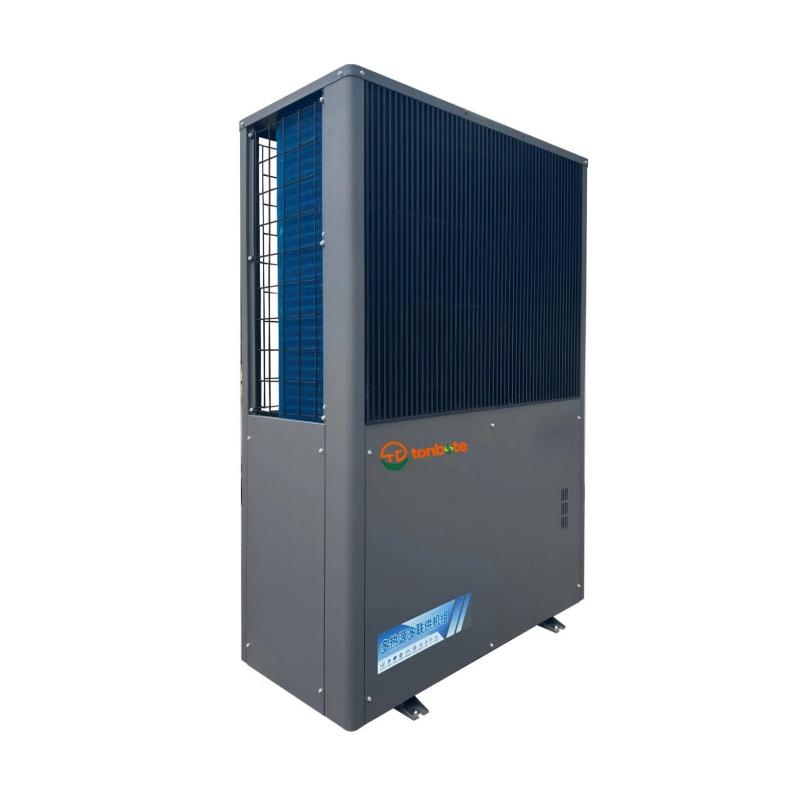
Matching room temperatures to guest arrival times isn't about following a rigid script. It starts with simple scheduling: know when someone is due, then nudge the thermostat a few degrees in the right direction about twenty minutes before the door opens. This avoids blasting cold air into an empty space all afternoon.
Occupancy sensors add another layer. If a flight lands early or a meeting wraps up sooner than planned, the system notices movement in the hallway or a key card tap and adjusts the climate accordingly. It's less about exact predictions and more about responding to real cues without wasting energy.
For properties that see a mix of business and leisure travelers, a short learning period helps. After a few stays, the system figures out that guests arriving after 8 p.m. often prefer a warmer space, while early birds lean cooler. Then the next reservation gets a head start without any manual override.
Reuse Exhaust Heat for Hot Water
Waste heat often slips away unnoticed—pouring out of exhaust pipes, drifting from equipment casings, and radiating off hot surfaces. In commercial kitchens, for instance, the flue gases from ovens and grills carry enough thermal energy to supply a steady stream of hot water for dishwashing. Instead of letting that heat vanish into the air, a simple heat exchanger can capture it and transfer it to a water tank. This approach turns a byproduct into a utility, cutting down on the primary fuel needed for water heating without adding any extra load to the existing systems.
The beauty of this reuse strategy lies in its adaptability. Data centers, laundromats, and even residential boiler setups all generate recoverable heat that can pre-warm incoming cold water. A compact brazed plate exchanger or a run-around coil loop can raise the water temperature by ten to thirty degrees Fahrenheit before the main heater ever kicks in. That translates to lower energy bills and fewer emissions, yet the equipment itself is often small enough to fit into a mechanical closet. Over time, the savings compound, making exhaust heat recovery one of the quietest, most cost-effective upgrades a building can adopt.
Give Engineers a Real-Time Tuning Dashboard
Tuning a live system often feels like trying to fix a car engine while it's speeding down the highway. Engineers end up guessing, rerunning the same queries, or waiting for a batch job to finish before they can see if a parameter change actually helped. A real-time tuning dashboard flips that script. Instead of post-mortem analysis, your team can watch latency, throughput, error rates, and resource usage shift the moment a change lands. That immediacy turns tuning from a slow, speculative loop into a tight feedback cycle where every tweak is measurable in seconds.
The key is to surface the right signals without drowning people in charts. A good dashboard doesn't just show more data—it highlights deltas, anomalies, and the direct impact of the last deployed change. For example, when someone adjusts the JVM heap size or bumps a connection pool limit, the dashboard should overlay a marker on the time series so the team can see exactly what happened before and after. Pair that with percentile breakdowns instead of just averages, and you catch the tail-latency problems that usually hide until a user complains. This kind of visibility isn't a nice-to-have; it's the difference between a team that ships with confidence and one that dreads every release.
Building this dashboard doesn't require a massive overhaul. Start by piping your existing metrics into a tool that supports sub-second refresh, then add a lightweight annotation layer for configuration changes. Let engineers customize their own view—some will want to watch garbage collection pauses, others will focus on queue depth or cache hit ratios. The point is to give them a shared, live workspace where tuning decisions are driven by evidence, not intuition. Once engineers see a knob turn and the graph respond in real time, they stop dreading performance work and start chasing it.
Let Sensors Catch the Ghost Rooms
Most offices keep lighting, heating, and cooling running in rooms that nobody actually uses. A meeting room booked on a shared calendar can look busy while sitting empty for hours, and a corner office can stay conditioned long after its occupant leaves for the day. These are the ghost rooms: spaces that seem occupied on paper but consume energy, cleaning time, and maintenance attention without giving anything back.
Placing small occupancy sensors at entryways, under desks, or near windows changes the picture quickly. Instead of trusting schedules or assumptions, the building starts reading real presence. A door sensor that has not registered movement since 9 a.m. tells the system to ease back ventilation. A CO2 or infrared sensor can confirm that a supposedly booked huddle room has been empty for the last two hours, so the lights dim and the thermostat drifts toward a lower-energy state.
The payoff is not only a smaller utility bill. When sensors routinely catch ghost rooms, cleaning crews can skip untouched spaces, facilities teams can spot underused areas worth converting, and employees can find quiet rooms that were previously invisible to booking tools. The building stops behaving like every room matters equally and starts responding to the rooms that actually do.
Beat Peak Pricing with Early Morning Cooling
Running your air conditioner in the middle of the night feels counterintuitive, but it can be one of the smartest ways to dodge steep afternoon rates. Early morning air is naturally cooler, so your AC doesn’t have to work as hard to pull heat out of the house. If your home has decent insulation and thermal mass—think concrete floors, brick walls, or even heavy furniture—that coolness gets absorbed and slowly released throughout the day, keeping indoor temperatures lower long after the unit shuts off.
Start by setting your thermostat to drop to around 68°F (20°C) between 4 a.m. and 6 a.m., then let it drift upward once peak pricing kicks in. Ceiling fans on low speed help push that stored cool air into living spaces, and closing blinds before sunrise traps the chill inside. If you have a smart thermostat, program a pre-cooling schedule that only runs on weekdays when time-of-use rates are highest, so you’re not wasting energy on days you’re away.
The biggest payoff comes on scorching afternoons when the AC would normally be cycling nonstop. Instead, the house starts from a cooler baseline, so the system either stays off entirely or runs in short, efficient bursts during the expensive window. Many people also notice less humidity buildup because the morning run pulls moisture out before it can settle in. Over a full summer, this simple shift can trim peak-hour consumption enough to see a real drop in your bill—without sacrificing comfort when it matters most.
FAQ
Start by auditing occupied versus unoccupied rooms. Set back temperatures in vacant rooms and use door switches or occupancy sensors to avoid cooling empty spaces. Adjust corridor and lobby setpoints by a degree or two—those areas don’t need to be as cool as guest rooms. Also, shift pre-cooling or pre-heating schedules so rooms reach comfort levels just before check-in rather than running all day.
Occupancy sensors can detect when a room is empty and automatically widen the temperature deadband, letting the space drift a few degrees. The system then recovers quickly when the guest returns. In common areas, CO2 sensors can modulate ventilation based on actual occupancy, so you're not conditioning air for a full ballroom when only ten people are inside.
Dirty coils, clogged filters, and low refrigerant force compressors to work harder. A simple filter replacement schedule can improve airflow and cut energy use by 5–10%. Checking belt tension, cleaning condenser coils, and calibrating thermostats are cheap tasks that prevent drift. Many hotels skip these because they're not flashy, but they consistently deliver savings.
Yes. Housekeeping can close drapes in sunny rooms during summer to reduce cooling load. Front desk can assign rooms on the shaded side first or cluster guests to avoid conditioning scattered rooms. Maintenance staff can report rooms that feel too warm or too cold, catching duct leakage or damper issues early. Small habits compound.
Retrofitting with variable frequency drives on fans and pumps is often a winner. Instead of running at full speed constantly, VFDs match airflow to demand. Pair that with a building automation system that sequences chillers and boilers efficiently. For guest rooms, swapping to smart thermostats with occupancy sensing usually pays back in under two years.
Set clear expectations. Provide in-room instructions for the thermostat and explain that the system is designed for comfort and efficiency. Offer a quick override that gives immediate heating or cooling for a limited time before returning to the eco setpoint. If guests know they can control their comfort, they're less likely to crank the temperature to extremes.
Sealing leaks around windows, doors, and utility penetrations stops conditioned air from escaping. Adding insulation in attics and walls reduces heat gain in summer and heat loss in winter. This means the HVAC system runs less often and for shorter cycles, which cuts energy use and extends equipment life. Even simple weatherstripping around guest room doors makes a difference.
Track energy use intensity (EUI) per occupied room night. Compare monthly utility bills against outdoor temperature data to normalize for weather. Use submeters on major HVAC equipment to spot inefficiencies. Guest satisfaction scores related to room comfort should stay stable or improve. If both energy use and complaints drop, you're on the right track.
Conclusion
ODM hotels don’t need a major retrofit to see real HVAC savings—they need smarter control of energy that’s already being wasted. Start with unoccupied corridors: running full cooling in hallways that see only housekeeping carts and the occasional luggage roll is a quiet drain. Setting those zones back or shutting off when not needed immediately trims the bill. Then look at arrival patterns. Instead of cooling every room to 72°F for days before a guest checks in, sync the thermostat with actual check-in times so rooms reach comfort just as guests walk through the door. Add heat recovery on exhaust air to preheat domestic hot water, and a hotel can turn a throwaway byproduct into free thermal energy for showers and laundry.
On the operations side, give engineers a real-time tuning dashboard rather than a static BMS screen. When staff can see which zones are overcooling or which air handlers are fighting each other, they can make adjustments in minutes instead of waiting for complaints. Pair that with occupancy sensors that flag ghost rooms—spaces that are sold or reserved but physically empty—and the system stops conditioning nobody. Finally, shift the heaviest cooling load to early morning hours when outdoor temperatures are lower and utility peak prices haven’t kicked in. Pre-cooling the building before 6 a.m. can flatten demand spikes and reduce peak charges significantly. These aren’t exotic technologies; they’re practical changes that lower energy bills and keep guest comfort intact.
Contact Us
Contact Person: Wanshu Chen
Email: [email protected]
Tel/WhatsApp: +86-13662871206
Website: https://www.mbcee.com