

OEM Quick Coupler: Streamlining Attachment Changes for Maximum Efficiency
2026-11-16
Every minute counts on a busy job site, yet changing attachments often grinds productivity to a halt. For operators who demand speed without sacrificing safety, the right coupler makes all the difference. Enter the OEM quick coupler—a rugged, precisely engineered solution that slashes downtime and keeps your machines working. At HONGSEN, we’ve taken this essential tool a step further, designing couplers that feel like a natural extension of your fleet. In this post, you’ll discover how the right quick coupler can transform your daily workflow and why leading operators are making the switch.
Why Your Machine Deserves an OEM Quick Coupler
It's easy to overlook the small metal connectors that keep hydraulic lines mated to your attachments, but those couplings are doing heavy lifting every single shift. When you grab a bargain coupler off the shelf, you're often introducing tiny dimensional mismatches that slowly eat away at seal life and invite internal leakage. An original equipment coupler isn't just a parts-bin afterthought. It's engineered alongside your specific machine's flow ratings, pressure spikes, and thermal expansion patterns, so the mating surfaces stay true even when the system gets pushed hard.
Downtime from a failed coupler rarely announces itself politely. One moment you're moving material, the next you're staring at a puddle of oil and a job site that's gone quiet. OEM quick couplers are built to match the exact tolerances and material specs of the factory units, meaning the locking mechanism won't vibrate loose under sustained load and the poppet won't starve your attachment of flow when you need maximum breakout force. That consistency keeps your operating costs in check because you're not chasing intermittent faults or swapping out prematurely worn aftermarket parts every few months.
There's also a safety layer that doesn't show up on a spec sheet. A coupler that fits correctly and locks with a positive feel reduces the chance of a partially connected line blowing apart under pressure. OEM designs typically include the same contamination barriers and seal compounds as the original build, safeguarding your hydraulic system from dirt ingress and erratic performance. When you add it all up, that factory-matched coupler isn't really a commodity—it's a small investment in keeping your machine's personality sharp, predictable, and ready to take on the next task without excuses.
Cut Attachment Change Time in Half or More
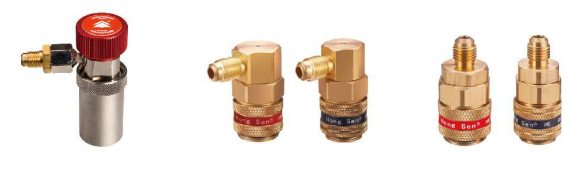
Most operators don’t realize how much idle time builds up during attachment swaps. A few extra minutes here and there might not seem like much, but across a full workday that delay easily cuts into productive hours. Simple changes to the way couplers are designed, positioned, and maintained can slash that downtime dramatically. When the connection is intuitive and components self-align, the switch happens in seconds—no hammering, no wrestling with hydraulic lines. It’s not about rushing the operator; it’s about removing the friction that makes the process slow in the first place.
The real magic is in the details most people overlook. A well-thought-out locking mechanism that gives clear visual confirmation lets the operator trust the connection immediately, without a walk-around check. Wear-tolerant surfaces and debris-shedding profiles keep the system working smoothly in mud, dust, or ice, where ordinary couplers jam up. When those small engineering upgrades come together, you’re not just saving minutes—you’re eliminating the root causes of hesitation and repeated attempts. Shops that adopt this approach routinely see attachment changes completed in under half the time they used to budget.
Beyond the stopwatch, faster changeouts shift how the whole jobsite flows. Machines that aren’t sitting idle between tasks put more material moved at the end of the day, without pushing the crew harder. It also means you can afford to use the right attachment for a brief task instead of making do with the wrong one, because the swap no longer carries a penalty. That flexibility adds up to better finish quality and less wear on buckets and hammers. Once teams experience a coupler that consistently clicks in place on the first try, the old routine of waiting around feels like a waste nobody wants to go back to.
Tool-Free Swaps: The Operator’s Dream
Imagine swapping out a heavy bucket or breaker without ever reaching for a wrench. That’s the quiet revolution taking shape on modern job sites—attachment changes that happen in seconds, driven by hydraulic locking pins and a single touch from inside the cab. It’s not just about saving time; it’s about keeping the operator in their zone, shielded from weather, mud, and the risks that come with climbing down to wrestle steel. When the machine handles the swap, the operator stays focused, and the clock keeps ticking on productive work.
The real magic isn’t in the mechanism alone, but in how it reshapes the workflow. A compact excavator moving from trenching to grading to lifting can transition seamlessly, often without a second pair of hands on the ground. This independence turns a single machine into a multi-tool, cutting the fat from labour budgets and letting smaller crews cover more ground. Fleet managers notice the difference in utilisation rates and in the near-absence of worn-out bolts or cross-threaded fasteners that come from manual changes. The dream, it seems, is built on better engineering that fades into the background.
Stubborn attachment pins and the need to manually tuck away hoses used to be the daily friction everyone simply accepted. Tool-free systems erase that friction by integrating self-sealing hydraulic couplers and foolproof alignment guides—often colour-coded or shaped so there’s only one way to connect. The operator feels it as a satisfying lock, confirmed on the screen, no guesswork. It’s this blend of tactile feedback and digital assurance that turns a mundane task into something almost enjoyable, making the cab feel less like a cockpit and more like the command centre of a very capable Swiss Army knife.
Unlock Full Hydraulic Performance with OEM Integration
True hydraulic efficiency isn’t just about pressure and flow rates on a spec sheet. It’s about how every component speaks the same language. When pumps, valves, cylinders, and controls are sourced from a single OEM ecosystem, the entire system operates inside its designed sweet spot—no signal lag, no energy-sapping mismatches. That native compatibility trims the invisible friction that generic setups tolerate, turning every drop of fluid into work rather than waste.
OEM integration goes deeper than plug-and-play convenience. It eliminates the trial-and-error tuning that robs time and masks underperformance. Because the hardware and software are engineered together, feedback loops tighten, response times contract, and the machine reacts with a predictability that feels almost instinctive. You don’t just meet performance targets—you stop having to compensate for the gaps that off-the-shelf combos inevitably introduce.
In the field, that difference is tangible. A seamlessly integrated hydraulic system runs cooler, holds pressure longer, and responds with a consistency that builds operator confidence from the first cycle. Maintenance windows stretch, unplanned downtime becomes rare, and the entire power train behaves as a single, coherent unit. That’s the kind of performance you feel in the controls and measure in the bottom line—without ever opening a catalog of patchwork alternatives.
One Coupler, Countless Attachments, Zero Downtime
Imagine a coupler that doesn’t slow you down or limit your options. With a single interface point, you can seamlessly switch between buckets, breakers, grapples, compactors, and more—without ever leaving the cab. That’s the freedom of a genuinely universal system that treats every attachment as a direct extension of the machine, not an awkward add-on.
The real magic, though, is how it handles the grind of daily work. Forget pin changes that eat up half your morning or hydraulic lines that fight back every time. This coupler locks on with reassuring precision, sending immediate feedback that the connection is solid. Wear components are built to be seen and swapped in minutes, not hours, so those surprise maintenance windows simply disappear from your calendar.
But the headline feature is what you don’t experience: downtime. Even when conditions are filthy or you’re pushing past regular service intervals, the coupler holds firm. Grease points are positioned where they actually work, contamination stays out of critical circuits, and every component is over-engineered just enough to shrug off the abuse that stops lesser systems cold. It’s the closest thing to a no-excuses coupler you’ll ever run.
Avoid Costly Downtime: The OEM Advantage for Fleet Owners
For fleet owners, every minute a vehicle sits idle translates directly into lost revenue. The real sting of downtime isn't just the immediate repair bill—it's the cascading effect on schedules, customer commitments, and driver productivity. Third-party parts might seem like a bargain until a premature failure sidelines a truck for days. OEM components are engineered to match the exact operating parameters of your vehicles, dramatically reducing the risk of unexpected breakdowns and the logistical headaches they trigger.
There's a quiet confidence that comes from knowing your fleet is supported by parts designed in lockstep with the original build. When a manufacturer stands behind both the vehicle and its replacement components, the entire maintenance ecosystem works more cohesively. Diagnostic routines are clearer, tolerances are tighter, and the life cycle of critical systems like engines and transmissions stretches further. That kind of predictability isn't just comforting—it's a measurable competitive edge, keeping your trucks on the road and your promises to clients intact.
The hidden advantage often overlooked is the speed of access. OEM supply chains are built to get the right part to the right bay without the cross-referencing guesswork that eats up technician time. Instead of waiting on a vaguely compatible alternator or a rebuilt turbo that might last half as long, you get a direct fit, first time. That minimal delay compounds across a fleet of dozens or hundreds, turning a few saved hours per incident into significant annual gains in utilization and driver retention.
FAQ
It's a coupling system built by the original equipment manufacturer specifically for a given machine. Unlike generic aftermarket versions, it's designed to match the exact specs, tolerances, and safety requirements of your loader or excavator, which means fewer fitment headaches and no unintended shifts in breakout force or tipping load.
Instead of wasting 20 minutes with hammers and pins every time you need to switch from a bucket to forks or a grapple, a good quick coupler lets you drop one attachment and lock onto another in under a minute. That turns into hours saved every week, letting you move between tasks—like digging, grading, and lifting—without losing momentum.
It adds a small amount of weight, so net capacity may dip slightly, but OEM units are engineered to preserve the machine's load chart as much as possible. More importantly, they keep the attachment tight to the linkage, preventing excessive leverage that can hurt stability. The trade-off is minimal compared to the uptime you gain.
Unintentional detachment is the big one. OEM couplers normally include a secondary locking mechanism—like a wedge or hydraulic check valve—that keeps the attachment secure even if primary pressure drops. Many also have visual indicators showing the lock status before you leave the cab. It's the sort of redundancy that's hard to find in cheap, universal copies.
It's low effort: regularly grease the pivot points and locking surfaces, inspect seals and hoses for leaks, and check for any slop developing in the linkage. A five-minute walk-around at the start of a shift is usually enough. OEM units are also built with bushings that can be replaced when worn, so you're not tossing the whole coupler after a couple thousand hours.
Absolutely. A factory or dealer-installed coupler is seen as a legitimate upgrade, not a modification that voids warranties. When it's time to sell, buyers trust the integration and the fact that it doesn't introduce odd failure points. Machines with proper OEM couplers tend to move faster on the used market because there's less uncertainty about the hydraulics and front-end geometry.
Conclusion
An OEM quick coupler isn’t just an add-on—it’s a carefully engineered bridge between your machine and its attachments. Unlike generic alternatives, it’s designed to lock onto the host machine’s hydraulic and control systems without compromising breakout force or flow characteristics. That integration alone pays for itself: crews routinely slash attachment change times by half or more, turning a multi-tool job that once involved hard labor, hammers, and wasted minutes into a smooth, tool-free process. Operators step out of the cab, release one pin, engage the next tool, and get back to work without sweat. In gravel yards, demolition sites, or trenching spreads, the ability to flip from a bucket to a grapple or a breaker so swiftly doesn’t just save clock time—it preserves focus and reduces fatigue, making the operator’s shift far less punishing.
For fleet owners, the story gets even better. Because the coupler is purpose-built for the machine’s exact linkage geometry and pressure requirements, there’s no risk of incompatibility that leads to leaks, slow cycle times, or premature wear. This means real zero-downtime attachment versatility: one coupler handles buckets, thumbs, rippers, augers, and compactors without needing adapters or manual pinned connections. When every attachment can be swapped in under a minute, the equipment stays productive, not parked waiting for a wrench. Avoiding costly unscheduled downtime becomes a natural outcome. An OEM-designed coupler also carries the manufacturer’s engineering validation, translating to fewer surprise failures on the job. That reliability protects project schedules and gives owners the confidence to bid on diverse work, knowing their investment adapts instantly to whatever the next task demands.
Contact Us
Contact Person: KOPASS HO
Email: [email protected]
Tel/WhatsApp: 8613606566112
Website: https://www.hongsenref.com/