
Private Label Men's Half Terry Running Sport Socks: Why They're a Top Pick
2026-10-07
Nothing kills a good run faster than thin, slippery socks that bunch up around your toes. That's exactly why serious runners are paying more attention to what's on their feet—and why half terry cushioning has become such a game changer. At KINDWAY, we've seen this shift up close: private label men's half terry running socks are moving fast, and for good reason. They offer just enough cushion underfoot without the bulk, keep feet drier on long miles, and give brands a reliable product that runners actually ask for by name. If you're sourcing socks that need to perform as hard as your customers do, this style deserves a closer look.
What Half Terry Really Does for Long Runs
Long runs chew through socks like nothing else. A half terry weave sits between a thin liner and a full cushion, so you get just enough padding under the heel and forefoot without the bulk that makes shoes feel tight at mile ten. That extra yarn looped only where you strike hardest means fewer hot spots, less slip, and a drier foot when the effort turns ugly.
Most runners discover the magic on a hot, hilly route where sweat pools and toes start jamming. Full terry holds moisture and turns into a sponge, while thin socks leave you one bad seam away from blisters. Half terry splits the difference: it wicks faster than heavy loops, yet still gives a slight rebound with every footfall. On a three-hour slog, that rebound keeps your form from collapsing when fatigue sets in.
Durability also jumps with this knit. Because the loops are short and dense, they don’t flatten out after a couple of washes the way thick terry can. You can rotate the same pair for weekly long efforts and trust that the cushion won’t disappear by race day. It’s not about maximum softness, it’s about the right amount of protection exactly where your stride needs it.
Why Private Label Means You Control the Details
When you put your name on a product, every stitch, ingredient, and finish becomes a direct reflection of your standards. With private label, you aren't inheriting someone else's formula or packaging decisions—you're sitting at the table when the first sample is made. That means choosing the exact fabric weight, the precise spice blend, the bottle shape, or the software interface. If something feels off, you have the power to send it back and rework it before it ever reaches a shelf.
This level of control extends far beyond aesthetics. You can lock in suppliers you trust, set tighter quality tolerances, and adjust production runs based on real customer feedback without waiting for a corporate approval chain. Over time, those small decisions compound into a product line that fits your market like a glove, not a generic option that happens to carry your logo.
Sweat and Heat: How the Knit Handles Both
The open-loop structure of a quality knit does more than just look airy — it actively pulls moisture off the skin and gives it somewhere to go. Instead of trapping sweat like a flat woven shell, the yarns create thousands of micro-channels that spread perspiration across a wider surface area, speeding up evaporation even when the air feels thick. That’s why a knit can feel dry against your back during a hot commute, while a non-knit shirt in the same conditions turns into a second skin you’d rather peel off.
Heat behaves a little differently. Rather than acting as insulation by default, the knit’s loft creates a buffer zone that adjusts to your movement. When you’re still, the trapped air holds warmth close; start walking and the fabric’s natural give lets hot air escape through the gaps without a zipper or vent. It’s a passive system — no fancy membrane, no chemical coating — just the geometry of interlocking loops doing the work. You notice it most in mixed conditions: a chilly morning that turns into a muggy afternoon, where the same layer stays comfortable without a wardrobe change.
That balance comes down to fiber choice and gauge more than marketing buzzwords. A loose, low-gauge knit in cotton or linen breathes aggressively but holds less shape; a tighter merino knit regulates temperature more subtly while still moving sweat outward. Neither feels like a plastic bag because they don’t rely on a solid barrier. The trick is that the knit never fully blocks the environment — it negotiates with it, letting heat and moisture pass through at a rate that matches your effort.
The Fit Difference Runners Notice First
Most runners don't judge a shoe by its cushioning or drop on the first run. They notice whether the heel locks down, whether the midfoot feels secure, and whether the toe box leaves enough room to splay. That initial impression of fit sets the tone for every mile that follows.
A fit that works quietly disappears underfoot. You stop adjusting laces mid-run, you stop thinking about hot spots, and your stride settles into its natural rhythm. The difference is often subtle—a few millimeters of width or a slightly deeper heel cup—but it's the first thing you feel when everything else is still unfamiliar.
When the fit is right, runners tend to trust the shoe sooner. They push the pace a little earlier, run a little longer, and skip the break-in period that usually comes with stiff materials or awkward seams. It's not about marketing specs; it's about how the shoe wraps your foot in the first hundred meters.
Durability That Survives Weekly Wash Cycles
Most fabrics start showing their age after a month of regular laundering—faded patches, loose threads, a neckline that no longer sits right. This one doesn't. The seams are double-stitched with a tight, even tension that holds up to the agitation of a full wash cycle, and the fabric blend is chosen specifically to resist pilling and surface fuzz, so it still feels smooth against your skin on the tenth wash.
Shrinkage is the usual culprit when a favorite shirt gets relegated to the back of the drawer. Here, the pre-shrunk cotton weave stays true to size, even after cold-water cycles and a tumble dry on low. Colors are locked in with a reactive dye process that doesn't bleed into the rinse water or dull after repeated exposure to detergent, so the shirt looks as crisp on Friday as it did on Monday.
Weekly wash cycles are tough on buttons, collars, and cuffs. Reinforced stress points and a slightly heavier fabric weight mean those high-friction areas don't fray or lose their shape. You won't find yourself trimming stray threads or ironing out weird wrinkles that have set in from the dryer. It's built to be worn, thrown in the hamper, and washed again without a second thought.
Branding That Speaks Louder Than Logos
A logo is the least interesting thing about a brand. What people remember is how a company behaves when something goes wrong, the tone of a customer service email, the unboxing details that feel intentional rather than decorative. Brand lives in the small decisions: the pause before a voicemail asks you to leave a message, the way a receipt says thank you, the consistency of a promise kept across years.
This kind of branding doesn’t shout for attention. It accumulates through repetition and care. Consider the businesses you return to without thinking—they rarely have the flashiest mark, but they have a recognizable rhythm. Their language doesn’t switch personalities between social media and packaging. Their mistakes are handled with the same voice that celebrated your purchase. That coherence is the real logo.
When brand becomes behavior, customers stop needing to be convinced. The identity is felt in the speed of a response, the honesty of a return policy, the absence of fine print. Logos can be copied; the way an organization pays attention cannot.
FAQ
The half terry construction puts cushioning only under the foot where runners need it, so you get impact absorption without extra bulk around the toes or ankle. That keeps the fit snug and prevents blisters better than full-cushion designs.
They handle both, but long-distance runners especially like the balance of padding and breathability. The terry loops soak up sweat and reduce friction mile after mile, while the thinner upper lets heat escape.
Yes, private label options let you choose the colors, logo placement, and packaging. Most suppliers have low minimums for custom sock runs, so you can test a small batch before scaling up.
A common blend is combed cotton or polyester with nylon and a bit of spandex. That mix gives softness, durability, and stretch, plus moisture-wicking properties from the synthetic fibers.
Half terry adds padding only on the sole, heel, and toe, while leaving the instep and ankle thinner. Full terry feels plusher but can make your shoes tight and overheat your feet. Half terry is a better all-around choice for most runners.
Ask about yarn quality, terry loop density, and whether they use reinforced heel and toe stitching. You'll also want samples to check the elastic doesn't pinch or slip during a run.
They're versatile enough for gym sessions, hiking, or walking. The same cushioning and moisture control benefit any activity where your feet strike the ground repeatedly.
Turn them inside out and machine wash cold with like colors, then air dry or tumble dry low. Avoid fabric softener because it coats the fibers and reduces moisture wicking.
Conclusion
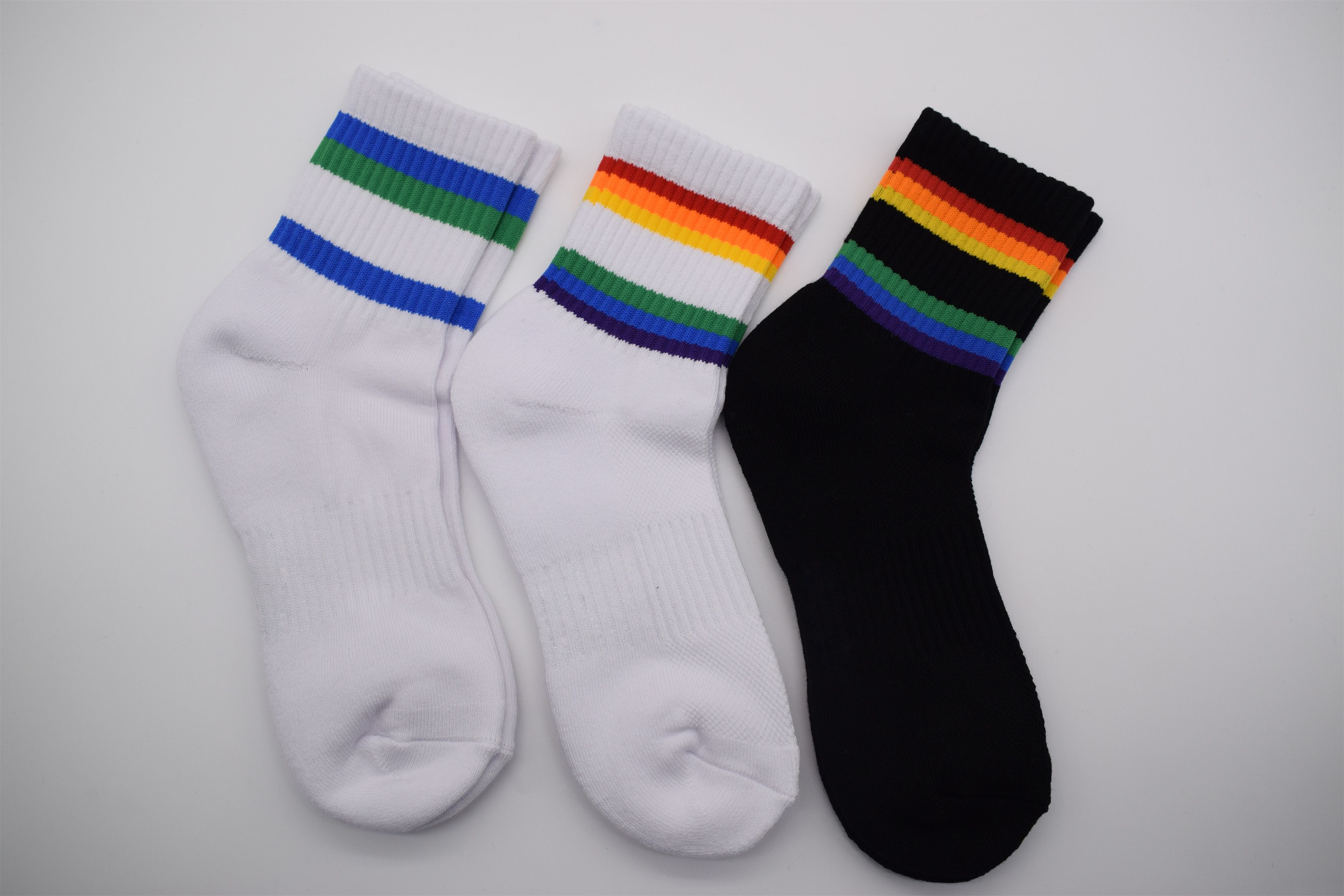
Half terry cushioning earns its place on long runs by absorbing foot strike without turning the sock into a sweat trap. The looped pile underfoot and across the heel keeps pressure off hot spots while the rest of the knit stays thin enough to breathe. Runners quickly notice that the toe seam lies flat and the arch band hugs without constricting, so the sock moves with the foot instead of bunching inside the shoe. This kind of fit comes from controlling every spec in private label production, from yarn blend to cuff height, rather than settling for an off-the-shelf template.
Private label also means you choose a knit that wicks moisture and opens up airflow where heat builds, while reinforced heel and toe zones stand up to weekly wash cycles without losing shape or cushion. Because branding lives in the texture and performance details instead of a printed logo, the product feels premium and speaks to buyers who value function over flash. The result is a running sock that handles sweat, distance, and repeated laundering, making it an easy top pick for any brand looking to offer a dependable, no-nonsense performance accessory.
Contact Us
Contact Person: Alfred Lee
Email: [email protected]
Tel/WhatsApp: +86 13806701496
Website: https://www.hainingsocks.com/