

Skinning Machine Recommendations: Top Picks for Efficient Meat Processing
2026-05-25
When processing large volumes of meat, the right skinning machine can mean the difference between a streamlined operation and a costly bottleneck. Whether you’re running a butcher shop, a farm, or a full-scale processing plant, efficiency isn’t just a goal—it’s a necessity. But with so many models on the market, how do you choose one that delivers consistent results without breaking the bank? In this guide, we’ll break down the top recommendations for skinning machines that balance speed, durability, and precision. And if you’re looking for equipment that’s already trusted by industry professionals, Worldbase offers a range of solutions worth exploring. Let’s cut through the noise and find the right fit for your workflow.
Why Investing in a Quality Skinning Machine Pays Off
A cheap skinning machine might look tempting on the shelf, but it rarely stays out of the repair shop. These bargain models often rely on flimsy blades and underpowered motors that burn out under regular use. Before long, you're spending more on replacement parts and downtime than you would have on a sturdy machine from the start. The hidden costs add up quickly: lost production hours, inconsistent cuts, and the frustration of wrestling with a tool that can't keep pace.
A well-built skinning machine changes the whole dynamic of your workspace. Instead of nursing a temperamental gadget along, you have a reliable workhorse that hums through piles of produce or meat without missing a beat. The blades stay sharp longer, the motor doesn't whine under load, and the finished product actually looks like something you'd be proud to sell. This reliability isn't just convenient—it directly shapes how your customers see your business. When every piece comes out clean and uniform, it tells a story of care and professionalism that no amount of clever branding can fake.
Over time, that upfront investment pays for itself in ways that don't show up on a simple price tag. The machine requires less maintenance, so your budget isn't constantly nibbled away by service calls. Operators work faster and with fewer mistakes, because they trust the equipment. Instead of being a bottleneck, the skinning station becomes one of the smoothest steps in your process. What often gets missed is the quiet confidence that comes from knowing your gear won't let you down mid-shift—that's the kind of return that keeps a small operation growing.
The Key Differences Between Entry-Level and Industrial Skinners
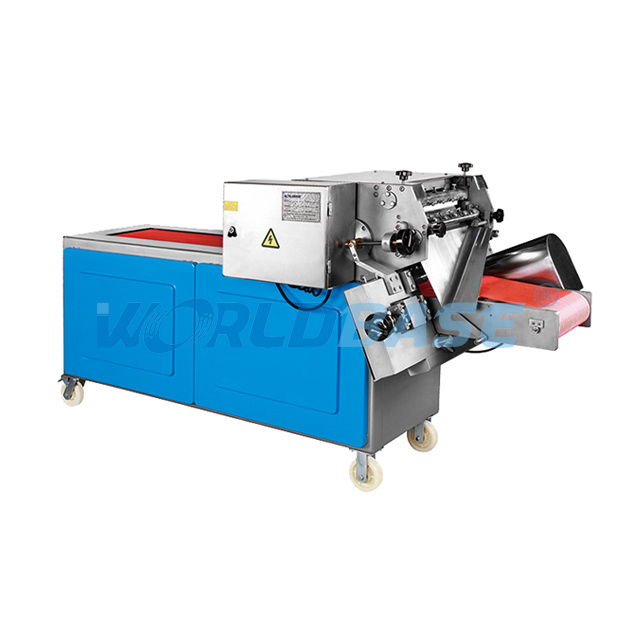
When you first look at an entry-level skinner and an industrial one, the most obvious difference is in the build. Entry-level units tend to rely on lighter materials and simpler components—they’re designed to be affordable and easy to handle for small-scale or occasional tasks. Industrial skinners, on the other hand, are built like tanks. They use hardened steel parts, reinforced frames, and are engineered to endure constant, heavy use without breaking a sweat. This sturdiness directly translates into reliability; a weekend hobbyist might never notice slight flex or gradual wear, but in a production line, those things can bring operations to a halt.
Beyond just being tougher, industrial models deliver a level of precision and speed that entry-level machines can’t match. If you’re processing a few dozen items a week, minor inconsistencies might not bother you. But when you’re handling thousands of units per shift, even a millimeter of variation adds up quickly. Industrial skinners often feature precision-ground blades, tighter tolerances, and automated alignment systems that maintain consistent cuts hour after hour. They also run at much higher throughput, often integrating seamlessly with conveyors and other machinery, while an entry-level skinner usually needs manual feeding and slower, more deliberate operation.
Another telling sign is maintenance and longevity. Entry-level machines are often perceived as disposable—when something wears out, replacement is cheaper than repair. Industrial skinner manufacturers, however, expect their equipment to last for years or even decades. They design for maintainability: components are accessible, parts are standardized, and service schedules are clear. Many industrial units also come with built-in diagnostics, alerting operators before a failure occurs. That proactive approach saves massive amounts of downtime compared to a smaller unit that simply stops working one day. In short, the gap between these two categories isn’t just about scale—it’s a fundamentally different philosophy of engineering and support.
How to Match Machine Throughput to Your Operation’s Scale
Start by taking a hard, honest look at your actual production demands—not just right now, but over the next two to three years. Run the numbers on your peak volumes, your lulls, and the cadence of your orders. A machine that can churn out 10,000 units an hour sounds impressive, but if you only hit those numbers once a quarter, you’re tying up capital and floor space for little return. Instead, map your throughput to your real, daily rhythm, and leave just enough headroom for growth without overcommitting.
Flexibility often beats raw speed. Look for equipment that can scale with you—think modular designs, tool-less changeovers, or software-driven adjustments that let you run varied batch sizes without a complete retool. A contract manufacturer might start with a single semi-automated cell, then duplicate it as demand climbs, keeping output aligned with revenue. This way, you avoid the trap of a monster machine that sits idle while smaller, more adaptable tools keep the floor humming.
Don't forget the flow beyond the machine itself. Your overall throughput is a chain, and the new equipment is just one link. Feed it too fast and you create a pileup upstream; too slow and downstream stages starve. Spend time on the plant floor watching how material actually moves—where it queues, where it waits, where operators scramble. Sometimes a modest increase in machine speed, paired with smarter material handling or a small tweak in shift patterns, delivers a smoother, more profitable scale-up than any high-end purchase ever could.
Underrated Features That Make Everyday Use Easier
There are small touches in everyday tools that barely get a mention but quietly improve how we get through the day. Take the way some messaging apps let you mark a conversation as unread without actually opening it. It sounds trivial, but that little flag helps you remember to reply later without the mental clutter of an open thread. Or the "skip intro" button on streaming platforms—something so minor that we tap it without thinking, yet it saves countless minutes over a year.
Another example is the gesture-based shortcuts on smartphones. Swiping down on the home screen to pull up notifications, or double-tapping the back of the device to open the camera—these actions are so baked into muscle memory that we forget they're optional settings someone had to design. They make the device feel almost intuitive, like an extension of your hand rather than a separate gadget you have to learn.
Even in less obvious places, these features exist: the parking location pin that your map app automatically drops when you disconnect from your car's Bluetooth, or the recipe saving tool in a browser app that strips out the life story before the instructions. None of these are flashy, but they turn minor annoyances into things you never have to think about again. That's the real mark of thoughtful design.
Spotlight on Our Favorite Models for Small to Mid-Size Processors
It’s easy to get swept up in flagship silicon, but there’s a quiet revolution happening among modestly sized processors. These chips often strike a near-perfect balance between real-world oomph and sensible power draw—making them ideal for countless commercial and industrial tasks where you don’t need a power-hungry beast, just something that hums along reliably without generating a heat problem. We’ve spent plenty of time testing units that handle automation controllers, digital signage, and compact networking gear without breaking a sweat, and honestly, the results keep us coming back to the “smaller” end of the catalog.
A couple of standout examples come to mind. The Sitara AM62x series from Texas Instruments, for instance, turns out to be a darling for embedded Linux applications—it pairs a capable Arm Cortex-A53 cluster with a dedicated microcontroller core, so you get rich OS support alongside real-time control in one tidy package. Then there’s the MediaTek Genio 500, which somehow crams a surprisingly capable AI processing unit into a tiny thermal envelope, making on-device machine learning feasible in smart appliances and edge gateways without forcing a design rethink over cooling. These aren’t mainstream headliners, but they’re the picks that solve our prototyping puzzles time and again.
What ties our favorites together isn’t raw benchmark bragging rights—it’s the thoughtful integration of features that actually matter when you’re moving from a breadboard to a sealed product. If you’re evaluating your next small or mid-range processor, pay less attention to the big numbers and more to how the peripherals, memory interfaces, and software ecosystem mesh with the specific problem you’re solving. Sometimes the best fit isn’t the flashiest spec sheet, but the one where the errata list is short and the reference design already covers your quirky interface requirements.
Maintenance Habits That Extend the Life of Your Equipment
Most equipment failures aren't sudden catastrophes—they're the slow creep of neglect. Simple routines like wiping down surfaces after use, checking fluid levels before startup, and listening for unusual noises can catch small issues before they snowball into expensive repairs. It's the difference between a five-minute tightening of a bolt and a half-day teardown because that bolt worked loose and damaged a shaft.
Scheduled lubrication and calibration often feel like chores that eat into productive time, but they are the heartbeat of longevity. Instead of relying on generic intervals, tailor your schedule to actual usage patterns. Keep a log, even a messy one, to spot trends—like a bearing that's running hotter than it did last month. That handwritten note might save you from unplanned downtime that throws off an entire project.
Storage conditions are the silent killer of machinery. Humidity, dust, and temperature swings degrade fluids, corrode contacts, and warp precision parts faster than daily operation. Invest in breathable covers, control your environment where possible, and rotate stored equipment so nothing sits idle too long. These habits aren't flashy, but they add years to your gear while keeping repair bills in check.
FAQ
For mid-size facilities, a floor-standing skinner with a moderate throughput around 1,500 to 2,000 pounds per hour usually hits the sweet spot. Look for a model with adjustable blade depth and speed control so you can fine-tune it for different cuts without excessive waste. Brands like Maja and Baader are known for durable mid-range units, but even lesser-known names from reputable suppliers can perform well if they have solid build quality and parts support.
Blade care depends heavily on usage volume. In a busy shop processing 15-20 hours a week, a quick honing with a ceramic rod once a shift keeps the edge clean. A full sharpening might be needed every two to three weeks, and blade replacement every few months if you’re cutting through tough silverskin regularly. Watch for ragged cuts or increased pull force—those are signs the blade is losing its edge.
Yes, most modern skinners are designed to switch between species with simple adjustments—usually just changing the blade gap and pressure roller settings. The trick is to match the machine’s design to your workload. A heavy-duty model with a wide inlet can tackle beef rounds just as easily as pork loins, but you might need a separate set of rollers for very thick fat caps versus thin membrane removal.
Non-negotiable features include a two-hand start mechanism, magnetic interlocks on all access panels, and emergency stop bars that run the full length of the machine. Some newer units also have light curtains that instantly halt operation if anything passes through the beam. Don’t rely on awareness alone—a machine that forces safe behavior through design is far more reliable than one that just has warning stickers.
For any volume beyond a few cuts per day, the productivity gain is dramatic. An automatic skinner can process up to 2,000 pieces per hour with consistent thickness, whereas even a skilled worker with a manual knife will struggle to hit 200 pieces and will produce far more variation. The real savings come from reduced labor fatigue, less trim waste, and the ability to repurpose skilled staff elsewhere.
Entry-level floor-standing skinners from established industrial brands start around $8,000 to $12,000. If you need higher throughput, stainless-steel construction, and all the safety certifications, expect to spend $18,000 to $25,000. Used machines can be a good buy, but always check the blade assembly, drive belts, and roller condition carefully—those are the expensive wear parts.
Look for fully welded, sloping surfaces with no hidden pockets where debris can accumulate. Quick-release rollers and removable blade housings are a huge timesaver during a sanitation shift. Also, check if the machine has an IP65 or higher rating for washdown environments—that tells you it’s built to handle daily hose-downs without water damaging internal electronics.
Conclusion
Choosing the right skinning machine can reshape your meat processing workflow, and it pays to look beyond basic specs. A quality skinner reduces waste and speeds up production, quickly offsetting its upfront cost. Entry-level units work fine for occasional use, but industrial models bring durability and consistency that make a real difference as volumes climb. Matching throughput to your daily output is critical—undersized machines create bottlenecks, while oversized ones waste money and floor space. Often, the features you don't think about at first end up mattering most: tool-free blade changes, washdown-ready seals, and intuitive tension adjustments cut downtime and keep operators happy.
For small to mid-size processors, we've seen standout performers like the Grasselli SS Series and Marel's flex line deliver that sweet spot of reliability and ease. Whichever model you choose, extending its life comes down to daily habits: cleaning right after use, checking blade sharpness before it tears product, and greasing bearings on schedule. When you treat your skinner as a core part of your operation rather than just another tool, you'll hit efficiency targets with less stress—and your bottom line will notice.
Contact Us
Contact Person: Mr Yang
Email: [email protected]
Tel/WhatsApp: +8613809083091
Website: https://en.worldbase.cn