

Solventless Laminating Machine Supplier Selection Guide for Reliable Packaging Output
2026-11-19
Packaging managers often find out too late that the real bottleneck isn’t the solventless laminating machine itself, but the supplier who sold it. A machine can look strong in a demo and still fall short on tension stability, adhesive coverage, or after-sales support once it hits your floor. That’s the gap this guide is built to close. Instead of comparing columns of near-identical specs, we focus on the supplier traits that show up in your daily output: response time, spare parts availability, process knowledge, and honest machine sizing. Brands like XIAOPAI have raised expectations in this space, so it is worth measuring every shortlisted supplier against similar standards. If you want packaging that stays consistent run after run, the choice starts well before installation. Here are the questions to ask—and the warning signs to avoid—when selecting a solventless laminating machine partner.
What Reliable Packaging Output Actually Demands from a Solventless Laminator
Reliable output rarely comes down to a single setting. It demands that the machine holds tension without drifting as roll diameter changes, and that the metering gap stays consistent once set. Small variations in adhesive application often show up later as tunneling or weak seals, so operators learn to watch the unwind and rewind behavior more than the control panel.
A solventless laminator also has to handle heat and mixing in a predictable way. If the adhesive is not brought to a stable working temperature, viscosity shifts and the transfer pattern becomes uneven. The real demand is repeatability: the same roll, same speed, same nip pressure should produce the same bond strength on Tuesday morning and Friday night, without constant corrections.
Cleanliness and routine checks matter as much as machine capability. Leftover adhesive on rolls or a slightly misaligned doctor blade can quietly degrade results, even when the display says everything is normal. Reliable packaging output is less about advanced features and more about whether the laminator can hold its condition through a full shift.
Why Showroom Settings Rarely Predict Daily Production Performance
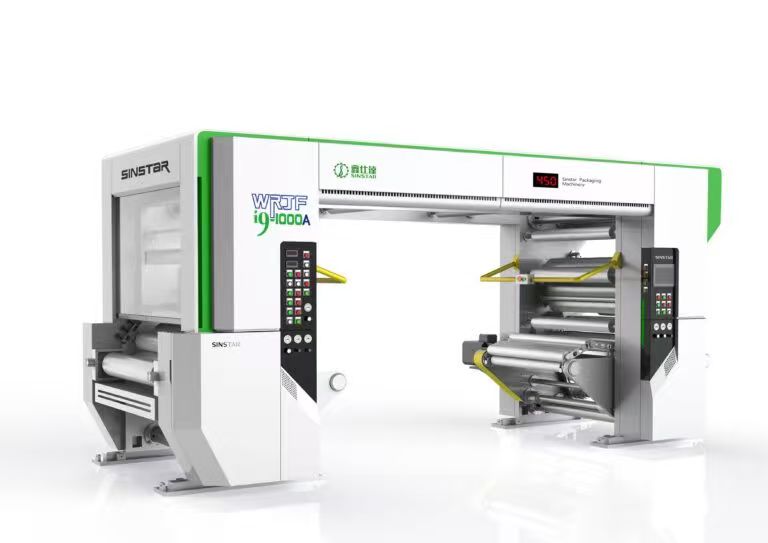
A showroom line is tuned until every movement looks crisp, but that same setup rarely survives contact with a live shift. Lighting, fixture alignment, and hand-picked components hide the noise that shapes real output: skipped deliveries, tool wear that drifts out of tolerance by mid-morning, and operators working around a conveyor that has been slightly out of level for weeks.
The gap shows up most clearly in cycle-time data. In a demo, tasks are repeated with fresh materials and no competing priorities, so the numbers reflect a controlled sequence rather than recovery time. On the floor, a machine waiting on compressed air, a missing label, or a new hire asking for clarification can add seconds or minutes that no showroom layout can forecast.
That does not make showroom metrics useless, only narrow. They are useful for proving that a process is physically possible, but they should not be treated as a reliable prediction of daily throughput unless they include the interruptions, variation, and human decisions that fill a normal production day.
Matching Adhesive Behavior to Film Structures and Operating Speeds
Film structures vary widely, from dense, high-barrier substrates to rough or porous surfaces, and adhesive behavior has to be read against these details rather than treated as a fixed property. A low-viscosity formulation may wet a smooth polyester film quickly but can disappear into fiber-filled or microporous layers before a stable bond forms. A more elastic adhesive, by contrast, can bridge small gaps on uneven surfaces yet leave excessive thickness on flat films. The practical task is to match open time, tack, and final cohesion to the surface energy and porosity of the film.
Operating speed introduces a second set of constraints because it changes the shear history and the time available for wetting, solvent or water removal, and initial bond formation. At higher line speeds, adhesives that rely on slow flow or extended dwell can produce starved areas or trapped air, especially on structured films with deep channels. Running too slowly with an aggressively fast-tack adhesive can cause pickup, stringing, or premature grab before the layers are aligned.
A more useful approach is to treat adhesive selection and process settings as one adjustment rather than separate fixes. For a given film structure, test the adhesive across the realistic speed range and watch for failure signatures such as edge lift, tunneling, or mottled appearance. Small changes in coating weight, drying profile, or nip pressure often do more than switching chemistries, because the goal is a bond that forms within the film's surface constraints and the line's time window.
Tension, Nip Pressure, and Cure Control as Hidden Quality Drivers
Most production teams treat coating weight, line speed, and oven temperature as the headline variables. But ask an operator who has spent years chasing subtle defects, and they will point to three quieter forces: tension, nip pressure, and cure control. Tension that drifts by a few newtons changes how a substrate absorbs adhesive, which later shows up as curl, tunneling, or edge lift. Nip pressure is rarely uniform across a wide web, and a slight crown in the roller can leave the center starved while the edges get crushed. Cure control, meanwhile, is often mistaken for a simple temperature setting when it is actually a time-and-energy balance that shifts with line speed and coat weight.
The trouble is that these three factors interact in ways that are easy to miss on a spec sheet. Raising tension to fix wrinkles can reduce the open time needed for proper wet-out, making the bond look fine at first but fail after thermal cycling. Increasing nip pressure to push out air bubbles can squeeze too much adhesive away from the bond line, especially on porous facestock. And pushing cure temperature higher to compensate for a faster line can create a hard skin on the adhesive surface while the center remains under-cured. None of these problems announce themselves immediately, which is why they are called hidden quality drivers.
The practical fix is to treat tension, nip pressure, and cure as a single control triangle rather than three independent knobs. Map tension across the full width at several line speeds, not just the center. Check nip footprint with pressure-sensitive film instead of relying on gauge readings. And validate cure by measuring actual bond performance after aging, not just by hitting an exit-web temperature. Teams that do this usually find that their best product quality comes from a narrow window they had been drifting in and out of without knowing it.
How Supplier Service Networks Affect Line Uptime After Installation
Post-installation uptime rarely hinges on the machine alone. It leans heavily on the supplier's service footprint: how close the nearest technician actually is, whether regional spare parts are stocked in a warehouse or flown in on demand, and how familiar local engineers are with the specific line configuration. These quiet logistical realities often turn a two-hour fault into a two-day stoppage.
A dense service network also changes the quality of preventive work. When a supplier can put an experienced engineer on site within a short drive, small anomalies get corrected before they compound. Remote monitoring may flag a failing drive or a pressure drift, but that early warning only becomes useful if someone nearby can act on it and reach the needed parts without waiting on cross-border shipments.
This means line uptime after installation is often decided by the last mile of the supplier network rather than the headline response time in the service agreement. Buyers who treat local parts inventory, technician availability, and escalation habits as part of the equipment evaluation tend to avoid the long, silent gaps that look acceptable on paper but cost production hours in practice.
Using Your Own Materials as the Final Supplier Qualification Step
Supplier qualification often falls apart at the paperwork stage because certificates and third-party audits only reveal so much about how a material will behave under your own conditions. Running a trial with your own material in the actual production workflow closes that gap. It shifts the decision from a document review to a direct observation of how the material feeds, cuts, bonds, finishes, or holds tolerance when it matters.
This approach also strengthens the supplier conversation. Instead of asking for more data when something seems borderline, you can describe exactly what happened on the line and which characteristics caused concern. That kind of feedback is harder to dismiss because it comes from your process rather than from a generic comparison. Suppliers often adjust more quickly when the evidence points to a particular result in your facility.
The exercise does not need to be elaborate. A limited production run, a focused incoming inspection, or a single test on a troublesome variable is usually enough to confirm whether the material can be approved. The key is that the material has been handled in a realistic way before it reaches the approved supplier list, reducing the chance of discovering problems only after full purchasing begins.
FAQ
Start with how the machine actually handles film tension, coating weight accuracy, and nip temperature consistency. Ask suppliers to run your typical film, ink, and adhesive combination and provide sample results instead of relying on top speed figures.
It makes a bigger difference because solventless adhesive coat weights are very low, so small deviations show up quickly as inconsistent bond strength or visible defects. Check the metering roll gap stability, automatic compensation behavior, and how easily the system can be cleaned during job changes.
Ask for a clear response time commitment, whether service engineers are local, what spare parts are stocked nearby, if remote diagnostics are available, and how much operator training is included. The best way to confirm the answers is to call existing users and ask how quickly issues were resolved.
Not necessarily. If tension control, adhesive transfer, or curing conditions cannot keep up with the speed, you may see tunneling, white spots, or unstable laminate bonds. A machine that holds a steady window at a slightly lower speed is usually more valuable than one that only performs well at maximum speed.
It should be a central part of the decision. Have each supplier run trials with your actual films, inks, and adhesives, then measure peel strength, appearance, coefficient of friction, and results after curing. This reveals practical limitations that specification sheets rarely show.
Visit installations that have been running for at least three years and talk directly with operators and maintenance staff. Ask to see actual uptime records, downtime causes, and how often parts like doctor blades, seals, or rollers need replacing.
Include installation and commissioning, operator training, maintenance of the adhesive mixing system, roller regrinding or replacement, energy consumption, spare parts, and downtime losses. Comparing total cost over the expected service life gives a better picture than the purchase price alone.
If the product requires extremely low residual levels or unusual barrier structures that current solventless adhesive systems cannot reliably handle, or if production consists of very short runs with frequent changeovers, the tighter process window may work against you. In those cases, a conventional line may still be the more practical choice.
Conclusion
Reliable packaging output from a solventless laminator depends far more on real production behavior than on showroom performance. A line that runs smoothly with a supplier’s standard film and slow, steady speed often struggles when operators switch to thinner gauge structures, higher line speeds, or adhesives with different rheology. Matching the adhesive to the film combination and the required operating window is what actually prevents coating defects, poor wetting, and cure inconsistency. Tension, nip pressure, and cure control matter because they quietly determine bond strength, clarity, and flatness across the reel, especially during splices or acceleration. Buyers get a more accurate picture by testing these variables with their own materials early in the evaluation, rather than trusting a specification sheet based on ideal conditions.
Supplier selection should also be judged by what happens after installation. A fast service response, local spare parts, and engineers who understand your specific film and ink set often do more for line uptime than any single machine feature. The final qualification step that separates reliable partners from the rest is running your own films and adhesives under normal production constraints, then inspecting the laminate after full cure for tunneling, curl, or delamination. Standard demo runs can hide these failures. Training quality, process support, and a supplier’s willingness to solve problems at your site are usually stronger predictors of consistent daily output than the equipment list alone.
Contact Us
Contact Person: Kellen Chen
Email: [email protected]
Tel/WhatsApp: 8613806536768
Website: https://www.cnxiaopai.com