

TECO Electromotor Wholesale Buying Tips for Industrial Applications
2026-11-01
Sourcing TECO electromotors at wholesale prices for industrial use isn’t just about finding the lowest quote—it’s about avoiding costly mismatches in torque, duty cycle, and enclosure ratings. From verifying genuine OEM stock to negotiating tiered pricing that actually holds up, the difference between a smooth procurement and a stalled production line often comes down to a handful of overlooked details. At Soochee, we’ve seen buyers save up to 30% simply by asking the right questions before placing a bulk order. In this guide, you’ll learn the exact specifications to lock in, the red flags that signal gray-market units, and how to structure your RFQ so suppliers compete on total cost of ownership—not just sticker price.
Pin Down Starting Torque and Duty Cycle Before Committing to a Wholesale Order
Starting torque is not the same as running torque. A motor or gearbox that easily sustains a load once it is moving can still fail to break the static friction and inertia at startup. Ignore this and you end up with stalled drives, tripped breakers, or the expensive habit of oversizing every unit just to be safe. Measure the actual breakaway force from your application—use a torque wrench on a prototype, or calculate it from the load's mass, bearing friction, and acceleration time. That number, not the nameplate horsepower, is what the supplier needs.
Duty cycle gets overlooked even more often. A motor rated for intermittent use will cook itself if you run it near full load for hours. Many wholesale buyers skim the spec sheet, see "1.5 kW" and assume continuous operation is fine. It often is not. Write down the real working pattern: how many starts per hour, how long each run lasts, how long it rests. Then ask for the thermal limit curve. A unit that matches your duty cycle will last far longer than a beefier one that never gets a chance to cool.
Before committing to a bulk order, lock both numbers into the purchase agreement. Request a torque-speed curve and a thermal duty rating for the exact model you are sampling. If the supplier cannot provide these, walk away. A wholesale order magnifies every small mismatch: a motor that overheats in one unit will overheat in five hundred. Pin down starting torque and duty cycle first, and the rest of the order becomes a matter of logistics, not guesswork.
Decode Efficiency Labels and Local Power Regulations to Avoid Costly Rework
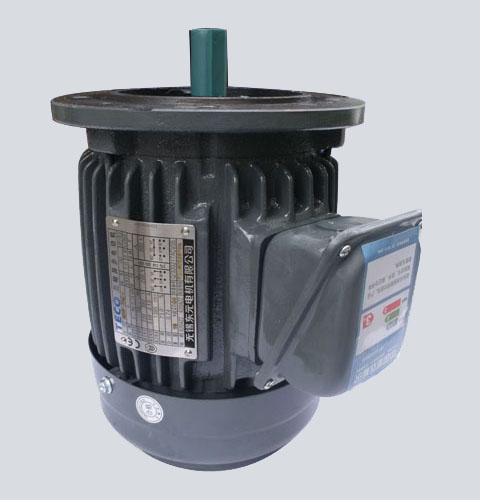
Efficiency labels aren't just marketing stickers—they encode operational limits that differ by region. A unit rated for one voltage or climate class might fail inspection in another jurisdiction if you overlook the fine print. Reading the actual test conditions and rated load before installation saves you from pulling wire twice.
Local power regulations often add layers that generic manuals don't cover. Some municipalities demand dedicated circuits for certain efficiency tiers, while others restrict breaker sizing based on the label's maximum current draw. Cross-check the label data against the local electrical code early in the planning phase.
When the label and local rules disagree, the stricter requirement usually wins. Document any assumptions before rough-in, and confirm with the inspector if the efficiency class triggers additional grounding or disconnect rules. That upfront conversation prevents expensive tear-out after the walls are closed.
Audit Factory Test Data and Bearing Quality, Not Just Catalog Specs
Many purchasing decisions still start and end with a catalog page. Dimensions, load ratings, and speed limits get copied into a spreadsheet without ever asking what the factory actually measured. That approach misses the fact that two bearings with identical part numbers can behave very differently depending on raw steel, heat treatment, and grinding consistency.
Ask for the test data tied to the specific lot you are buying. Look at raceway roundness, radial internal clearance distribution, hardness after tempering, and noise or vibration signatures. A batch can pass a basic dimensional check and still have elevated cage friction or poor surface finish that shortens life in a real application.
Compare reports across several production batches, not just one favorable sample. A supplier with stable processes will show tight spreads in clearance and low standard deviation in vibration readings. If you only get a PDF of catalog specs back, that should make you pause. Bearing quality lives in the measured data, not in the printed page.
Use Frame Size Standardization to Unlock Better Bulk Pricing
Frame size standardization isn't just about neat rows in a warehouse—it's a direct line to lower per-unit costs. When every frame you order falls into a small set of predefined dimensions, suppliers can cut material waste, reduce machine changeover time, and consolidate production runs. That efficiency translates into volume discounts that would never materialize with one-off custom sizes. Instead of paying a premium for each unique cut, you start buying from a menu of proven specs, and the price per frame drops noticeably as your order quantity climbs.
The real leverage comes when you align your product line behind those standard sizes. Rather than offering customers endless width and height combinations that complicate everything downstream, you pick the three or four frame formats that cover the vast majority of use cases. This lets your purchasing team negotiate from a position of predictable, repeatable demand. Suppliers can plan raw material orders weeks in advance, run longer uninterrupted batches, and pass those savings back to you—often in the form of tiered pricing that gets much more attractive beyond a certain threshold.
There's also a hidden benefit that rarely shows up on a quote sheet: fewer mistakes and less rework. When frame dimensions are fixed, order entry becomes simpler, packing and shipping are faster, and returns due to size errors nearly vanish. That operational smoothness keeps your total landed cost low, even before the bulk discount kicks in. So while standardization may feel like a constraint at first, it's actually a purchasing strategy that compounds savings every time you reorder.
Match Enclosure Ratings to Real Plant Conditions—Heat, Dust, and Moisture
Selecting an enclosure based solely on the IP or NEMA number printed in a catalog often falls apart once the unit is bolted to the wall in a working plant. A rating like IP66 tells you a housing survived a laboratory jet of water for three minutes, but it says nothing about how the seals will behave after two summers next to a quench tank, or whether fine cement dust will pack into every crevice and grind the hinge pins. Start by mapping the specific insults present: in a grain mill, the dust isn't just airborne—it's abrasive, slightly oily, and settles into a cake that traps moisture. That calls for a gasketed enclosure with smooth exterior surfaces and a high dust-ingress digit, but more importantly, it calls for a maintenance schedule that assumes the gasket will fail eventually. The rating is a starting point, not a lifetime guarantee.
Heat changes the equation in ways that few spec sheets address. A NEMA 4X fiberglass box rated for outdoor use may warp or become brittle when mounted six inches from an annealing oven, allowing gaps to open around the door. Polycarbonate windows cloud and crack; neoprene gaskets take a permanent set and then no longer rebound against the frame. In high-temperature zones, look for enclosures with continuous silicone gaskets, stainless steel latches that resist thermal expansion, and enough internal volume to allow air movement rather than trapping heat against the components. Also account for the dust that heat convection pulls upward: a hot motor control panel near a furnace can ingest fine particulates through the bottom conduit entries simply because the rising air creates a slight vacuum. That demands a breather drain with a fine mesh—or better, a positive-pressure purge system.
Moisture is the most deceptive factor because it rarely arrives as direct spray. A floor washdown in a food plant might only splash the lower half of a panel, yet the high humidity combined with temperature swings causes condensation on the inside of the door every night. Sealed enclosures trap that moisture; without a drain or a desiccant pack, the circuit boards corrode within months. Conversely, a cabinet rated IP67 and completely sealed against immersion can become a miniature greenhouse when sunlight hits it, cycling internal humidity to 100% each afternoon. The practical fix is often to derate the sealing requirement and add controlled ventilation—a filtered fan or a membrane vent that allows vapor to escape but blocks liquid. Matching the rating to the real plant condition means asking not just “what can get in?” but “what can’t get out?”—and designing for both.
Secure a Maintenance Kit and Direct Engineering Support as Part of the Deal
A deal that includes a maintenance kit and direct engineering support shifts the focus from a one-time purchase to long-term reliability. You get replacement parts and consumables matched to your equipment, plus a clear line to the people who designed or service it.
This arrangement removes the usual scramble for compatible spares after a failure. Instead of waiting on generic suppliers, your team can pull from a ready kit and contact an engineer who already knows your installation history, which cuts downtime and avoids misdiagnosis.
Bundling these items into the original agreement also tends to be more cost-effective than buying support later. Vendors are more willing to include favorable terms when the full package is on the table, so you secure ongoing help without reopening negotiations every quarter.
FAQ
Look beyond horsepower and frame size. Confirm the starting torque curve matches the load profile—conveyors often need high breakaway torque. Also verify the duty cycle (S1 continuous vs. intermittent) and ambient temperature rating, because a motor that runs hot in a dusty plant will fail early. TECO's cast iron frames handle vibration better than rolled steel, so favor those for conveying.
Ask for the original serial number range and confirm it with TECO's local distributor before committing. Check that the nameplate data uses the current efficiency markings (IE3/IE4 or NEMA Premium) and that the supplier can provide a traceable certificate of origin. A legit wholesaler will also offer warranty registration in your company's name, not just a generic invoice.
Almost always yes. The energy savings on a continuous-duty pump can pay back the price difference in 12-18 months, depending on local electricity rates. But don't just look at the nominal efficiency—request the actual test report for the specific load point you operate at. A motor that is highly efficient at full load may be mediocre at 75% load where most pumps actually run.
Standard TECO stock motors usually ship within 2-4 weeks, but mixed orders with less common frame sizes or special voltage can stretch to 10-14 weeks. Lock in your order before peak industrial maintenance seasons (spring and late summer) and ask the wholesaler to reserve stock with a deposit rather than waiting for full payment. Also confirm whether the motors come from a regional warehouse or are drop-shipped from overseas, because customs can add unpredictable days.
Definitely. Many buyers specify TEFC but forget that a chemical environment needs IP65 or better with stainless steel hardware and epoxy paint. Check the shaft seal material for chemical resistance—standard nitrile fails fast with solvents. Also ask for a condensation drain plug if the motor will cycle between day/night temperatures; TECO offers this as a low-cost option that prevents internal rust.
Try bundling accessories into the deal: terminal boxes, space heaters, thermistors, or even spare fan covers. Wholesalers often have more margin on accessories and can throw them in while keeping the motor price firm. Also ask for free container consolidation if you're mixing small and large motors, and negotiate payment terms like 30% deposit / 70% after inspection instead of full upfront—that's worth more than a 2% price cut.
Document the installation conditions before startup: measure voltage balance, alignment, and vibration readings, and keep a photo log. If a claim arises, report it within the required window (usually 72 hours for shipping damage, 30 days for hidden defects) and always go through the wholesaler's warranty channel, not directly to TECO. A good wholesaler will have a local service partner who can inspect the motor on site, which speeds up the decision.
Conclusion
Starting torque and duty cycle first—don't guess. A motor that looks cheap on paper but can't handle your start/stop pattern will fail early, and intermittent duty ratings won't survive continuous operation. Check efficiency labels against local voltage and frequency rules, because a motor built for a different grid can mean rewinding or replacing. Also ask for factory test data and bearing specs, not just catalog numbers. Many buyers skip this and end up with motors that pass on paper but vibrate or overheat in the field.
Standardizing on frame sizes across your plant is a practical way to get better volume pricing without sacrificing flexibility. If you can limit new purchases to two or three common frame sizes, spare parts become easier to stock and your negotiating position gets stronger. Match enclosure ratings to what the floor actually throws at the motors—heat, fine dust, occasional washdown. A TEFC motor isn't automatically right for every corner of a plant, and an IP55 rating means nothing if the ambient temperature runs high. Finally, negotiate maintenance kits and direct access to engineering support as part of the wholesale deal. That turns a one-time purchase into a longer-term reliability plan, which is where the real cost savings show up.
Contact Us
Contact Person: Jenny Jaa
Email: [email protected]
Tel/WhatsApp: 0086 152 9510 6006
Website: https://www.china-motor-supplier.com