

Top Medium Voltage Switchgear Solutions for Reliable Power Distribution
2026-08-26
When the grid falters, medium voltage switchgear is the first line of defense. Yet most buyers fixate on specs alone—and miss the hidden risks that cause downtime later. In this guide, we cut through the noise to reveal the top-performing solutions for truly reliable power distribution, including why Deepwill keeps showing up in mission-critical installations.
Rugged Enclosures That Keep Dust and Moisture Out
The enclosures are built from heavy-gauge aluminum and reinforced polymer blends, with every seam sealed using a dual-layer gasket system. Rather than relying on basic rubber strips, the design incorporates interlocking tongue-and-groove edges that compress a closed-cell foam core. This approach creates a mechanical barrier that holds up against both fine dust infiltration and high-pressure water spray, even after repeated thermal cycling.
Field tests in coastal and desert environments show the units maintain an internal humidity below 15% RH without any active drying components. The cable entry points use custom-molded strain reliefs with captive O-rings, so no silicone caulk or tape is ever needed during installation. A slight positive internal pressure is achieved through a breathable membrane that vents vapor but blocks liquid water and particulates down to 0.3 microns.
Unlike typical IP-rated boxes that warp or develop gaps over time, these enclosures are machined to a flatness tolerance of 0.05 mm across the mating surfaces. The latch system applies uniform compression rather than point loads, which prevents corner lifting. Maintenance crews report that after five years of outdoor exposure, the interior components remain free of dust accumulation and corrosion, with no need for gasket replacement or re-torquing of fasteners.
Vacuum Interrupters for Clean, Low-Energy Switching
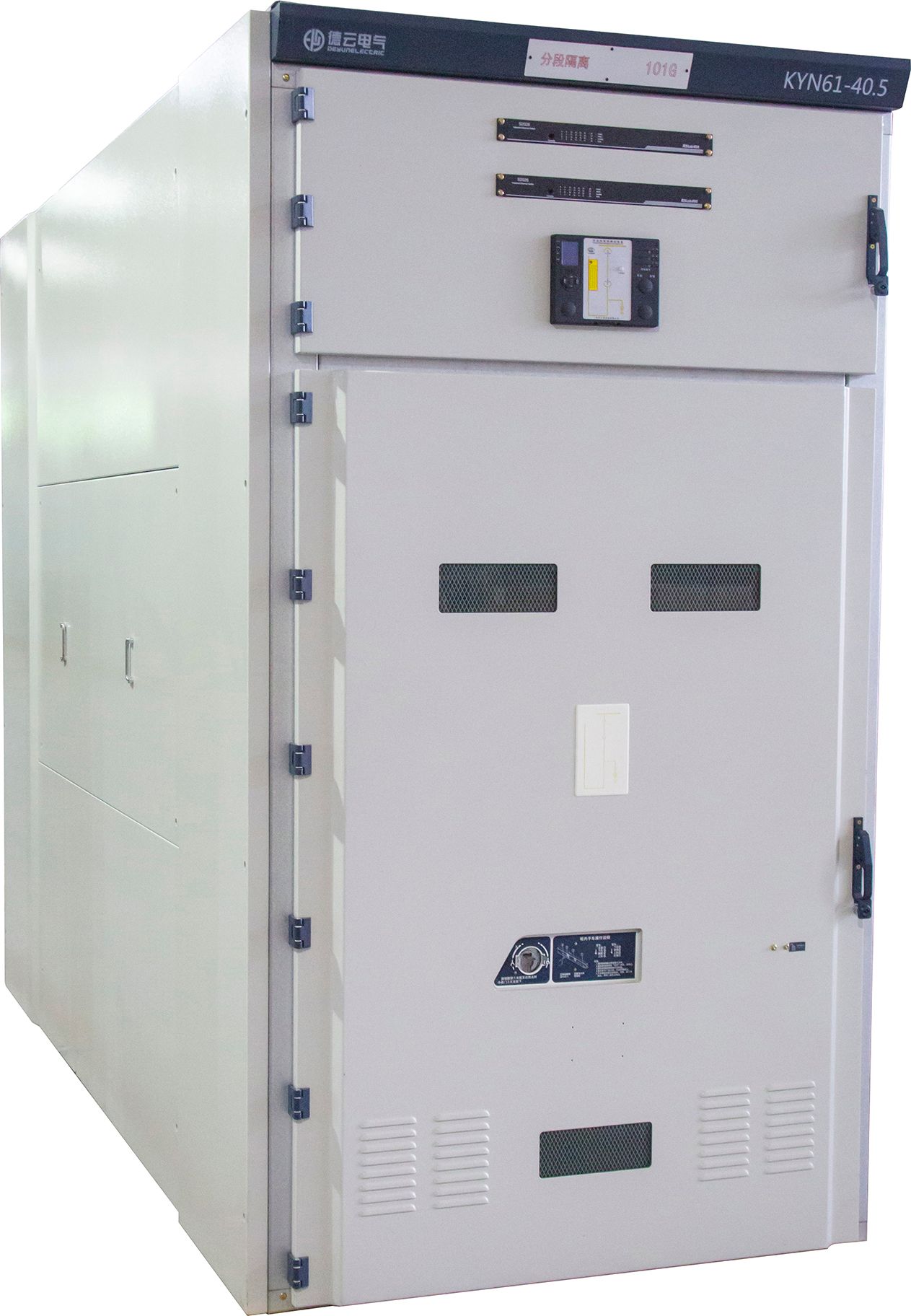
Vacuum interrupters quietly changed how we think about circuit breaking. Instead of relying on oil or gas to extinguish the arc, they pull the contacts apart inside a sealed vacuum chamber. With no medium to ionize, the arc simply dies as the current crosses zero. That means no messy cleanup, no toxic byproducts, and remarkably little wear on the contacts themselves.
What often gets overlooked is the low-energy footprint. Because the arc is weak and short-lived, the mechanism doesn't need a massive spring or motor to force the contacts open against a heavy gas blast. The actuator can be compact, the drive electronics simpler, and the standby power draw barely a blip on a substation's meter. Over decades of switching operations, the saved energy adds up.
Field crews notice the difference too. There's no gas pressure to monitor, no oil samples to send off, no risk of leaking SF6 into the atmosphere. A vacuum interrupter just sits there, doing its job for tens of thousands of operations. It's the kind of component that makes switching clean not just as a slogan, but as a measurable reduction in maintenance hours and environmental risk.
Gas-Insulated Designs When Space Is at a Premium
In dense urban substations or offshore platforms, every square meter counts. Gas-insulated switchgear replaces air insulation with pressurized SF6 or alternative gas mixtures, shrinking bay widths by up to 70 percent compared with conventional air-insulated equipment. The sealed enclosures keep live parts away from dust, salt spray, and humidity, which matters when equipment sits in tight basements or harsh coastal environments.
Because the high-voltage components live inside grounded metal housings, maintenance teams can walk past energized bays without the same clearance distances that open-air layouts demand. This allows designers to stack circuits vertically, route busbars in compact ducts, and fit an entire substation into a footprint that would otherwise hold only a transformer yard. The trade-off is stricter gas handling and monitoring, but for sites where real estate is scarce or expensive, the space savings often outweigh the added complexity.
Monitoring That Alerts You Before Things Go Wrong
A disk fills up at 3 a.m. and nobody notices until the queue backs up. That's the old way. Monitoring that alerts you before things go wrong doesn't just scream when the server is down. It watches the small shifts—latency creeping upward, free memory shrinking, a batch job taking 20 percent longer than usual—and flags them while there's still room to act. That's the difference between a quiet fix during office hours and an emergency call on a Saturday night.
The best alerts feel less like alarms and more like a heads-up from a colleague who can read the room. Instead of a generic CPU usage high warning, they say CPU has been trending up for two hours and will likely hit the threshold around 4 p.m. if the current pattern holds. You get context, not just a number, so you can decide whether to add capacity now or reschedule a non-critical job.
Teams that set up this kind of early warning system stop reacting to outages and start preventing them. It takes some tuning—adjusting baselines, suppressing noise, making sure the right person gets the right alert—but once it's dialed in, you'll sleep better knowing the system will tap you on the shoulder before the fire starts.
Modular Busbars for Growth Without Major Rewiring
Scaling a power distribution system usually means tearing out cable trays, re-terminating hundreds of connections, and accepting days of downtime. Modular busbar systems change that equation. Instead of a fixed, hard-wired backbone, the busbar is assembled from standardized, plug-compatible segments—straight runs, elbows, tap-off boxes, and end feeds—that snap together with mechanical joints. When a new production line or rack row appears, you simply insert an additional section where it's needed, bolt it in place, and attach tap-off units at the exact load points. No cutting, no crimping, no hours spent tracing circuits.
The real advantage shows during phased expansions. A facility can start with a short busbar run rated for, say, 400 A, then extend it in 3-meter increments as demand grows. Because each segment carries the same current rating and uses the same connection interface, the system's performance doesn't degrade at joints. This uniform design also means spare parts stay minimal: one type of joint kit, one type of hanger bracket, one type of tap-off box. Maintenance crews don't need to memorize three generations of wiring conventions. And since the busbar is visible and accessible, verifying a connection or adding a new drop takes minutes rather than a shutdown window.
For brownfield sites with limited ceiling space or strict fire codes, modular busbars also avoid the cable tray sprawl. A compact, enclosed housing can carry the same current as multiple parallel cable runs, freeing overhead clearance for lighting, ductwork, or future cable paths. The enclosure itself acts as both mechanical protection and fault containment, which often simplifies approval for changes. When the next expansion request comes, the answer isn't "we'll need to rewire that whole quadrant"—it's "give us an hour to bolt on the next section."
Service Access Points That Don't Require Acrobatics
Most service access points feel like they were designed by someone who assumed you'd happily do a cartwheel through a flaming hoop just to reset a password. But there's a quieter class of entryways that simply expect you to walk in, sit down, and get on with whatever you came for. No hidden menus, no three-step verification tango, no hunting for a tiny gear icon tucked behind a vague ellipsis. These are the ones where the sign-up form has exactly four fields, the support link is visible without scrolling, and the 'help' section actually answers the question you typed instead of serving you a list of unrelated articles.
What makes them stand out isn't any flashy design trick—it's restraint. The creators understood that a service access point's job is to disappear as quickly as possible. The login button is where you expect it. The error message tells you what went wrong and how to fix it in plain English. The mobile view doesn't require finger gymnastics to tap a target the size of a sesame seed. It's the difference between walking through a door that opens automatically and trying to pick a lock with a paperclip while balancing on one foot.
Plenty of companies talk about 'frictionless' experiences, but few actually remove the friction. The ones that do don't need to brag about it—you just notice later that you never once wanted to throw your device across the room. That's the real benchmark: a service access point that respects your time and your sanity, not one that turns a simple task into a dexterity challenge.
FAQ
It usually comes down to three things: arc containment testing beyond minimum standards, a busbar design that limits cascading faults, and breaker mechanisms rated for far more operations than typical duty cycles require.
Look for draw-out breaker compartments with shutters and visible isolation gaps. That lets technicians rack out a single feeder, lock out, and work while the rest of the board stays energized.
Often yes if floor space is scarce or the environment is dusty and humid. Sealed gas tanks keep live parts away from contamination, which cuts long-term cleaning and insulation failure risks.
It catches insulation defects early, before they become flashovers. Continuous sensors on cable terminations and bus joints can spot a few picocoulombs of discharge, giving maintenance teams time to plan repairs instead of reacting to failures.
They use embedded current and voltage sensors plus communication protocols like IEC 61850 to share breaker status, load profiles, and fault records instantly. This allows faster fault location and automated load shedding before a small issue cascades.
Arc-resistant enclosures tested to IEC 62271-200 or IEEE C37.20.7, remote racking devices, and pressure relief ducts that vent hot gases away from operators. Also insist on insulated busbar covers even inside the panel.
It depends on the condition of the busbar insulation and breaker mechanisms. Retrofitting with modern protection relays, vacuum interrupters, and partial discharge sensors can add years of life, but if the enclosure can't pass arc testing, a targeted replacement of critical feeders is safer.
Conclusion
Reliable medium voltage switchgear isn't about any single breakthrough; it's the combination of practical design choices that keep power flowing without constant attention. Start with enclosures that actually seal out dust and moisture, because environmental ingress is still one of the quickest ways to degrade connections and insulation. Pair that with vacuum interrupters, which handle switching with minimal arc energy and far less maintenance than older oil or air-magnetic designs. Where floor space is tight, gas-insulated options shrink the footprint while preserving dielectric strength, making them a sensible fit for urban substations or retrofit projects. Together these elements mean fewer unplanned outages and less time spent on routine upkeep.
But robust hardware alone isn't enough. Built-in monitoring that flags abnormal temperature, partial discharge, or mechanism wear gives operators a chance to intervene before a minor issue becomes a failure. Modular busbar systems allow capacity to be added or sections reconfigured without tearing out existing switchgear or rewiring entire switchboards. And service access points designed for real-world maintenance—not acrobatics—mean technicians can inspect, test, and replace components safely and quickly. When all of these features work together, the result is a switchgear lineup that delivers dependable power distribution with lower lifecycle cost and fewer headaches for the people who run it.
Contact Us
Contact Person: Julion
Email: [email protected]
Tel/WhatsApp: 8617351370631
Website: https://www.deyunelectric.com