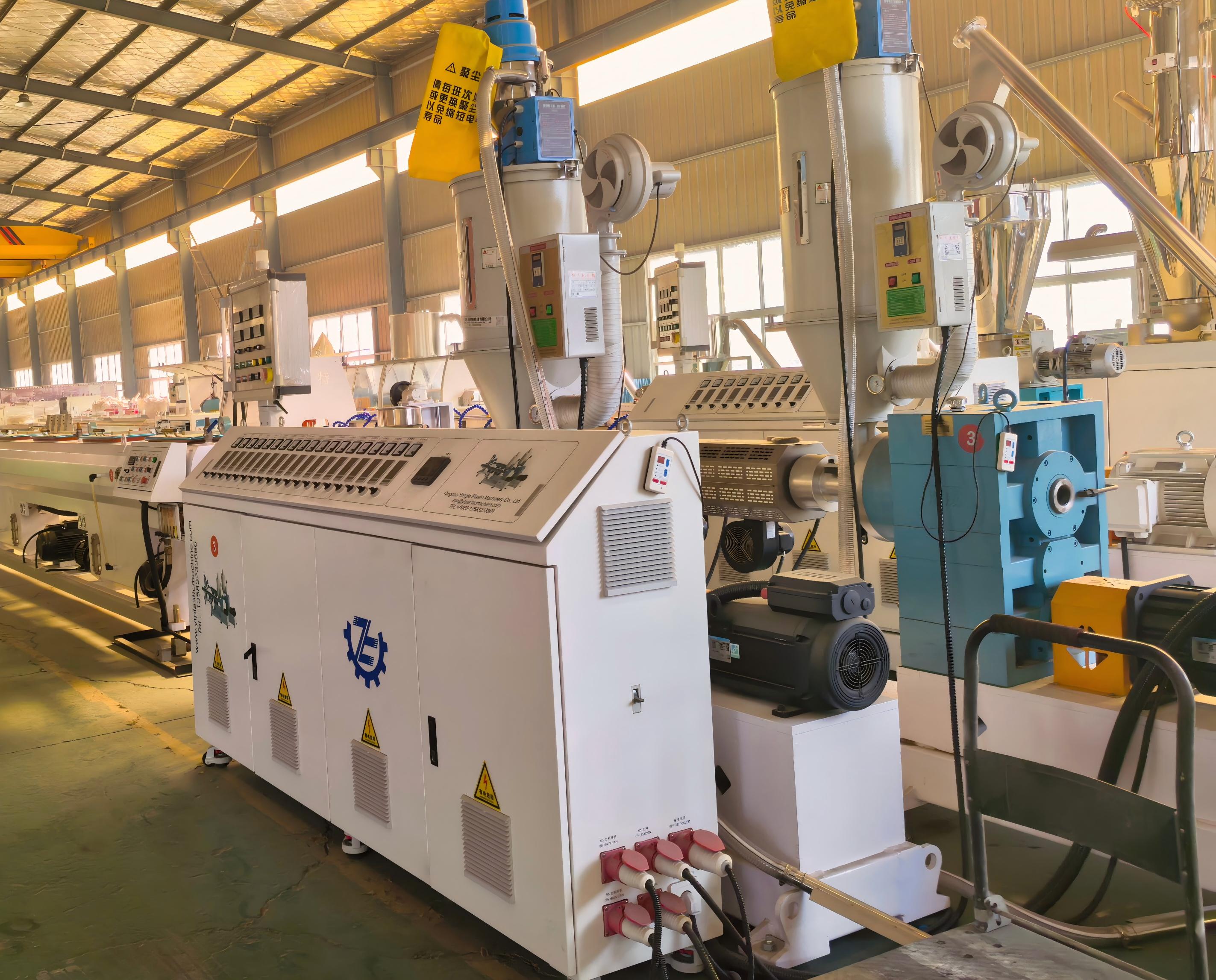

Top Plastic Pipe Machines: Key Features and Buying Guide
2026-08-28
Choosing the right plastic pipe machine can feel like navigating a maze of specs, speeds, and promises. Whether you're expanding a production line or entering the market, the difference between a machine that delivers consistent output and one that drains your maintenance budget often comes down to understanding key features before you buy. From extruder design and screw configuration to cooling efficiency and control systems, there's more than meets the eye. In this guide, we break down what actually matters—and why manufacturers like Yongte have built a reputation by prioritizing durability and precision over flashy specs. Read on to make an informed decision without the guesswork.
Pipe Diameter and Wall Thickness: Getting the Spec Right Before You Buy
Many buyers assume a 2-inch pipe has an outside diameter of 2 inches, but that’s rarely the case. Pipe sizing follows nominal dimensions that don’t match a tape measure, and wall thickness changes the inside diameter more than people expect. Before you order, grab a caliper or check the manufacturer’s chart for both OD and ID at the specific schedule you’re considering.
Wall thickness isn’t just a number—it’s tied directly to pressure rating and material grade. A Schedule 40 pipe and a Schedule 80 pipe might share the same nominal size, yet the latter has a noticeably smaller bore and far greater strength. If you’re swapping one for the other without checking the actual wall dimension, you can end up with flow restrictions or, worse, a fitting that won’t seal.
Think about what the pipe actually has to do. Low-pressure drainage can get away with thinner walls, while compressed air, steam, or chemical lines usually demand heavier schedules. Don’t buy based on habit or what’s on the shelf—verify the diameter and wall thickness against your system’s pressure, flow rate, and connection requirements first.
The Extruder Barrel and Screw Combination That Suits Your Material Mix
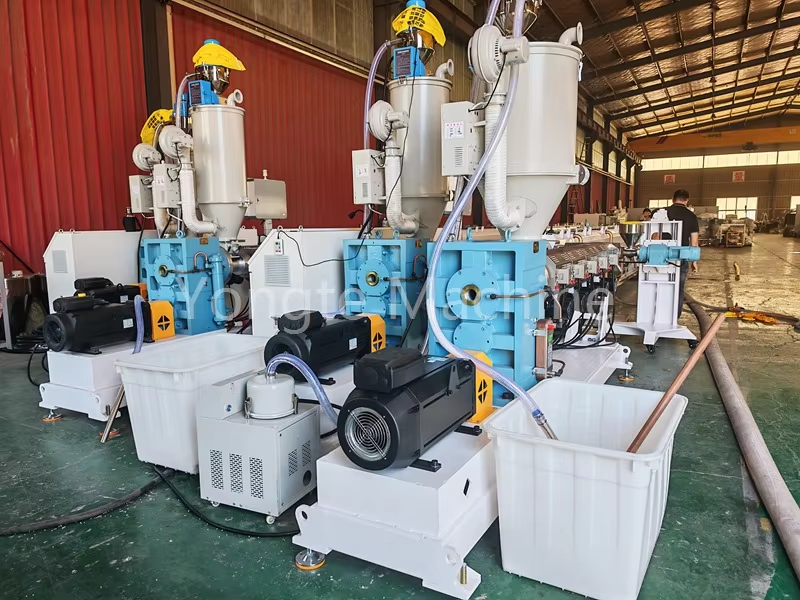
Matching barrel and screw geometry to your material mix isn't a one-size-fits-all exercise. A polypropylene loaded with 30% glass fiber demands a completely different screw profile than a shear-sensitive PVC compound. The barrel needs the right liner or alloy to withstand abrasive wear, while the screw should balance dispersive and distributive mixing zones. If you push a filled system through a general-purpose screw, you'll often see poor dispersion, excessive shear heating, or premature barrel wear along the compression section.
The real difference becomes clear when you run recycled streams or blends with varying melt viscosities. A combination with a longer feed section and a barrier flight helps hold melt temperature stable on mixed regrind, while a grooved barrel improves feed consistency for lower-bulk-density materials. Adjusting the compression ratio and adding mixing pins or a Maddock section lets you fine-tune residence time and shear history without constantly chasing the barrel temperature.
Even small changes, like tightening screw clearance or switching to a bimetallic barrel layer, alter how quickly the screw recovers after each cycle. Instead of staying with a generic setup, it pays to map your material's viscosity curve and filler content onto the screw design. That way you get a combination that actually fits the mix you run every day, not just the one the machine was originally built for.
Die Heads for PVC, PE, and PP: What Changes When You Switch Resins
Switching extrusion resins on the same line often means more than just purging the barrel. For PVC, PE, and PP, the die head itself usually needs a closer look because each polymer brings its own melt behavior to the tooling. PVC, being thermally sensitive, demands very streamlined flow channels with no dead spots where material can sit and degrade. PE and PP are more forgiving in that regard, but their melt elasticity and drawdown characteristics differ enough that the same die geometry will rarely give you the same dimensions or surface quality.
The most immediate changes show up in the die land length and gap. With PVC, you typically run a tighter gap and a longer land to build enough backpressure while keeping shear low; this helps control swelling and prevents burnt specks. Switch to PE and the melt is more elastic, so you might need a slightly wider gap or a shorter land to avoid excessive die swell. PP, on the other hand, has low melt strength, so the web or tube can sag right after exiting the die. That often means adjusting the air gap or adding a closer cooling ring rather than dramatically changing the die internals, but the mandrel and tip geometry may still need tweaking to maintain concentricity.
Surface finish on the flow surfaces also matters more than people expect. PVC can stick and degrade on rough or worn metal, so dies for PVC are often polished to a mirror finish, sometimes with chrome plating or special coatings. PE and PP are less prone to sticking, but they can be more sensitive to melt fracture, so die temperature uniformity becomes critical. In practice, when you switch from PVC to PE or PP on a shared line, you are not just swapping resins—you are likely swapping internal die parts, resetting temperature zones, and verifying the die gap with feeler gauges before you get back to stable output.
Vacuum Tanks and Haul-offs: Tuning the Line for Roundness and Surface Finish
Vacuum tank settings rarely work as a single fixed number. For roundness, the first chamber near the die needs enough negative pressure to pull the hot tube firmly against the sizing sleeve, but too much vacuum increases drag and can leave longitudinal scratches. A practical approach is to set the first stage 10–15% higher than the second stage, then drop the last compartment to just enough to hold shape. Water temperature in the tank matters just as much: keep it between 25°C and 35°C for most polyolefins. Colder water freezes the skin too fast, locking in ovality instead of correcting it.
Haul-off tuning is about matching speed to the extruder output without overworking the material. If the puller runs too fast, the tube stretches, wall thickness drops below tolerance, and the surface can show fine transverse cracks or a dull, drawn look. Too slow, and melt accumulates at the die exit, causing varying diameter and poor roundness. With belt or track haul-offs, adjust contact pressure so you can still slip a piece of paper between the belt and the tube at the edges—this prevents flattening. Check the drive for speed hunting; even a 0.5% oscillation leaves a visible washboard pattern on the surface.
Surface finish problems often trace back to what is happening inside the vacuum tank rather than the die itself. Dirty water, worn spray bars, or a clogged filter will embed fine particles into the soft extrudate. Drain and replace tank water regularly, and inspect the water rings for mineral buildup. At the tank exit, a soft air wipe or a fine mist ring helps control the final cooling rate and removes excess water, which reduces water spots and micro-cracking. Keep the haul-off contact surfaces clean and free of PVC residue or silicone buildup—these transfer directly to the product and are hard to remove later.
Why Some Machines Cost Twice as Much: Energy, Wear Parts, and Service
A cheap machine can quietly drain your wallet through electricity bills that never seem to match the spec sheet. Low-efficiency motors, undersized cooling systems, and power-hungry control loops often hide behind an attractive upfront price. Over five years, the energy delta alone can exceed the entire purchase cost of a more expensive, better-engineered alternative — and that's before you factor in production downtime during peak tariff hours.
Then there are the parts that don't survive first contact with real workloads. Budget machines skimp on bearing grades, seal materials, and heat-treated contact surfaces. You end up replacing wear components two or three times more often, and each unplanned stop costs far more than the part itself. Premium machines typically use over-spec'd consumables and modular wear interfaces, so the maintenance cycle stretches from weeks to months without heroic effort.
Service is where the price gap becomes impossible to ignore. A low-cost supplier might offer a warranty that evaporates when you need field support, or charge hourly rates that make every minor fault feel like a ransom. Higher-priced machines usually come with remote diagnostics, trained local technicians, and spare-part guarantees that actually hold up. When a critical line goes down, that support contract is the difference between a two-hour recovery and a two-week standstill.
A Practical Checklist for Comparing Quotes Without Getting Lost in Spec Sheets
When you line up quotes side by side, the spec sheets can quickly turn into a wall of numbers and jargon. Start by stripping away anything that doesn't directly affect your day-to-day use. Ask yourself what you actually need the product to do, then check each quote against that real-world list. A flashy feature you'll never touch shouldn't sway the decision, but a missing detail that will cost you time or money later absolutely should.
Next, look beyond the headline price and compare the fine print. Are delivery, installation, or setup fees buried in one quote but not another? Does one vendor include ongoing support while another charges extra? Make three columns on a plain sheet of paper: must-have, nice-to-have, and don't care. Mark each quote accordingly, and don't be afraid to call the vendor and ask for clarification in plain language.
Finally, trust your gut on the relationship. The cheapest quote might come from a vendor who is slow to respond or vague about timelines. A slightly higher price can be worth it if the other party communicates clearly and seems invested in your long-term satisfaction. The goal isn't just to match numbers — it's to pick the option that leaves you confident and unhurried, not second-guessing yourself at every turn.
FAQ
Extrusion lines dominate for continuous pipe, while injection molding handles fittings and shorter pipe sections. Within extrusion, you'll see single-screw and twin-screw setups; twin-screw excels at processing rigid PVC formulations, whereas single-screw can be more economical for polyolefins.
It comes down to material and output requirements. Twin-screw machines provide better mixing and shear control for heat-sensitive compounds like PVC, while single-screw extruders are simpler and cheaper to run for polyethylene or polypropylene. If your runs involve frequent material changes or high filler content, twin-screw is usually the safer investment.
Pay close attention to the downstream: vacuum calibration tanks, cooling baths, haul-offs, and cutters must match your diameter range and wall thickness. A well-designed calibration sleeve and stable vacuum control often matter more for roundness and surface finish than the extruder barrel size.
It's a major differentiator. Look for systems with closed-loop control over barrel temperatures, melt pressure, and haul-off speed. Automatic wall thickness adjustment and inline ultrasonic measurement can reduce scrap and operator dependence, especially for high-volume runs.
The screw geometry, barrel material, and downstream cooling capacity must suit your polymer. For example, abrasive or corrosive materials like glass-filled compounds require hardened screws and bimetallic barrels. Also verify the temperature control range for both low-temperature HDPE and high-temperature engineering resins.
Over a typical machine lifespan, yes. Servo-driven haul-offs and energy-efficient motors can lower consumption substantially. Look for insulated barrels, optimized heating/cooling zones, and power factor correction. The payback often comes within two to three years in continuous production environments.
The die head determines layer structure and wall uniformity. For multi-layer pipe, spiral mandrel dies give better distribution than simple spider designs. Make sure the calibration tooling is easily removable and sized for your intended pipe dimensions, since swapping tooling for different diameters adds time and cost.
Ask for references from plants running similar materials and dimensions, not just demo videos. If possible, visit a facility and watch a full production run, checking scrap rate, changeover time, and dimensional consistency. Also request a trial with your own raw material to see how the line behaves under your conditions.
Conclusion
Before you even compare prices, pin down the actual pipe dimensions you intend to run—outside diameter, wall thickness, and tolerance band. A line sized for 63 mm HDPE will struggle or waste material if you later decide to push 250 mm PVC. The extruder barrel and screw pair matters just as much: a 30:1 L/D general-purpose screw handles polypropylene well but may over-shear rigid PVC, while a longer barrier screw suits high filler or recycled blends. When you switch between PVC, PE, and PP, the die head design changes more than the mandrel diameter; land lengths, compression ratios, and spider leg geometry all shift to avoid melt fracture and maintain wall concentricity.
Downstream, the vacuum tank and haul-off are not afterthoughts. Sizing sleeves with adjustable vacuum zones let you pull a round, smooth pipe at high speed without collapse or bounce, and a caterpillar haul-off with soft pads prevents surface marking on soft PE. Price differences often trace back to energy-efficient AC drives, hardened barrels and screws that last twice as long, and a local service team that stocks wear parts—not just a brand markup. When comparing quotes, strip the spec sheets down to four numbers: output rate per hour per kW, screw and barrel material hardness, number of heating zones you actually need, and the cost of a replacement screw. That gets you closer to total cost of ownership than any glossy brochure.
Contact Us
Contact Person: Ms Qin
Email: [email protected]
Tel/WhatsApp: 8613583233866
Website: https://www.yongteplast.com