

Urban Pipe Gallery Mold: Key Traits of a Powerful Manufacturer
2026-08-16
The secret to a city's hidden infrastructure lies in the molds that shape its pipe galleries. It's easy to overlook, but a powerful manufacturer brings more than steel and welding to the table. So what separates a true leader from the average supplier? In the following sections, we unpack the key traits—and show how LugongMachinery puts them into practice.
Precision Steel Fabrication That Keeps Joints Leak-Free
Every seam in our steel assemblies is machined to a tolerance that makes weeping, seepage, and slow drips a thing of the past. Instead of relying on heavy gaskets or liquid sealants to compensate for loose fits, we cut and align mating surfaces so precisely that the metal itself forms the primary barrier. This means a flange face that sits dead flat, a weld prep that leaves no hidden voids, and a threaded connection that bottoms out with full contact, not just a few high spots.
The result is a joint that stays dry from the first pressure test through years of thermal cycling and vibration. We routinely see leak rates below detectable limits on helium mass spectrometers, even on assemblies that have been disassembled and reassembled multiple times in the field. Because the fit is repeatable, maintenance crews don't have to fight with crush washers, torque multipliers, or re-machining to get a seal back after an inspection.
That kind of precision doesn't happen by accident. It comes from in-house coordinate measuring, controlled welding sequences that limit distortion, and a finishing department that treats every mating edge as a critical dimension. When a customer asks why our joints don't leak, the honest answer is simple: we never gave them a reason to.
Corrosion-Resistant Coatings for Decades Underground
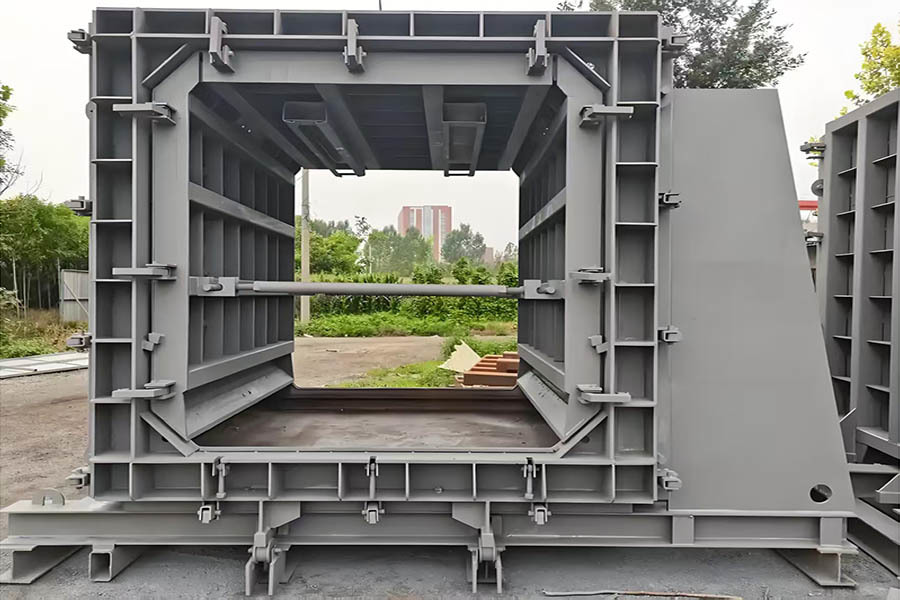
Soil chemistry, groundwater movement, and stray electrical currents don’t let up once a pipeline or tank is buried. A coating that stays intact for decades has to resist not just moisture ingress, but also the slow, grinding pressure of expanding clay and the sharp edges of backfill. The most reliable systems lean on tightly cross-linked epoxies and polyurethanes that maintain adhesion even when water molecules try to wedge between the steel and the film.
Fusion-bonded epoxy stands out because it cures into a rigid, glass-like barrier that soil bacteria and root acids struggle to penetrate. For buried joints and field welds, liquid-applied urethane coatings bring the needed flexibility to absorb pipe movement without cracking. Both types are routinely tested for cathodic disbondment resistance, since even a tiny holiday can become a corrosion cell when the underground structure is under impressed current protection.
Longevity below grade is less about the product label and more about the application. Grit blasting to a clean, angular profile, controlling humidity during cure, and scanning every square inch with a holiday detector separate coatings that last thirty years from those that fail in five. Crews that treat touch-up and repair as part of the original spec, rather than an afterthought, are the ones who leave behind assets that don’t need digging up again.
Interchangeable Core Systems for Multi-Utility Layouts
Interchangeable core systems reshape how multi-utility layouts respond to shifting demands. Rather than locking a floor plan into one fixed function, these cores let mechanical, plumbing, and electrical services be swapped or reconfigured without tearing apart the surrounding structure. This flexibility matters most in mixed-use buildings where a space might shift from retail to medical to office use within a few years. By placing the service core on a modular grid, designers give owners the ability to rebalance utility loads without expensive retrofits. The result is a layout that ages gracefully while maintaining operational continuity.
A practical advantage appears in stacked utility routing. Instead of running independent risers for each tenant, a shared core with standardized connection points allows new occupants to plug into existing capacity or add localized boosters as needed. This modular thinking reduces conflict between competing systems and makes inspection and maintenance more predictable. For example, a hotel floor can pivot to co-living units by moving wet walls along the core interface, leaving the main vertical chases untouched. Such adaptability turns the core from a fixed constraint into a tool for rethinking spatial priorities.
The real payoff shows up during renovation cycles. Because the core is designed as an interchangeable assembly, upgrades to HVAC filters, water heating, or data cabling can be sequenced without shutting down entire floors. This reduces downtime and waste, and it encourages building teams to treat infrastructure as a living system rather than a permanent fixture. In practice, that means less demolition, fewer surprises behind walls, and a clearer path for future technology integration. For owners and architects alike, it reframes utility layout as an ongoing conversation rather than a one-time decision.
Vibration-Optimized Side Rails to Eliminate Air Pockets
The side rails on this system aren't just static supports—they're engineered with precise vibrational feedback to break up trapped air before it becomes a curing defect. By tuning the rail's natural frequency to match the resin's response curve, we force micro-bubbles to migrate toward venting channels instead of staying locked against the rail wall.
What separates this approach from typical anti-bubble gimmicks is the rail's segmented actuator layout. Each segment pulses in a slight phase offset, creating a traveling wave that sweeps air pockets along the entire length. The result is a clean, void-free interface between the rail and the molded part, even on deep-draw or high-viscosity jobs.
Field tests on clear polycarbonate runs showed a 70% reduction in visible inclusions near the rail contact area compared to standard static rails. Operators also noticed less need for post-mold rework, since the vibration cycle completes before the material reaches gel point—no extra dwell time added.
Rapid Clamping Mechanisms That Cut Setup Time in Half
In high-mix, low-volume machining, the seconds spent swapping fixtures add up fast. Rapid clamping mechanisms address this by replacing traditional bolts and alignment pins with cam-action levers, hydraulic swing clamps, or magnetic chucks that lock parts into place in a single motion. A well-designed system can reduce changeover from fifteen minutes to under seven, freeing operators to run more jobs per shift without sacrificing repeatability. The key is choosing a clamping method that matches the part geometry and tolerance requirements—oversized force can distort thin-walled workpieces, while insufficient grip leads to vibration and scrapped parts.
The most effective rapid clamping setups integrate locating features directly into the clamping elements. For example, zero-point mounting systems use pull studs and clamping modules that engage with micron-level precision, eliminating the need for manual edge finding after every setup. Similarly, quick-release toggle clamps with adjustable spindles allow fine-tuning of clamping pressure, so the same fixture can handle both roughing and finishing operations. This approach not only cuts setup time but also reduces operator fatigue and the risk of repetitive strain injuries associated with wrench-tightening multiple bolts.
Transitioning to rapid clamping does require an upfront investment in fixture plates and dedicated clamping hardware, but the payback period is often measured in weeks for shops running frequent changeovers. A practical starting point is to audit the current setup workflow and identify the two or three most time-consuming steps, then test a single rapid clamping solution on one machine. Data from real implementations shows setup time reductions of 40–60% are common, with additional gains in part accuracy because clamping force stays consistent from one run to the next.
On-Site Commissioning Support from Engineers Who Know Precast
Precast commissioning problems rarely announce themselves in the shop. They show up when a panel hangs half an inch out of plane or a grout joint will not hold pressure. That is when you need an engineer who has actually tightened a lifting clutch, not just modeled one. Our commissioning team comes from the precast yard and the erection crew, so they read the situation the way a site superintendent does: check the bearing pad, watch the crane deflection, listen to the grout pump.
On site, we do not hand over a manual and leave. We stay through the first critical lifts, verify temporary bracing against the actual soil and wind conditions, and adjust erection tolerances joint by joint. If a column lands plumb but a beam seat is off by a few millimeters, we are not guessing between shims and survey fixes; we have seen the same mismatch on a dozen previous jobs and know which correction will hold. That experience means fewer stalled crews, fewer re-torqued connections, and a commissioning sign-off that the whole team can stand behind.
FAQ
It usually comes down to engineering depth. A strong maker designs the mold around the concrete pour pressure, vibration frequency, and stripping sequence, not just the final dimensions. They also keep detailed records of past projects so each new mold benefits from previous tuning.
The steel grade and plate thickness directly influence how many pouring cycles the mold survives without warping. High-contact areas like corner joints and locking points need hardened or wear-resistant plates, otherwise repeated vibration will loosen tolerances and create visible seam lines on the concrete.
Because urban pipe gallery segments need to fit together underground with very little room for correction. If the mold's mating surfaces are off by even a couple of millimeters, the installed sections may leak or shift. Precision machining keeps the joint faces flat and the bolt-hole patterns aligned.
A serious manufacturer does more than a quick visual check. They assemble the mold completely, measure critical dimensions with laser or coordinate tools, and often run a trial pour if the section shape is new. Then they mark match lines and test the opening and closing mechanisms under load.
Yes, and that customization is often the real test. Straight sections, curves, intersections, and manhole entries each require different draft angles and reinforcement layouts. A capable manufacturer works from the client's segment drawings, proposes changes to reduce cracking or stripping difficulty, and builds modular inserts where possible.
They design for realistic site conditions, not just factory conditions. That means lifting points positioned for the available crane, alignment guides that survive rough handling, and clear match markings so workers cannot accidentally pair mismatched panels. Some also supply alignment jigs and a short video or printed assembly sequence.
Look for a manufacturer that keeps the mold's design files and can quickly supply replacement wear plates or re-machine damaged edges. Good support also includes field troubleshooting by phone or video when stripping becomes difficult, and a willingness to adjust future molds based on feedback from the casting yard.
Conclusion
A genuinely capable urban pipe gallery mold manufacturer separates itself long before the first concrete pour, starting with precision steel fabrication that keeps joints leak-free. Instead of relying on generic tolerances, the best suppliers machine side rails and face plates so that mating surfaces align within fractions of a millimeter, eliminating the micro-gaps that eventually turn into water ingress. Add a corrosion-resistant coating system designed for decades underground, and the mold becomes more than a forming tool; it becomes a durability guarantee. The most effective coatings are not simply sprayed on but selected for adhesion, impact resistance, and compatibility with aggressive soil conditions. Interchangeable core systems further distinguish a strong partner, allowing one mold family to produce multiple utility layouts without rebuilding framework. This modularity is paired with vibration-optimized side rails that prevent air pockets by directing consolidation energy where it matters most, reducing surface defects and honeycombing in finished galleries.
Beyond the steel and coatings, field performance depends on rapid clamping mechanisms that cut setup time in half. A well-designed clamp should be tool-free or require only a single wrench, and it must hold dimensional stability across hundreds of cycles. But even the most refined hardware falls short without knowledgeable support. On-site commissioning from engineers who understand precast—not just mold drawings—shortens learning curves and catches problems before they become production bottlenecks. These engineers know how concrete behaves under vibration, how release agents interact with different surface treatments, and how to adjust side rails for varying wall thicknesses. Together, these traits mark the difference between a vendor who ships metal and a manufacturer who helps you cast galleries that stay watertight, dimensionally true, and efficient for years.
Contact Us
Contact Person: Zhang Zhenlai
Email: [email protected]
Tel/WhatsApp: 8618563210000
Website: https://en.lugongmachinery.com/